Al-Midan Quarter
The southern gate of Damascus: the long street where the Hajj caravan set out and Hauran grain came in. A quarter of grain merchants and the city’s sweet makers.
- Opening hours
- Open streets; shops from morning until late evening
- Entry
- Free
- Duration
- 120 minutes
- Best time
- Late afternoon, while the ovens are working
- Period
- Mamluk — Ottoman
- Address
- South of the walled old city, Damascus
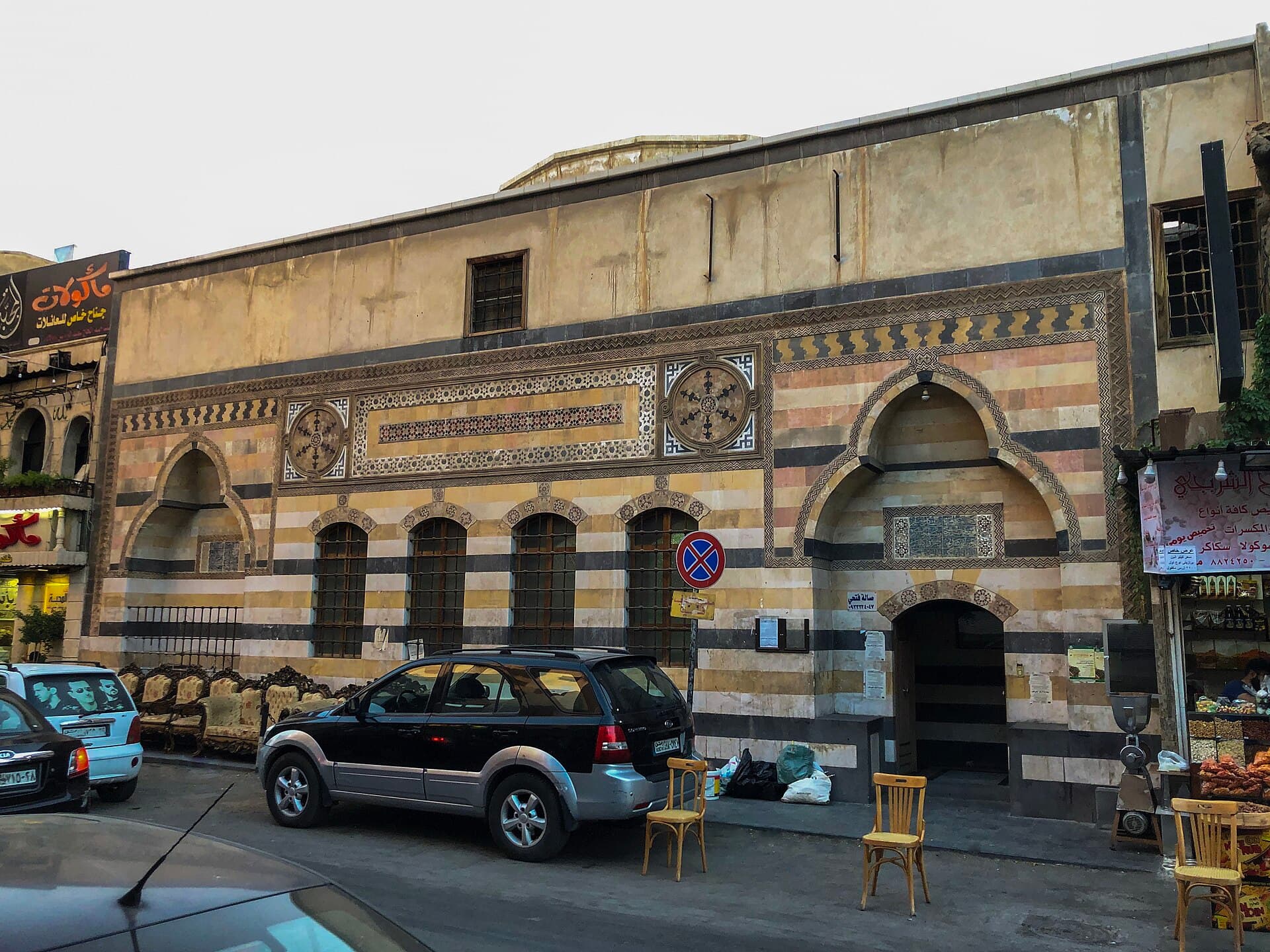
A long quarter south of the walled old city, running up against the modern centre. The name comes from Midan al-Hassa, the field of gravel: the district lay between two arms of the Barada, and heavy rain filled them with stones. It began under Mamluk rule. It took its present form during the Ottoman centuries, and has changed little since.
Why it grew here
Al-Midan was the southern gate of Damascus. The word gate is not a figure of speech here. Merchants of the city set up a trading street here to stand closer to the grain country of the Hauran, and wheat came north along it. The same line was the start of the road to Mecca: the Hajj caravan gathered south-west of the city and set out from here. The long straight spine of the quarter is what those two jobs left behind.
What to see
Along the main street stand Ottoman mosque, khan and fountain fronts, with two-storey stone shops between them. The Bab Musalla Mosque and the Naqshbandi Mosque are in this quarter, and so is the Jezmatiyya souq. Al-Midan is counted among the most conservative parts of Damascus, and modest dress makes the visit easier.
The street of sweet makers
Al-Midan is the centre of the city’s confectionery. Baklava, barazek, kanafeh, namoura and awameh are made here. Most shops still bake at the back of the premises. On Ramadan evenings the street turns into one long queue; the rest of the year the busiest hour is late afternoon.
Don’t miss
Jezmatiyya street in the early evening. Stalls spill onto the pavement, the ovens all run at once, and the lane becomes the densest food street in Damascus. From there it is a quarter of an hour on foot to Bab Musalla.
Tips
- The Jezmatiyya souq and the Bab Musalla Mosque are inside this quarter
- A conservative district; covered dress makes the visit easier
- Ramadan evenings are very crowded; come early
Transparency
- How this was chosen
- Written by hand; opening hours, entry fee and coordinates are kept as data. A field that is not known for certain is marked as variable rather than guessed.
- Facts checked
- September 2026
- Last updated
- September 15, 2026