The Al-Murshidiyya Madrasa
A funerary college on the Friday-market street in Salihiyya, known for the only 13th century minaret left standing in Damascus and a plan bent by the qibla.
- Opening hours
- Normally locked — the interior needs permission from the Directorate-General of Antiquities
- Entry
- Free — seen from outside
- Duration
- 15 minutes
- Best time
- Late morning, while the market stalls are still thin
- Period
- Ayyubid
- Address
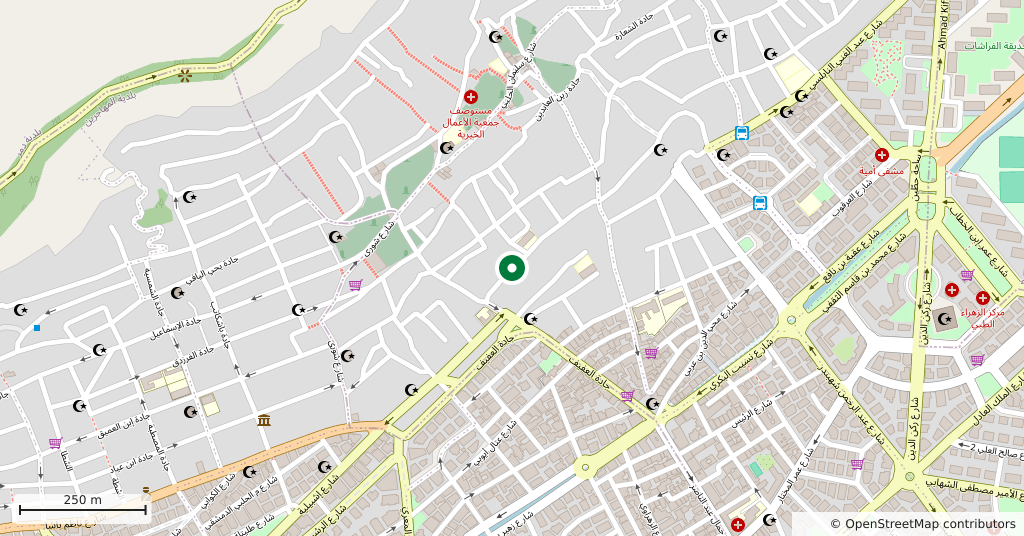
- Salihiyya, the Friday-market street (Jaddat al-Madaris), Damascus
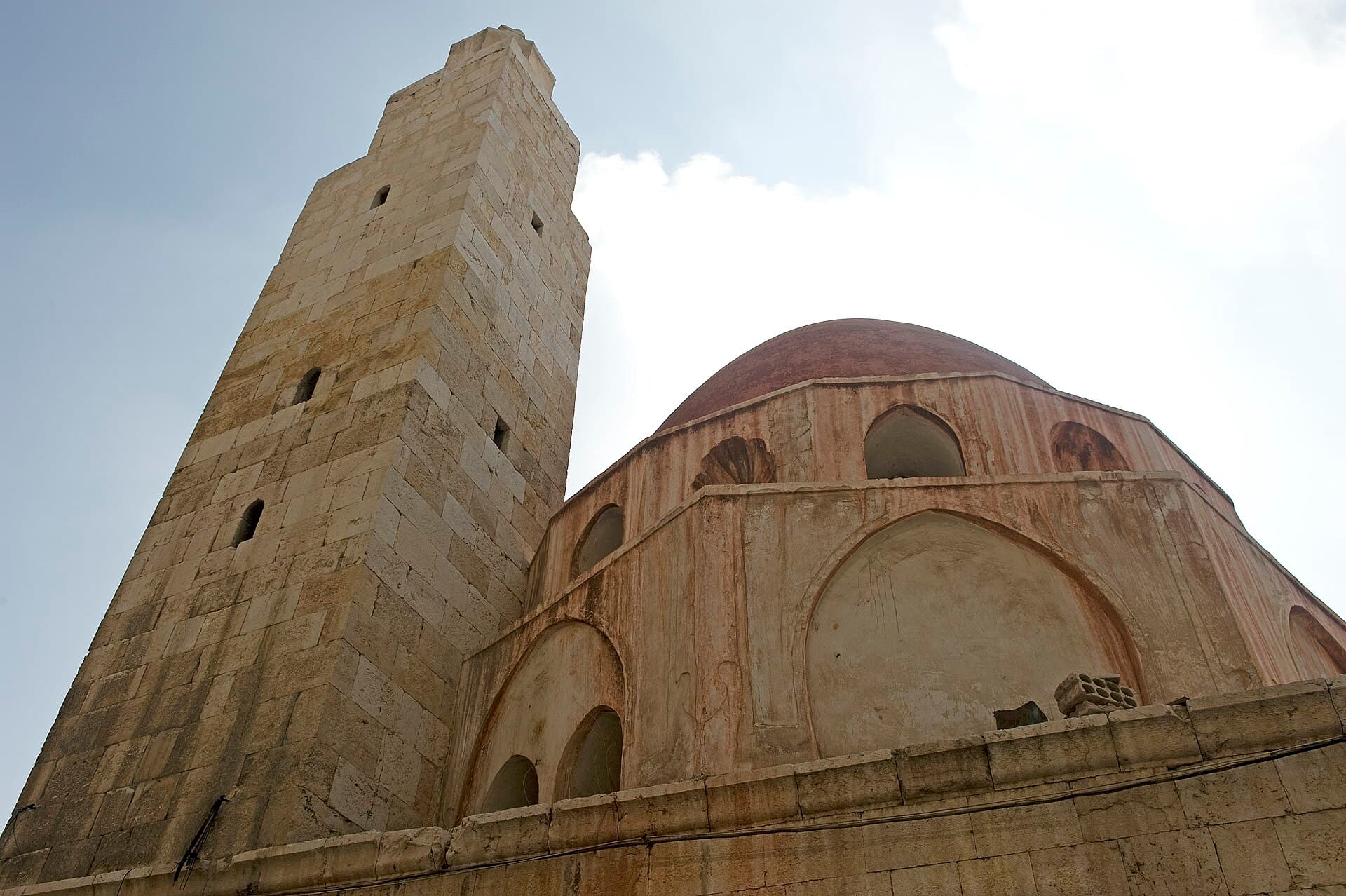
It sits on the line of the Jaddat al-Madaris in Salihiyya, on the street now called the Friday market. Built in 1252 as a funerary college for Khadija Khatun, daughter of the Ayyubid ruler al-Muazzam Isa, who is buried in its courtyard. Its square minaret is the only 13th century minaret still standing in Damascus.
Getting there
Halfway along the madrasa street at the foot of Qasioun. The Sahibiyya lies to the north, the Atabakiyya and the Jaharkasiyya to the south, a few minutes apart on foot. The street sells vegetables and food by day and clothes in the evening. At busy hours the minaret is hard to fit in a frame, so come before the stalls are set out.
What to see
The minaret. A square shaft of dressed stone, sharp at the corners, with no ornament and no projecting balcony; the mass runs straight up, and the narrow slit windows sit at a different height on each face. The dome of the tomb stands beside it, and the ring of arches at the drum reads clearly from the street. The plan itself is bent in a way found nowhere else in the city: both the tomb and the prayer hall had to face true south, and the builder could not keep the two on one axis.
How long it takes
Fifteen minutes. It stopped working as a college long ago and the building is normally locked; going inside needs permission from the Directorate-General of Antiquities. A shut door costs you little, because the minaret that makes this a stop is visible from the street anyway.
Don’t miss
No other minaret from the 13th century survives in Damascus, and that is the reason to look up here. The stone courses of the square shaft change colour, which you notice once you cross to the far pavement. Then the grave itself: Khadija Khatun lies in the open courtyard she paid for, not in a closed tomb chamber.
Tips
- Frame the minaret from the opposite pavement; from directly below, the awnings hide the shaft
- A locked door is the normal state; look at the street face of the tomb dome instead of trying the handle
- The Sahibiyya is north and the Atabakiyya south — all three fit in one walk
Transparency
- How this was chosen
- Written by hand; opening hours, entry fee and coordinates are kept as data. A field that is not known for certain is marked as variable rather than guessed.
- Facts checked
- September 2026
- Last updated
- September 15, 2026