The Al-Qabbani Theatre, Damascus
The hall in Sarouja opened in 1962 and is among the oldest working stages in Damascus. It carries the name of the man who founded Arab theatre in 1871.
- Opening hours
- By programme; open on performance evenings, often shut during the day — confirm at the box office
- Entry
- Variable — depends on the performance, confirm at the box office
- Duration
- 120 minutes
- Best time
- A performance evening; that is the hall's only real visiting hour
- Period
- Republican era
- Address
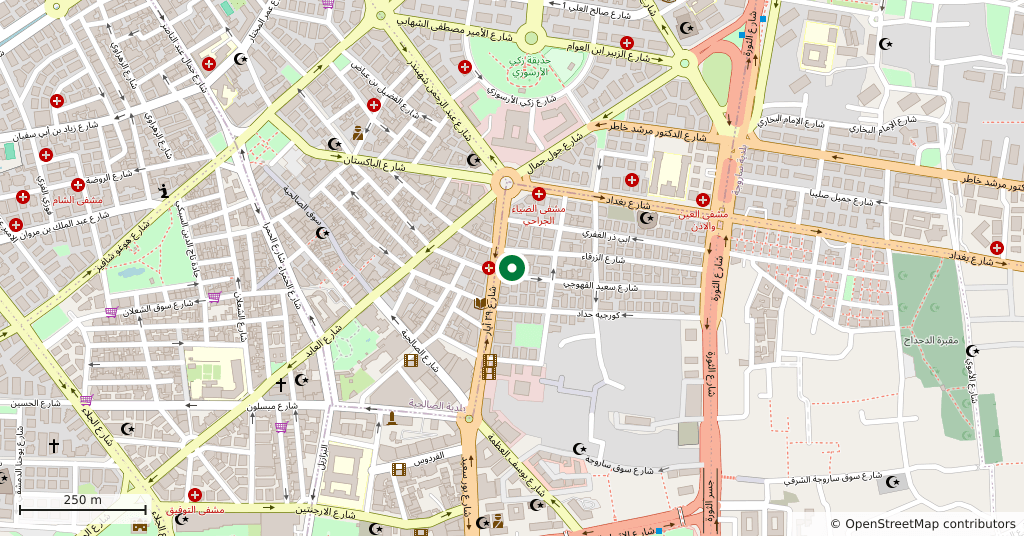
- 29 May Street, Sarouja, Damascus
A theatre in the Sarouja quarter, on 29 May Street. It belongs to the Directorate of Theatres and Music at the Ministry of Culture, opened in 1962, and is one of the oldest stages in Damascus still raising a curtain. Its repertoire is serious: Syrian, Arab and world drama. The building is not a monument to tour — it is a hall with an evening programme, and the city has very few addresses of that kind.
Getting there
Walk north from Marjeh Square towards Sarouja; about ten minutes from the square. The hall stands on 29 May Street and the entrance opens straight onto it. The parliament building is a street away and the Hijaz station is in the same district.
When to go
The programme follows the ministry’s season calendar, and there are no regular daytime visiting hours. On performance evenings the curtain usually goes up after late afternoon; confirm the ticket and the time at the box office or from the ministry’s announcements. During the day the hall may simply be shut.
How old is the building
The structure itself is from 1962. It is not part of the Ottoman or Mandate heritage of Damascus; it was built roughly sixty years after the man whose name it carries. Keeping that straight matters, because the sign outside bears a nineteenth-century name while the walls belong to another generation. The value of the place is not in its architecture but in the fact that it has never stopped working.
The man on the sign
Ahmad Abu Khalil al-Qabbani lived between 1833 and 1903 and founded the first Arab theatre in Damascus in 1871. He began with adaptations of Molière, then staged close to forty plays drawing on muwashshah melodies — the sung Andalusi form — and on the Thousand and One Nights. Arab theatre, in other words, started in this city and under that name; the hall’s title is a record rather than a gesture.
Do not miss
The main foyer. Qabbani’s portrait hangs there along with photographs of productions staged on this stage. Audiences usually walk straight through to their seats, and the sixty-year inventory of the theatre is on the wall behind them.
Tips
- Ask about the programme before going; you may well find it closed by day
- Productions are staged in Arabic with no subtitles; read the play beforehand
- Look at the photograph wall in the foyer before you take your seat
Transparency
- How this was chosen
- Written by hand; opening hours, entry fee and coordinates are kept as data. A field that is not known for certain is marked as variable rather than guessed.
- Facts checked
- September 2026
- Last updated
- September 15, 2026