The Al-Qilijiyah Madrasa
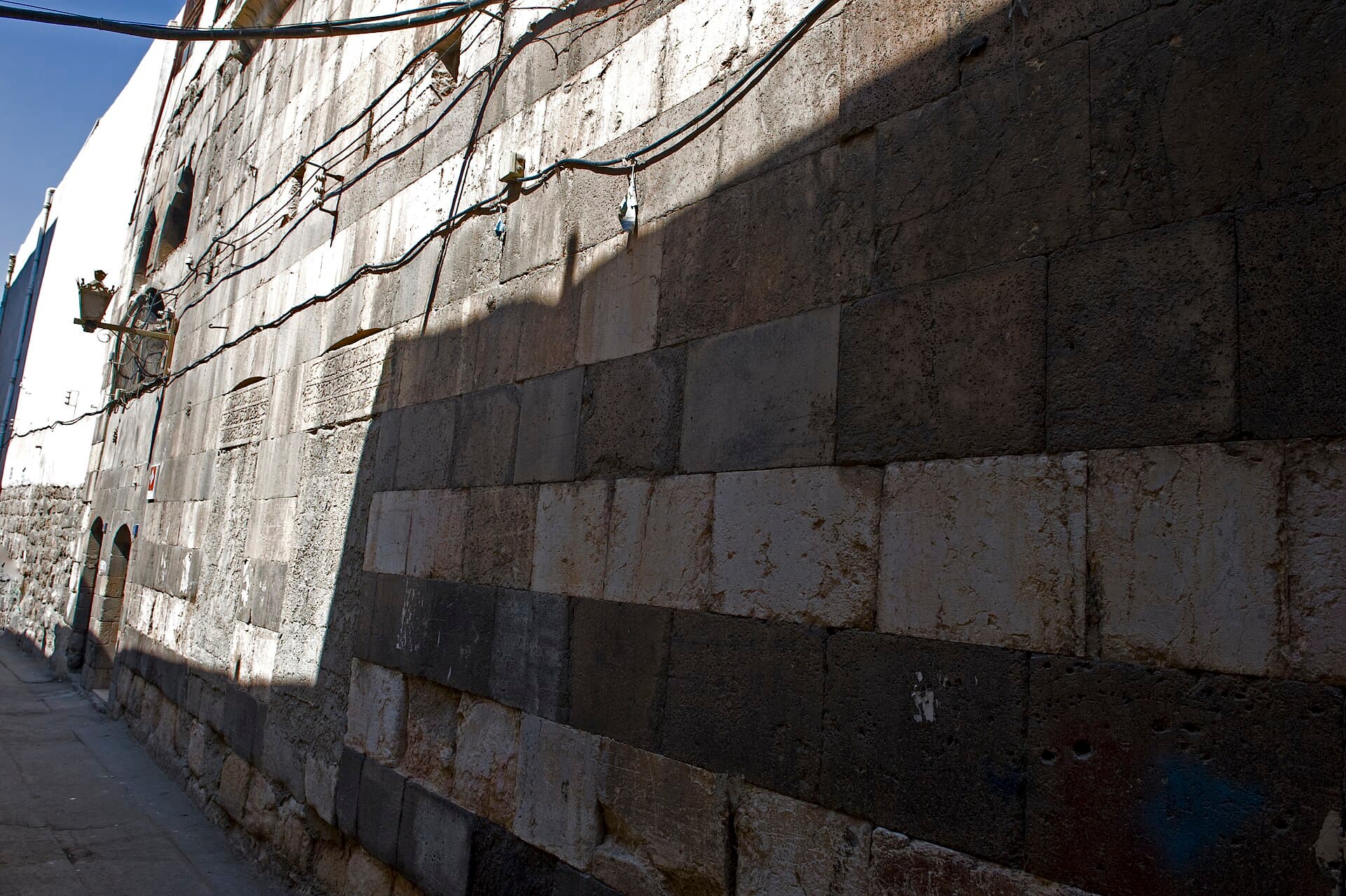
An Ayyubid madrasa between the Al-Bzouriyah Souq and the Azm Palace. The first striped stone facade in Damascus, built against the wall of the palace.
- Opening hours
- Variable — the interior is not regularly open, the facade is there at any hour
- Entry
- Free — the facade is visible from the street
- Duration
- 15 minutes
- Best time
- Towards midday, when light drops into the narrow lane
- Period
- Ayyubid
- Address
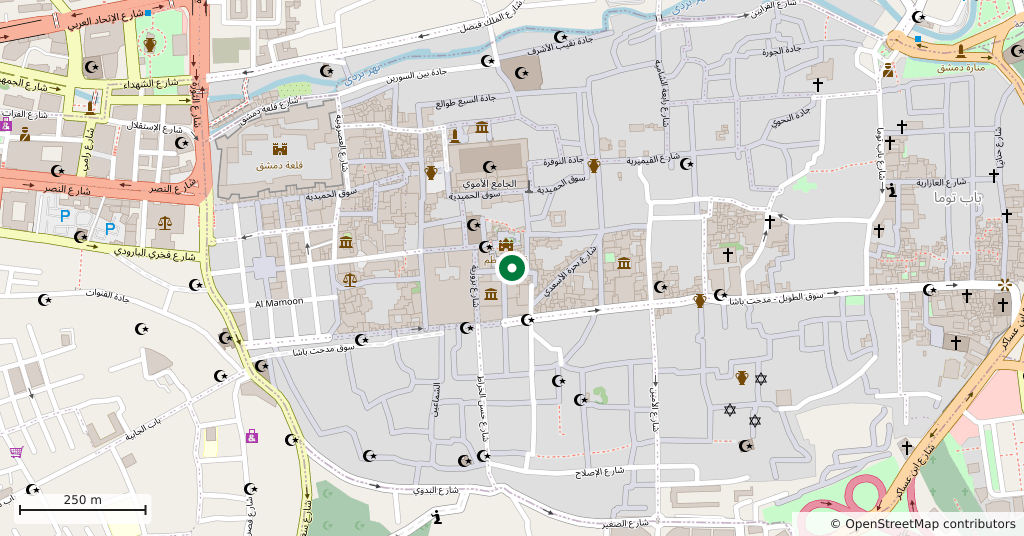
- Between the Al-Bzouriyah Souq and the Azm Palace, Old City, Damascus
Between the Al-Bzouriyah Souq and the Azm Palace, inside the walled old city. It was founded in 1254 by Sayf al-Din Ali ibn Qilij al-Nuri. Its front is reckoned the first Ayyubid facade in Damascus laid in ablaq, the alternating black and white stone, and the whole language of the Mamluk and Ottoman facades that follow starts here.
Getting there
Walk up the Al-Bzouriyah Souq towards the ticket desk of the Azm Palace and round the south-east corner of the palace. The madrasa adjoins that corner and is about 500 years older than the palace: the stone behind the wall where visitors queue was laid five centuries before the palace stone. The side lane is narrow and shaded, and the crowd stays on the souq side.
What to see
The facade. Courses of black basalt and pale limestone alternate along the wall; some of the courses were mixed up in later repairs, so the rhythm is not even, and the unevenness is itself the history. Blocked windows and doorways show in the masonry. The entrance is hidden behind a building put up later and cannot be seen from the street, so if you hunt for it and fail you are not in the wrong place — the door really is closed off.
How long it takes
Fifteen minutes, walking the length of the wall. The interior is not regularly open. For anyone heading to the Azm Palace or buying spices in the Al-Bzouriyah, this stop is already on the way and needs no separate plan.
Don’t miss
Look closely at the striped stone, fix on a single course and follow it along. Every banded facade Damascus produced over the next five centuries — the portal of the Sabuniyya, the courtyard of the Khan As’ad Pasha, the Azm Palace itself — continues this idea. Here it is at its plainest: colour is there, pattern is not yet.
Tips
- Do not look for the door, it was built over; the wall itself is the thing to see
- Start a visit to the Azm Palace here, the madrasa adjoins its south-east corner
- To see how ablaq began, fix on one course of stone and follow it along the wall
Transparency
- How this was chosen
- Written by hand; opening hours, entry fee and coordinates are kept as data. A field that is not known for certain is marked as variable rather than guessed.
- Facts checked
- September 2026
- Last updated
- September 15, 2026