Al-Rabweh Gorge, Damascus
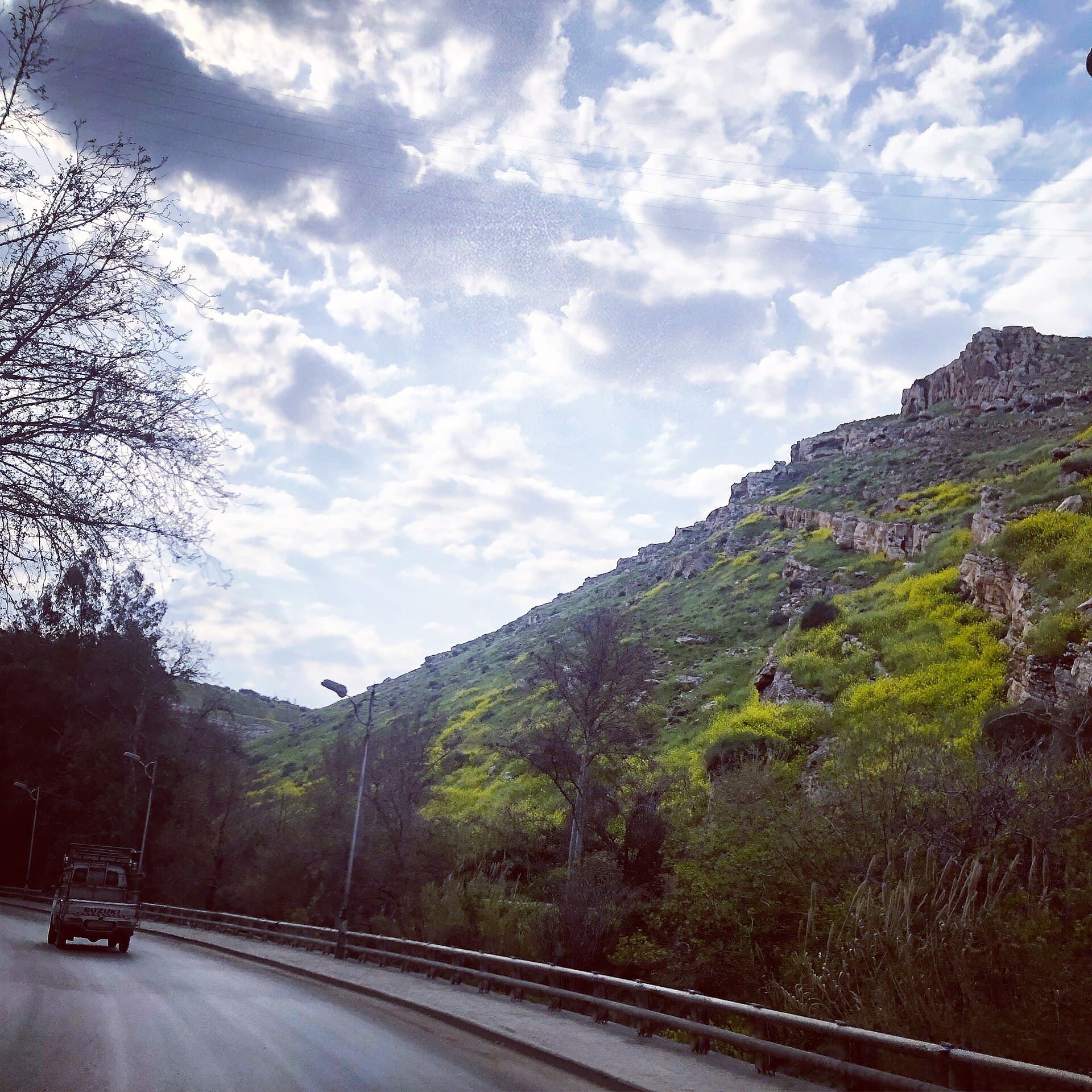
The last narrow gorge the Barada passes before the Damascus plain, where the river splits into canals. Ibn Jubayr praised it in 1184; the Dummar road runs through.
- Opening hours
- Open valley, no set hours
- Entry
- Free
- Duration
- 60 minutes
- Best time
- Spring, when snowmelt fills the Barada and the slopes are green
- Period
- A pleasure ground from Fatimid and Zengid sources to the present
- Address
- Dummar road, the gorge where the Barada valley opens onto Damascus, northwest of the city
Al-Rabweh is the last narrow gorge the Barada runs through before it opens onto the plain of Damascus. It lies northwest of the city on the western slope of Mount Qasioun, between two mountains called Antar and Jank. At a point known as the Shadhrawan the river divides into branches at different levels, and the network that waters the gardens of Damascus starts here. Medieval travellers wrote about it as a pleasure ground; today it is a valley beside the Dummar road where people from the city spend their weekends.
Getting there
The road from central Damascus towards Beirut runs along the floor of the gorge, next to the river, with steep slopes on both sides. The Barada valley railway had its Rabweh station here. Take a taxi. It is a short ride from the centre. The pavement is narrow and traffic is fast, so take care crossing to the riverbank.
Where the water goes
According to the Arab Encyclopedia the Barada splits into seven branches here. On the Qasioun side the Yazid and the Thawra hold the high level; to the west the Darani branch, the Mezzeh canal and the Banias canals break away. Each branch leaves the gorge at a different height, so this is where it was decided which quarter of the city got which water. The count varies between sources; some give six branches.
What the sources say
The Andalusian traveller Ibn Jubayr, in 1184, counted it among the finest views in the world. In the 15th century Ibn al-Badri wrote that 15 sheep were slaughtered here every day and that it had a bath house without equal. The Fatimid caliph al-Mustansir had a mosque built around 1052, and its endowment deed was carved into the rock face in Kufic script. Nur al-Din founded a building for the poor with two minarets, known as “the Lover and the Beloved”. The sources also mention the Qubbat al-Sayyar and a mihrab-like niche in the rock called “the cradle of Christ”.
None of this is guaranteed today. Which of these buildings still stands has not been confirmed. What the texts describe and what you see in the valley may not be the same thing; ask on the spot.
Where the name comes from
Rabwa means a raised place, a hill, in Arabic. Commentators on the Quran have traditionally linked this spot to verse 23:50, which speaks of “a hill with a place to settle and flowing water”. The 14th-century Damascene geographer known as Shaykh al-Rabwa took his name from it.
What most people miss
The rock walls of the gorge. The Kufic endowment inscription was cut not into a building but straight into the slope. Whether it can still be seen is unclear, yet looking at the stone with that in mind turns Al-Rabweh into more than a valley by the road.
Tips
- Ask on the spot before hunting for the medieval buildings; it is unclear which still stand
- The road is busy and the pavement narrow; take care crossing to the river
- Read the Barada, Yazid and Thawra entries together; all three split off here
Transparency
- How this was chosen
- Written by hand; opening hours, entry fee and coordinates are kept as data. A field that is not known for certain is marked as variable rather than guessed.
- Facts checked
- September 2026
- Last updated
- September 15, 2026