The Al-Rukniyya Madrasa
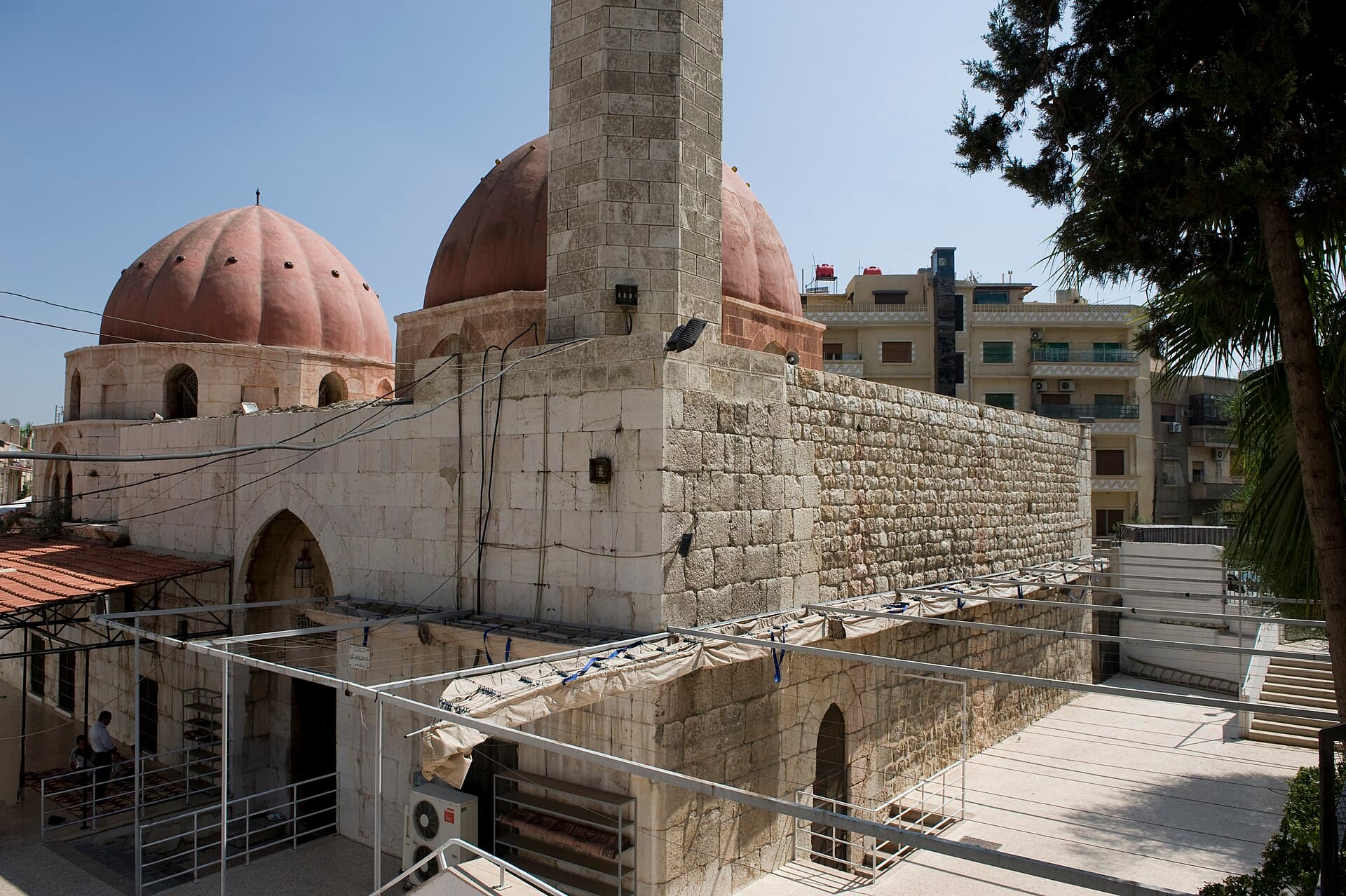
An Ayyubid madrasa on the lower slope of Mount Qasiyun, dominating the square of the Rukn al-Din quarter: ribbed domes, a square minaret, its founder’s tomb inside.
- Opening hours
- Daylight hours, outside prayer times
- Entry
- Free
- Duration
- 25 minutes
- Best time
- Afternoon, when raking light picks out the ribbed domes
- Period
- Ayyubid
- Address
- End of Ibn Tulun al-Salihi street, Rukn al-Din, Damascus
It stands outside the walls of old Damascus, on the lower slope of Mount Qasiyun in the Rukn al-Din quarter, and it dominates the square there. Amir Rukn al-Din Mankurus al-Falaki built it; he had been the freedman of Amir Falak al-Din Sulayman, a maternal brother of al-Malik al-Adil. Ibn Kathir dates the work to 1224 and its completion to 1227. It was endowed for the Hanafi school, with a tomb chamber attached.
Getting there
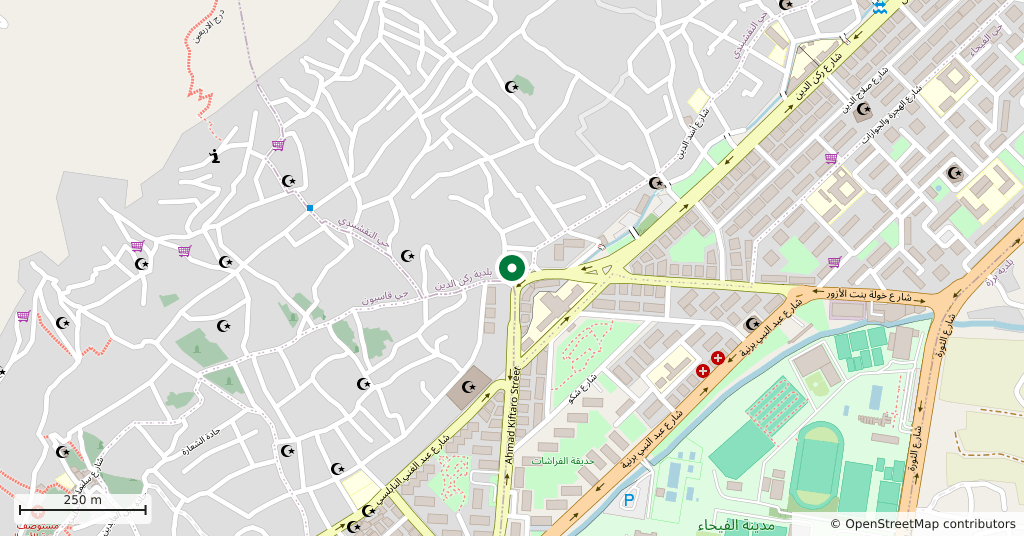
In the Rukn al-Din quarter, at the end of Ibn Tulun al-Salihi street, which runs from Hittin (Maysat) square to Shamdin square. You can walk up from Salihiyya; the madrasa announces itself as soon as you reach the square.
How long it takes
Half an hour. The building is in use as a mosque, and the courtyard is small.
What to see
Ayyubid building speaks here through mass rather than ornament: plain, solid, carefully planned. The signature of the period is in the domes — ribbed shells with vertical flutes rising from a polygonal drum. Rendered red, they read from a distance above the cut stone walls. The tall portal carries a muqarnas arch above it; in Ayyubid work the decoration gathers at the doorway and the rest of the surface is left bare.
Don’t miss
The founder died in 1233 at Jayrud, a village north of Damascus. His body was carried back here and buried inside his own madrasa, and the tomb is still there. His endowment also required the teacher to live on the premises — this was a building people slept in, not only studied in.
Its condition today
The building stands and is in use. Apartment blocks now press in around it and steel canopies have been added over the courtyard. Come outside prayer times.
Tips
- Look at the vertical flutes on the domes — the clearest Ayyubid marker in Damascus
- The founder's grave is inside the building; ask at the door
- Add it to a walk through Salihiyya; it sits at the end of the square
Transparency
- How this was chosen
- Written by hand; opening hours, entry fee and coordinates are kept as data. A field that is not known for certain is marked as variable rather than guessed.
- Facts checked
- September 2026
- Last updated
- September 15, 2026