The Shaghur Quarter
The southern quarter of old Damascus: overhanging houses one lane off the tourist route, a working market street, and the memory of the 1925 revolt in Syria.
- Opening hours
- Lanes at any hour; the market from morning to evening
- Entry
- Free
- Duration
- 90 minutes
- Best time
- Morning, as the market sets up
- Period
- Mamluk — Ottoman
- Address
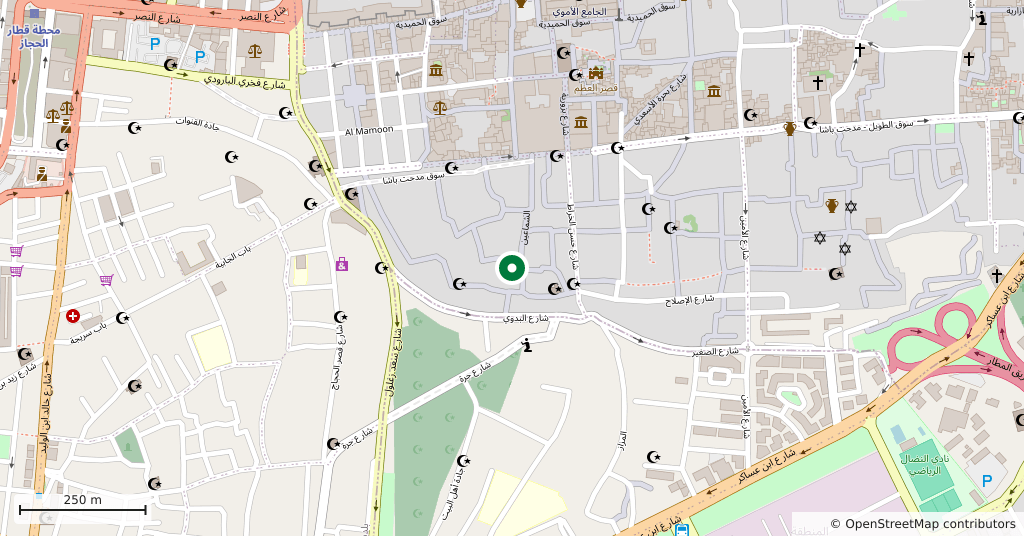
- South of the Old City, between the Midhat Pasha souk and Bab al-Saghir, Damascus
Shaghur is the quarter in the southern part of old Damascus. It is one of the oldest recorded quarters in the city and comes in two parts: Shaghur al-Juwani inside the walls, and Shaghur al-Barrani outside them, now a municipality of its own. It lies ten minutes from the crowds around the Umayyad Mosque, and those crowds never come here.
How the quarter began
Al-Beit street separates the quarter from Midan to the west, and al-Amin street separates it from the old Jewish quarter to the east. Al-Amin street is also its spine: the market and the main shops run along it. Shaghur was for a long time the quarter of the established Shia families of Damascus, and under the French mandate it was one of the centres of resistance. The poet Nizar Qabbani lived here, as did Yusuf al-Azma, defence minister of the Kingdom of Syria, and Hasan al-Kharrat, who led the revolt in Damascus during the Great Syrian Revolt of 1925. The 1936 census put the population of Shaghur at 18715, a third of them inside the walls and the rest outside.
Getting there
Any lane turning south off the Midhat Pasha souk drops you into Shaghur al-Juwani, five minutes on foot. From the Bab al-Saghir cemetery it is the same distance going north. The Sinan Pasha mosque stands at the western end of the quarter.
What to see
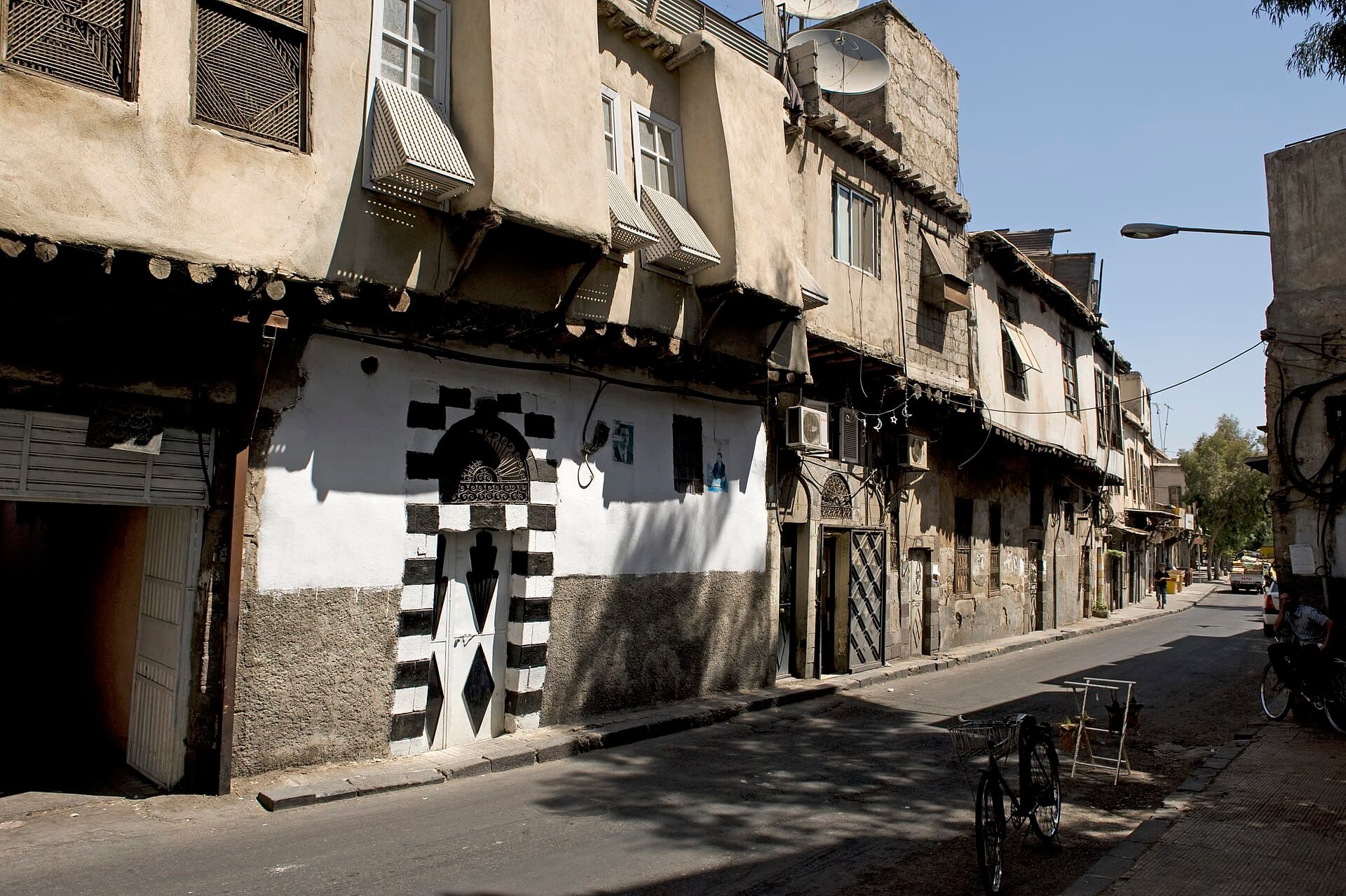
There is no list of monuments to tick off here; the quarter itself is the thing to see. The lanes are narrow, upper floors lean out over them, and the facades carry courses of black and white stone and wooden shutters. Along al-Amin street run greengrocers, spice sellers, a smith and the neighbourhood bakeries. Turn off it and you find mosque courtyards, fountain niches and closed courtyard doors. Cross the line of the wall and Shaghur al-Barrani begins: wider streets, newer buildings, the same neighbourhood life.
How long it takes
An hour and a half. The walk works best combined with the Midhat Pasha souk or the Bab al-Saghir cemetery, both within walking distance.
What most people miss
Take the first narrow gap turning south off al-Amin street. The main line looks like an ordinary market street, but one turn in the lane narrows to two metres, and that is where the real scale of the quarter shows.
Tips
- Use al-Amin street as your spine; the quarter runs on both sides of it
- Go in by the first lane turning south off the Midhat Pasha souk
- People live here: ask before photographing courtyard doors
- The Bab al-Saghir cemetery is within walking distance; pair the two
Transparency
- How this was chosen
- Written by hand; opening hours, entry fee and coordinates are kept as data. A field that is not known for certain is marked as variable rather than guessed.
- Facts checked
- September 2026
- Last updated
- September 15, 2026