The Al-Tawba Mosque
The Ayyubid mosque in the Uqaybah quarter of Damascus. A scaled-down Umayyad plan, a black-and-white courtyard, and the khan that gave the mosque its name.
- Opening hours
- Daylight hours, outside prayer times
- Entry
- Free
- Duration
- 30 minutes
- Best time
- Morning, courtyard empty and the stone pattern unshaded
- Period
- Ayyubid — with Mamluk repairs
- Address
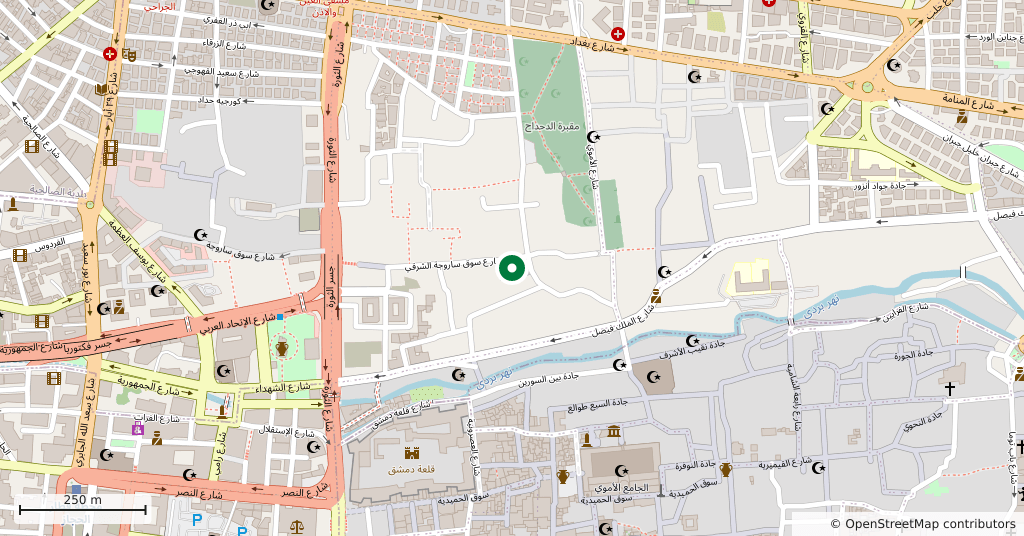
- Uqaybah quarter, north-west of Bab al-Faradis, Damascus
Some 200 metres north-west of Bab al-Faradis, in the Uqaybah quarter outside the old wall, stands a mosque Damascenes call the Little Umayyad Mosque. The reason is the plan: a long rectangular courtyard with arcades on three sides, a prayer hall of two long halls, and a small dome over the mihrab. The Ayyubid ruler al-Ashraf Musa had it built between 1231 and 1235.
Getting there
Leave the Old City by its northern gate, Bab al-Faradis, and walk a few minutes north-west. It is on the same side as Souq Saruja, so the two go into one walk.
What to see
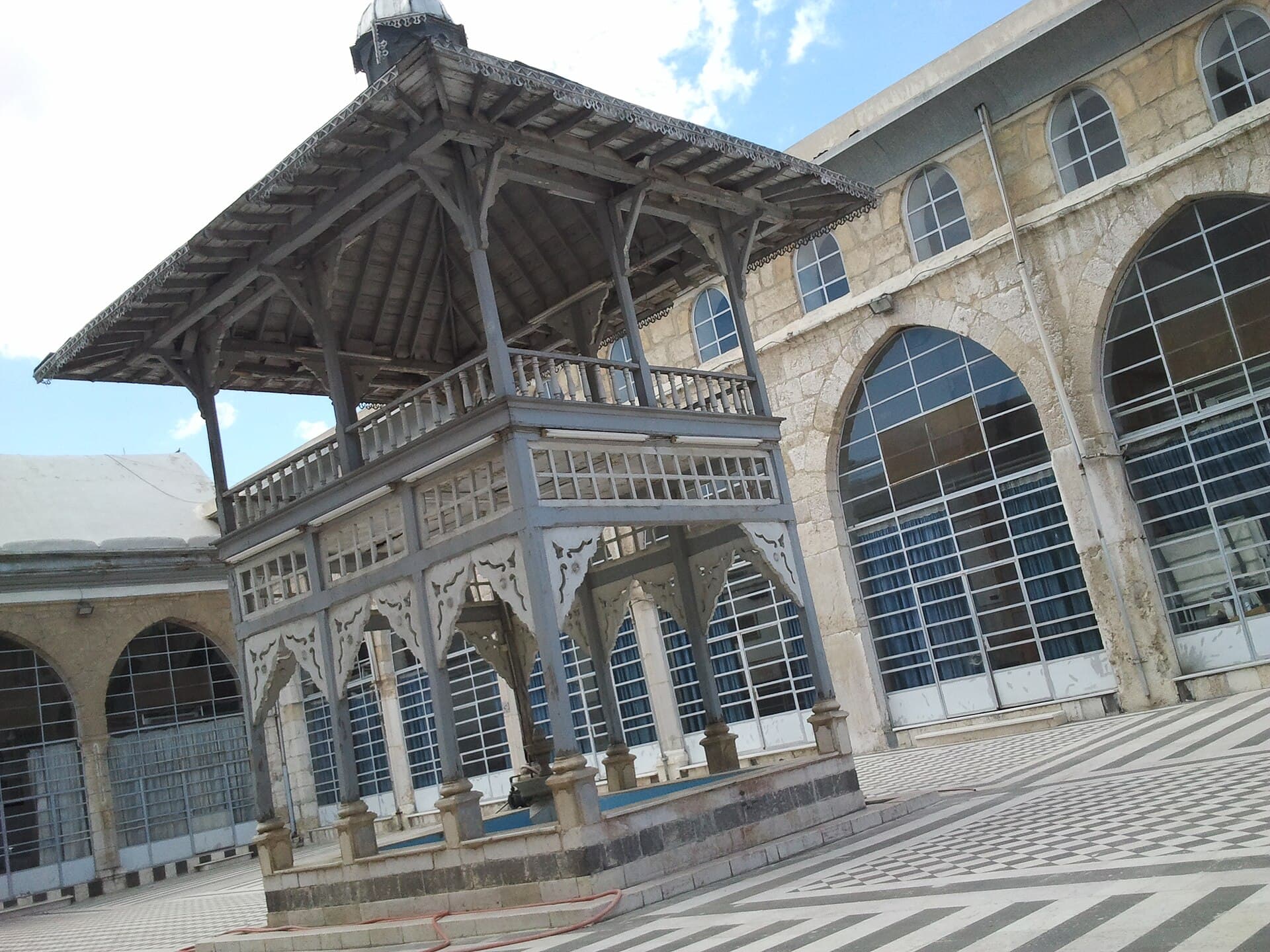
The courtyard floor is laid in black and white stone set in radiating bands. In the middle stands an ablution pavilion on wooden posts with a wide eaves overhang. It is an Ottoman addition. It is also the most photographed thing in the yard. Behind the arcades, tall arched windows open into the prayer halls. A panel on the east wall lists the scholars who have held the imamate and the pulpit here over recent centuries; Quran teaching still goes on in the building.
Where the name comes from
A caravanserai, Khan al-Zanjari, once stood on the site and had a bad reputation. When it was pulled down and a mosque put up in its place, the mosque was named tawba, repentance. Damascene sources tell the story in two versions, and both end in the same spot.
Don’t miss
The mosque came through two destructions: it burned in 1300 when the Mongol army entered the city, and the soldiers of Timur wrecked it in 1401, after which the emir Shahin al-Shuja’i repaired it. Look at the places on the prayer hall walls where the stone changes colour and texture; the courses of repair are legible there.
Tips
- The wooden ablution pavilion in the middle is a later addition; the original plan reads out from under it
- The panel of scholars' names on the east wall is to the right of the entrance
- Souq Saruja is on the same side, so walk the two in sequence
Transparency
- How this was chosen
- Written by hand; opening hours, entry fee and coordinates are kept as data. A field that is not known for certain is marked as variable rather than guessed.
- Facts checked
- September 2026
- Last updated
- September 15, 2026