Assal al-Ward
A plateau town at 1850 metres, 55 kilometres north of Damascus: cherry and apple orchards, the Ras al-Nabi spring, and monastery remains on the slope. Free.
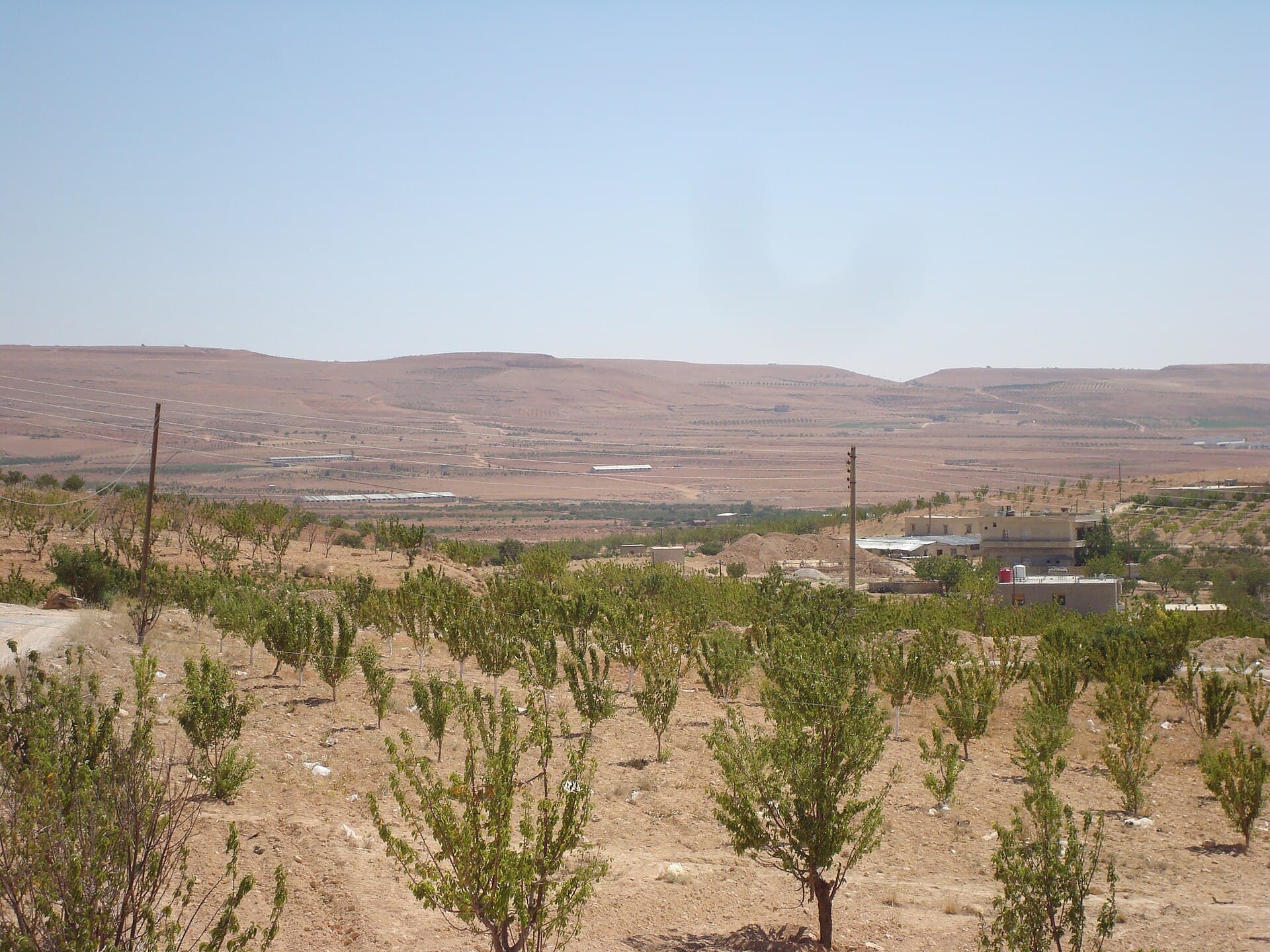
- Opening hours
- An open town, all day; the remains are on open ground
- Entry
- Free
- Duration
- 150 minutes
- Best time
- June to September; cherry and apple season, and mild air
- Period
- —
- Address
- Assal al-Ward, 55 km north of Damascus, Rif Dimashq
A town 55 kilometres north of Damascus, built at 1850 metres on a wide plateau that lies above the mountain peaks around it; geographers call it the Assal al-Ward plateau. At this height in the Qalamoun the winter is hard and the summer temperate, and the mountains around hold snow for a long part of the year. Cherries, apples, potatoes and peas come down from here.
Getting there
55 kilometres north of Damascus. The road is the northern continuation of the Saidnaya and Maaloula line; the last stretch climbs to 1850 metres. Snow can close it in winter. In those months, ask before you set out.
How long it takes
Two and a half hours. That covers the town, the ground around the spring and the remains on the slope. In orchard season it makes sense to stay longer.
What is there
Around the town stand the remains of Ras al-Nabi, the spring structure where the Majar stream rises and runs as far as Yabroud. On one mountain slope there are the remains of a church and a monastery, and a monastery cave. Neither is a prepared site — they lie between the fields and the slope, with no sign and no keeper.
The orchards
The altitude delays the cherries, and that is an advantage: the season continues here after it has closed on the plain. Apples, potatoes and peas come from the same height. There is roadside selling but no regular market; you get whatever somebody brought that day.
What is told and what is documented
A local account says Harun al-Rashid spent his summers at a place called Tell Fataya. Arabic sources give this with the note that it needs to be documented by archaeologists, and it stands here with the same note: there is an account, there is no excavation. It is not the only case in the town — the monastery remains on the slope have not been dated either. What you see is not a read history but a place not yet read.
Tips
- The road can close in the winter months; ask about it before you set out
- Ask in the town for the spring and for the remains on the slope; neither is signposted
- The cherries here ripen after those on the plain; late June into July is when the stalls are full
- You are at 1850 metres and the evening is cool even in summer; bring a light layer
Transparency
- How this was chosen
- Written by hand; opening hours, entry fee and coordinates are kept as data. A field that is not known for certain is marked as variable rather than guessed.
- Facts checked
- September 2026
- Last updated
- September 15, 2026