The Azm Palace
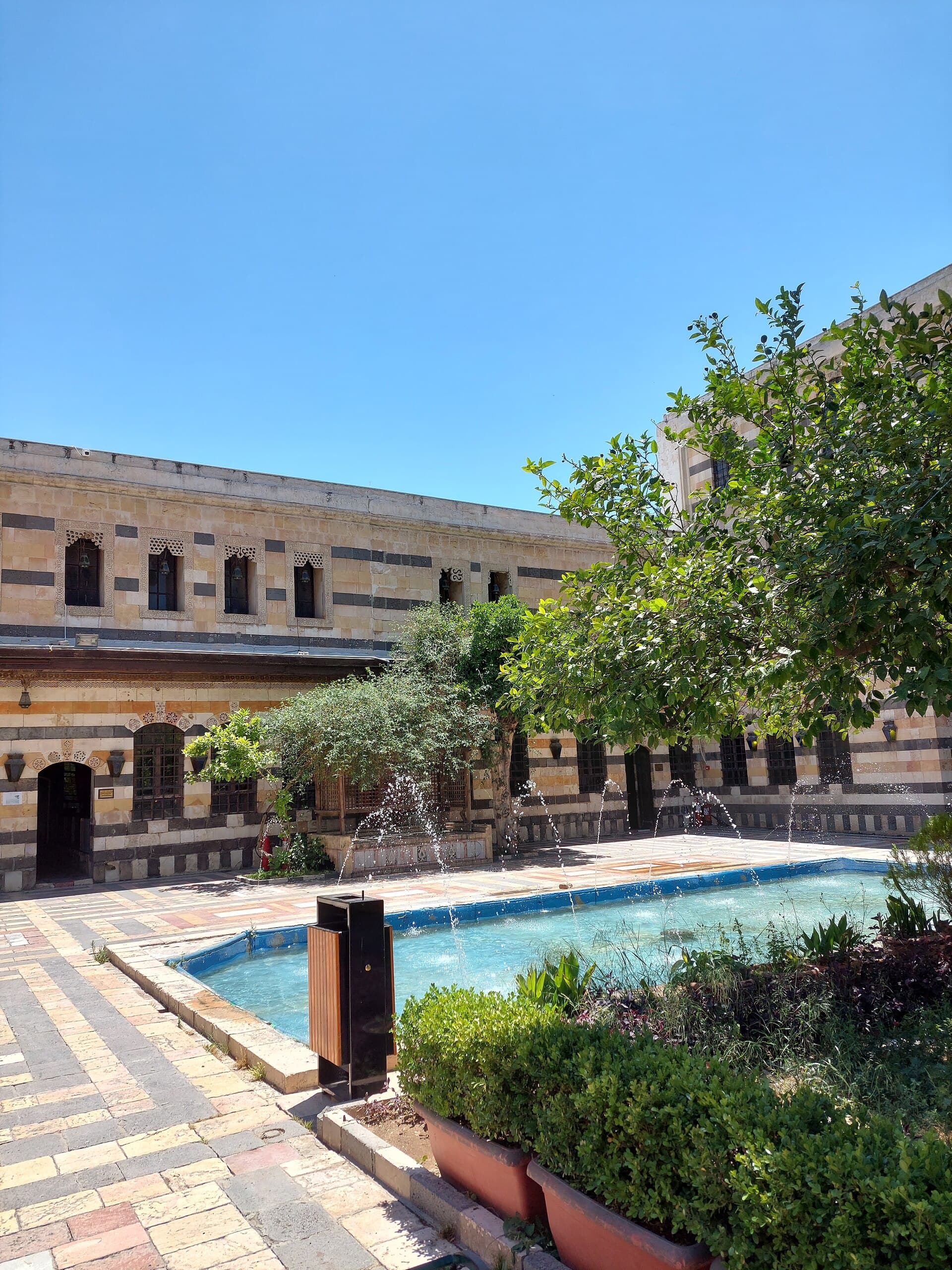
A Damascene house built for an Ottoman governor in 1749. Bands of black basalt and white limestone, a shaded courtyard, and the folk museum inside it today.
- Opening hours
- Daytime hours; closes earlier in winter. Confirm at the entrance
- Entry
- Varies — confirm at the gate
- Duration
- 75 minutes
- Best time
- Morning, while the courtyard is in shade
- Period
- Ottoman
- Address
- Near the Bzouriyah souq, Old City, Damascus
The grandest Damascene house still standing. It was built between 1749 and 1752 for As’ad Pasha al-Azm, the city’s Ottoman governor. From the street it is a plain wall; through the door a courtyard opens up with lemon trees and a pool. Nothing outside, everything inside — that inversion is the whole logic of Damascene architecture.
Getting there
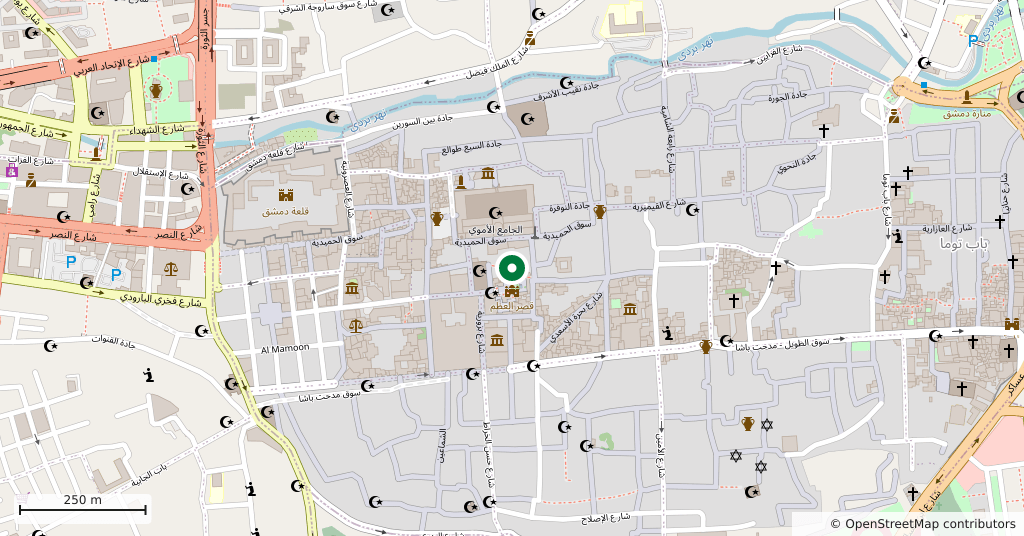
South of the Umayyad Mosque, entered from the Bzouriyah souq. It is a few minutes’ walk from the souq to the palace door.
What to see
The building splits in two: the haramlik where the family lived and the salamlik where guests were received. The black-and-white banding on the walls — it is called ablaq — sets the region’s two stones side by side. Today it holds the Museum of Arts and Popular Traditions, with Damascene mother-of-pearl inlay, silk and household objects laid out room by room.
Do not miss
The main hall on the north side of the courtyard has a painted wooden ceiling, and most visitors walk through without looking up. The palace was badly damaged in the French bombardment of 1925 and then repaired; some of the woodwork you see is that repair.
Tips
- Look up in the north hall: the ceiling is painted wood
- Morning light for photographs; the courtyard takes hard sun after noon
- Entering from the Bzouriyah souq takes you past the spice merchants
Transparency
- How this was chosen
- Written by hand; opening hours, entry fee and coordinates are kept as data. A field that is not known for certain is marked as variable rather than guessed.
- Facts checked
- August 2026
- Last updated
- September 15, 2026