Bab al-Faraj
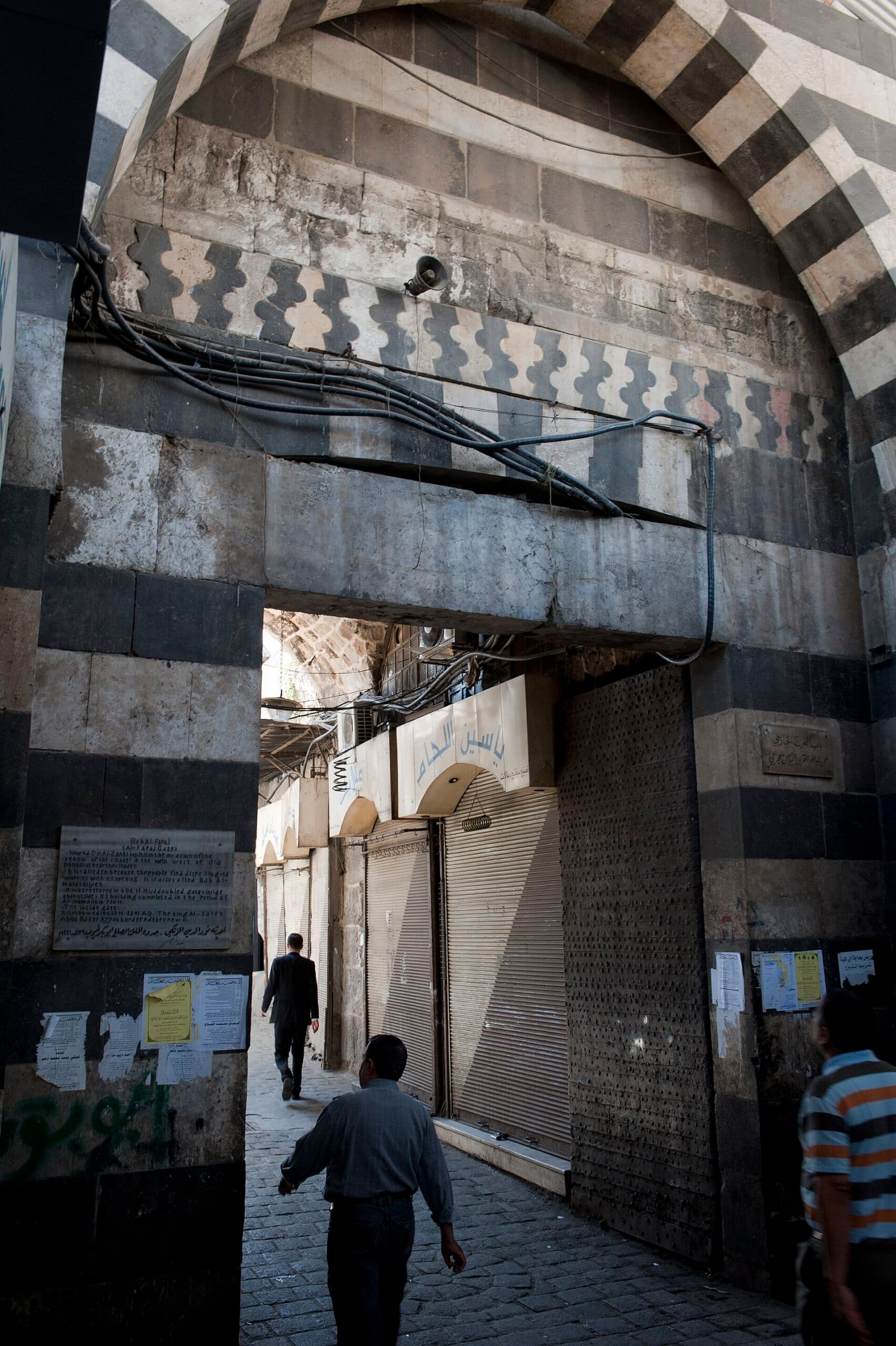
The eighth gate of the Damascus wall, and the only one opened from scratch after the Islamic conquest. Nur al-Din built it; the Ayyubids made it double.
- Opening hours
- Open passage, any hour; the shops around it open by day
- Entry
- Free
- Duration
- 20 minutes
- Best time
- Morning, while the market is still thin under the arch
- Period
- Zangid — Ayyubid — Mamluk
- Address
- Bab al-Faraj, between Amara and Manakhiliyya, Damascus
Seven of the eight gates in the wall of Damascus are Roman. This one is not. Nur al-Din Zangi opened Bab al-Faraj in 1154-1155 while refortifying the city, which makes it the wall’s only gate of the Islamic period, and the reason its story runs separately from the others.
Getting there
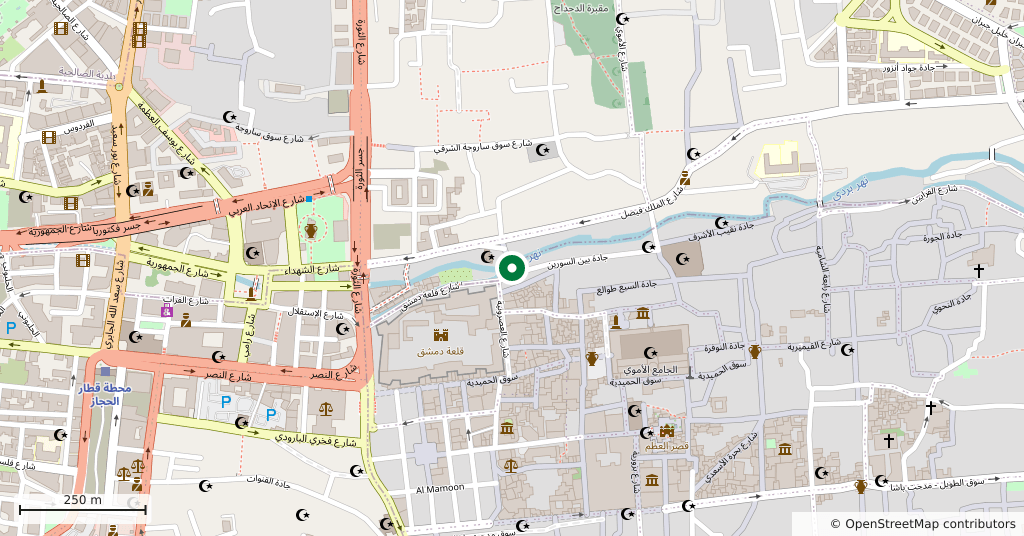
It stands just beside the northeast corner of the citadel, between the Amara and Manakhiliyya quarters. Its northern passage opens onto King Faisal Street. If you are looking for the gate you have to look inside the market, because the gate now works as a market arch.
How the gate grew
Al-Malik al-Salih Ayyub added a second passage to the north in 1239-1240 and turned it into a double gate. The inscription set into the left jamb is dated Ramadan 639, that is 1242. The structure was rebuilt under the Mamluks in 1396-1397 and restored after 1980. The opening you walk through today is 381 centimetres high and 305 centimetres wide.
What to see
The inner gate sits on the line of the wall, the outer one against the Barada. In the narrow passage between them stand an Ayyubid-period mill and, today, hardware shops and key cutters. Outside the gate is the Bab al-Faraj mosque, and next to it the site of the Barada bridge of 1336, from the Mamluk period.
The gate’s three names
Faraj means relief. Under the Ottomans the gate was called Bab al-Bawabijiyya, after the shoemakers who had taken over the ground around it; today it is called Bab al-Manakhiliyya, this time after the market around it. The name of the gate has changed with the trade working beside it.
What most people miss
Look at the plaques on either side of the arch. On the left is a panel explaining the gate, on the right an Arabic inscription cut into the stone. Both sit within the black and white ablaq courses. Most visitors pass under the gate without seeing either.
Tips
- The gate is inside the market; step under the passage to see the facade
- The panel on the left gives the gate's history; the stone inscription on the right is in Arabic
- An Ayyubid mill stands in the narrow passage between the two gates
- The northeast corner of the citadel is a few minutes on foot
Transparency
- How this was chosen
- Written by hand; opening hours, entry fee and coordinates are kept as data. A field that is not known for certain is marked as variable rather than guessed.
- Facts checked
- September 2026
- Last updated
- September 15, 2026