The Cherubim Monastery above Saidnaya
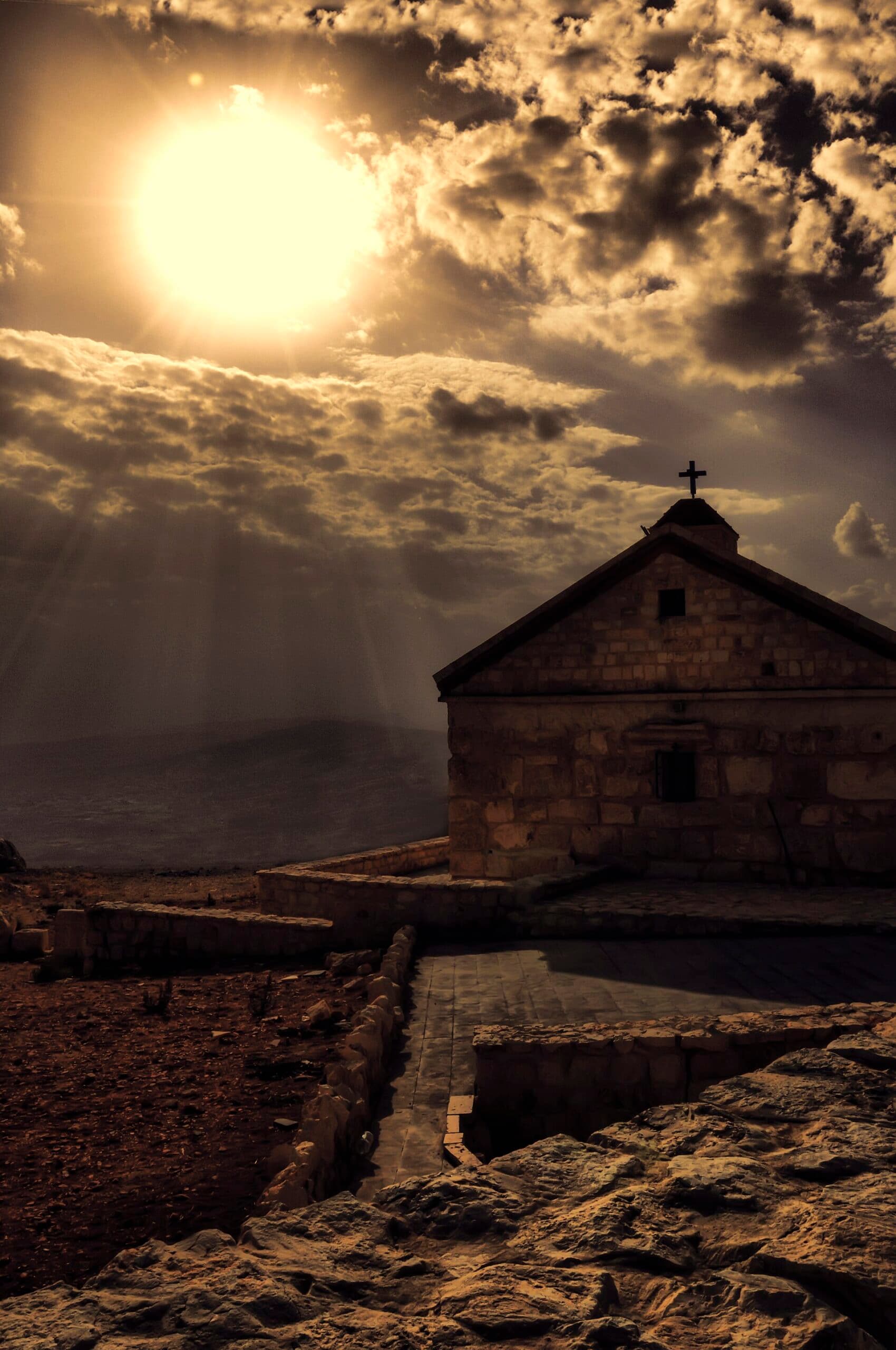
A monastery on the mountaintop above Saidnaya, some 2000 metres above sea level. Damascus and the Ghouta open from its terrace; entry free, mountain road.
- Opening hours
- Daylight hours; gate times vary, confirm in Saidnaya before you climb
- Entry
- Free
- Duration
- 60 minutes
- Best time
- Afternoon, when the terrace over the Ghouta has the light
- Period
- Byzantine — 6th century; repaired in 1981
- Address
- Mountain summit above Saidnaya, rural Damascus
On the summit of the mountain above Saidnaya, roughly 2000 metres above sea level, stands a monastery. The Cherubim Monastery offers two things at once: early monastic caves cut into the mountain, and the view from its terrace. Stand on that terrace and Damascus, the Ghouta, Mount Sannine and Mount Hermon sit in a single frame.
Getting there
The road climbs from Saidnaya and the last stretch is steep. There is no public transport, so you need a car or a taxi arranged in Saidnaya. If you are putting Saidnaya Monastery and Maaloula into one day, this works as the third stop of that day, since the road falls between the two.
What to see
The site has two parts. The lower one is a series of caves cut into the mountain: caves for communal living, single cells for prayer, and an amphitheatre carved into the rock. The upper one is the large stone buildings. The difference between them shows two separate eras of monastic life, one sheltering in rock and one building in stone. The statue of Christ beside the monastery is held to be the largest in the Middle East, and its base carries a line: I have come to save the world.
What the sources say
Shihab al-Din al-Umari describes the place in Masalik al-Absar as a Byzantine work, a large monastery of large white stone, with a flowing spring outside it and windows looking over the Ghouta. The monastery’s active period is tied to the 6th century and to the emperor Justinian, who ruled between 527 and 565. When the traveller Pococke climbed up here in 1727 he found a single monk and a working church. The buildings then fell into ruin, and in 1981 they were repaired by Anne Catherine Abi Haidar, abbess of the Saidnaya Monastery, who also had trees planted around them; Patriarch Ignatius IV Hazim appointed Archimandrite Yuhanna to the site.
What not to miss
The amphitheatre cut into the rock. Most visitors look at the statue and the view and go back down, yet the oldest layer of the monastery is in that line of caves. Think about the hour as well: if you want the terrace in afternoon light, plan the climb around it, because the way down is hard in the dark.
Tips
- There is no public transport; you need a car or a taxi arranged in Saidnaya
- The last stretch of road is steep and can ice over in winter
- The rock-cut amphitheatre and the prayer caves are in the lower part, and most visitors miss them
- The wind on the summit never stops; bring one extra layer even in summer
Transparency
- How this was chosen
- Written by hand; opening hours, entry fee and coordinates are kept as data. A field that is not known for certain is marked as variable rather than guessed.
- Facts checked
- September 2026
- Last updated
- September 15, 2026