Farrukh Shah and Bahramshah Mausoleums, Damascus
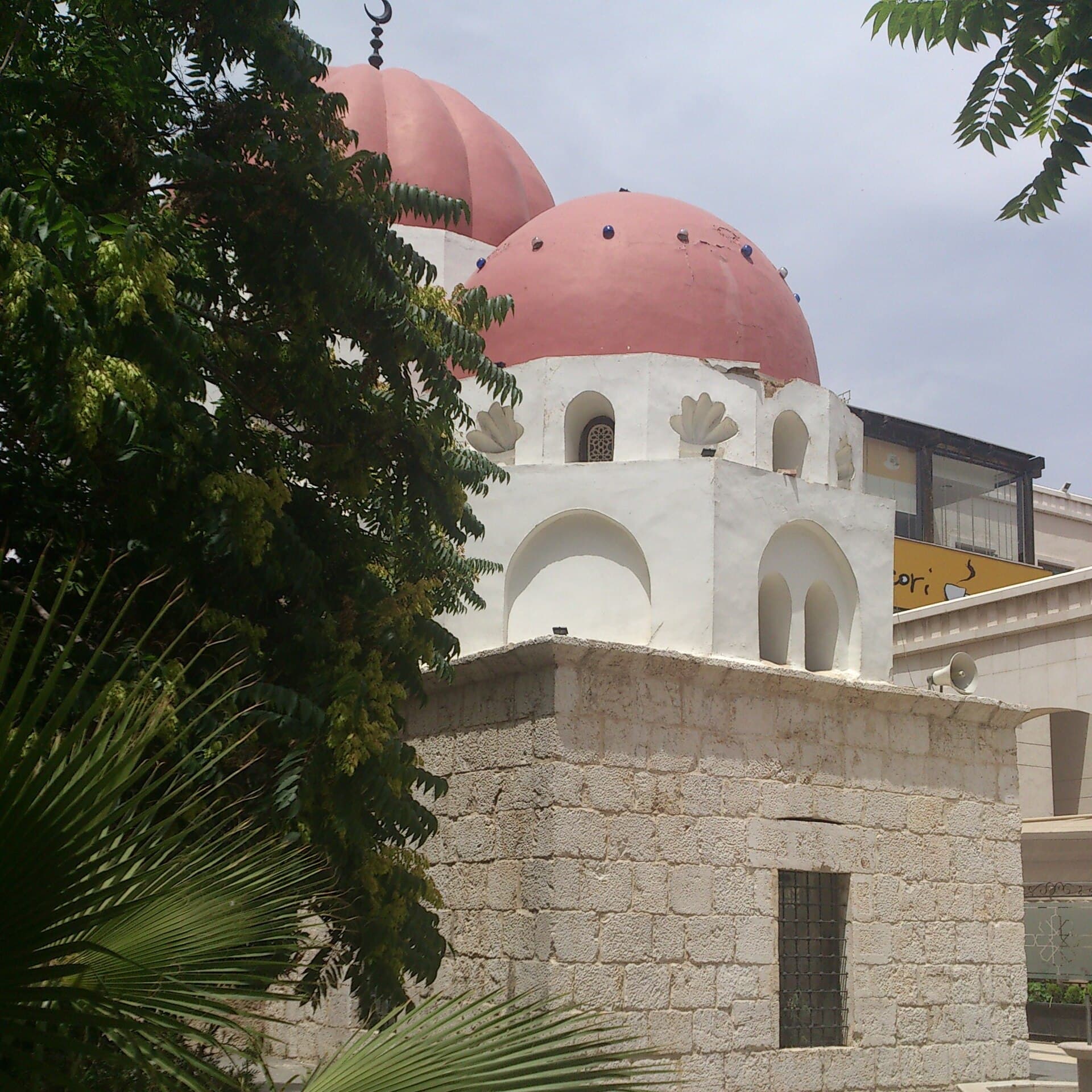
Two Ayyubid tombs side by side in Abu Rummaneh, Damascus: the dome of Saladin’s nephew Farrukh Shah, now a prayer room, and his son’s tomb, restored in 2005.
- Opening hours
- In use as a mosque (2013 record) — current state and visiting hours not verified
- Entry
- Variable — confirm on site
- Duration
- 20 minutes
- Best time
- Around the noon prayer, when the mosque is most likely to be open
- Period
- Ayyubid
- Address
- Eastern end of Al-Jalaa Street, beside Qasr al-Diyafa Square, Abu Rummaneh, Damascus
Two domed Ayyubid tombs standing side by side at the eastern end of Al-Jalaa Street in Abu Rummaneh, a modern district of Damascus. The Ayyubids were the dynasty founded by Saladin. One tomb belongs to Saladin’s nephew Izz al-Din Farrukh Shah; the other, joined to it on the south, to his son al-Amjad Bahramshah. Both were once part of madrasas. The madrasas are gone and the tombs remain. Farrukh Shah’s is used today as a small mosque.
Who was Farrukh Shah
Izz al-Din Farrukh Shah ibn Shahanshah ibn Ayyub was Saladin’s nephew and his most trusted relative. He was emir of Baalbek and governed Damascus as Saladin’s deputy. He died in 578 of the Islamic calendar, that is 1182. His mother endowed the madrasa. The historian Ibn Kathir writes that it stood at al-Sharaf al-A’la, north of the city, taught both Hanafi and Shafi’i law, and had the Amjadiyya tomb beside it.
The inscription in the dome
The historian Badran read the inscription above the window on the east wall of the dome. It says the tomb was built by the mother of al-Malik al-Mansur Izz al-Din Farrukh Shah. Only the tomb survived from the madrasa. In time even the trace of the grave disappeared and the building became a mosque; the Damascus Directorate of Awqaf, the office that manages religious endowments, lists it today as the Farrukh Shah Mosque.
The southern tomb: the Amjadiyya
Farrukh Shah’s son al-Amjad Bahramshah was also emir of Baalbek. He died in 629, that is 1232. His tomb was built at his request by al-Muzaffar Nur al-Din Umar, who died in 638, that is 1240. That is why the building goes by two names, Amjadiyya and Bahramiyya. Its madrasa has gone; the tomb remains. Its windows once looked out over the Green Hippodrome, al-Maydan al-Akhdar, near Marjeh.
What the 2005 restoration changed
Repairs in the second half of the 20th century damaged the Amjadiyya. It was restored again, to scientific standards, as part of a large building project around it, and reopened in 1426 of the Islamic calendar, that is 2005. The work came at a cost: the original entrance was sealed, the east window became the entrance, the floor was raised and the copper crescent on top of the dome was lost. The door used today is in fact the tomb’s east window.
Where they are and what you see today
The tombs are in Abu Rummaneh at the eastern end of Al-Jalaa Street, on Argentina Street beside Qasr al-Diyafa Square. They are within walking distance of Jisr al-Rais. According to a 2013 Awqaf note, the buildings now sit inside the plot of a modern development; which side the plot is entered from is not verified, so ask on the spot. A 2013 photograph shows the two red domes, their white drums with shell niches, and their dressed-stone bases between the trees. The same record describes the mosque as in use; its current state and visiting hours are not verified. Twenty minutes is enough to see both tombs from outside.
Don’t miss
The entrance to the Amjadiyya. Where you stand at the door was once the east window that looked over the Green Hippodrome. The real door was sealed in 2005. So today you enter this tomb from a place its builders never meant as a way in.
Tips
- Ask on the spot which gate leads into the plot; the tombs sit inside a modern development
- The Amjadiyya's present entrance is its old east window; the original door was sealed in 2005
- Look for the inscription above the window on the east wall of Farrukh Shah's dome
Transparency
- How this was chosen
- Written by hand; opening hours, entry fee and coordinates are kept as data. A field that is not known for certain is marked as variable rather than guessed.
- Facts checked
- September 2026
- Last updated
- September 15, 2026