The Hammam al-Malik al-Zahir
One of the oldest working bathhouses in Damascus, built in 985 beside the Zahiriyya Madrasa. Come for the domed cold room and its inlaid marble basin.
- Opening hours
- Variable — separate hours for men and women, check at the door
- Entry
- Variable — scrub, massage and towels charged separately, check at the door
- Duration
- 90 minutes
- Best time
- Late afternoon, after a day in the souqs
- Period
- Fatimid, later Mamluk
- Address
- Malik al-Zahir street, al-Amara al-Juwaniyya, Old City, Damascus
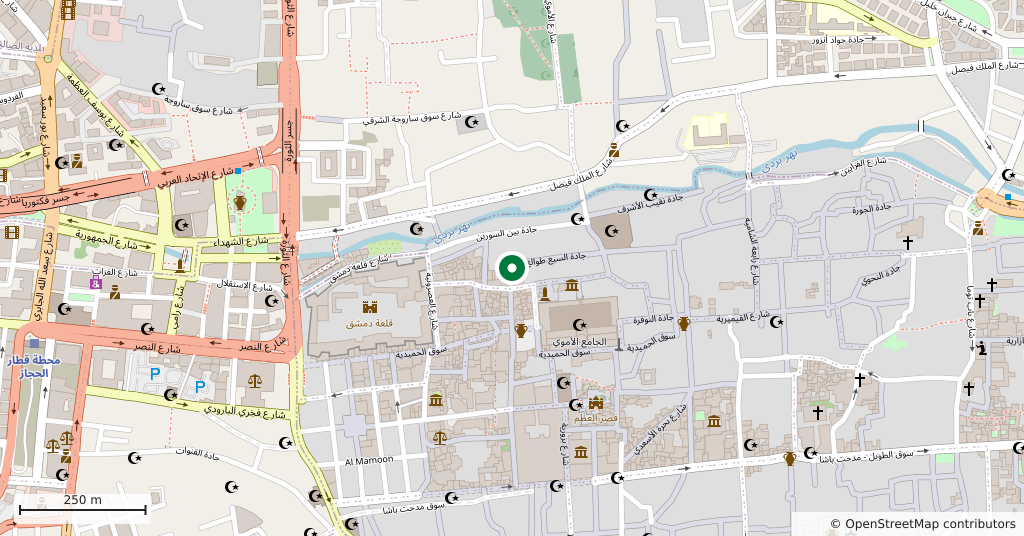
One of the oldest bathhouses in Damascus, and still taking customers. The building dates to 985, in the Fatimid period, which makes it older than most of the monuments in the city. It stands inside the Old City, in the al-Amara al-Juwaniyya quarter, right beside the Zahiriyya Madrasa.
Getting there
North-west of the Umayyad Mosque, on Malik al-Zahir street. Leave the mosque and ask for the Zahiriyya Madrasa and you have found the bath as well, since the two adjoin. Five minutes from the eastern end of the Al-Hamidiyah Souq. The door is at street level and low.
How long it takes
An hour and a half. With a scrub and a massage it runs to two hours. Coming only to look is awkward: this is a working bath, not a ruin to tour.
What to see
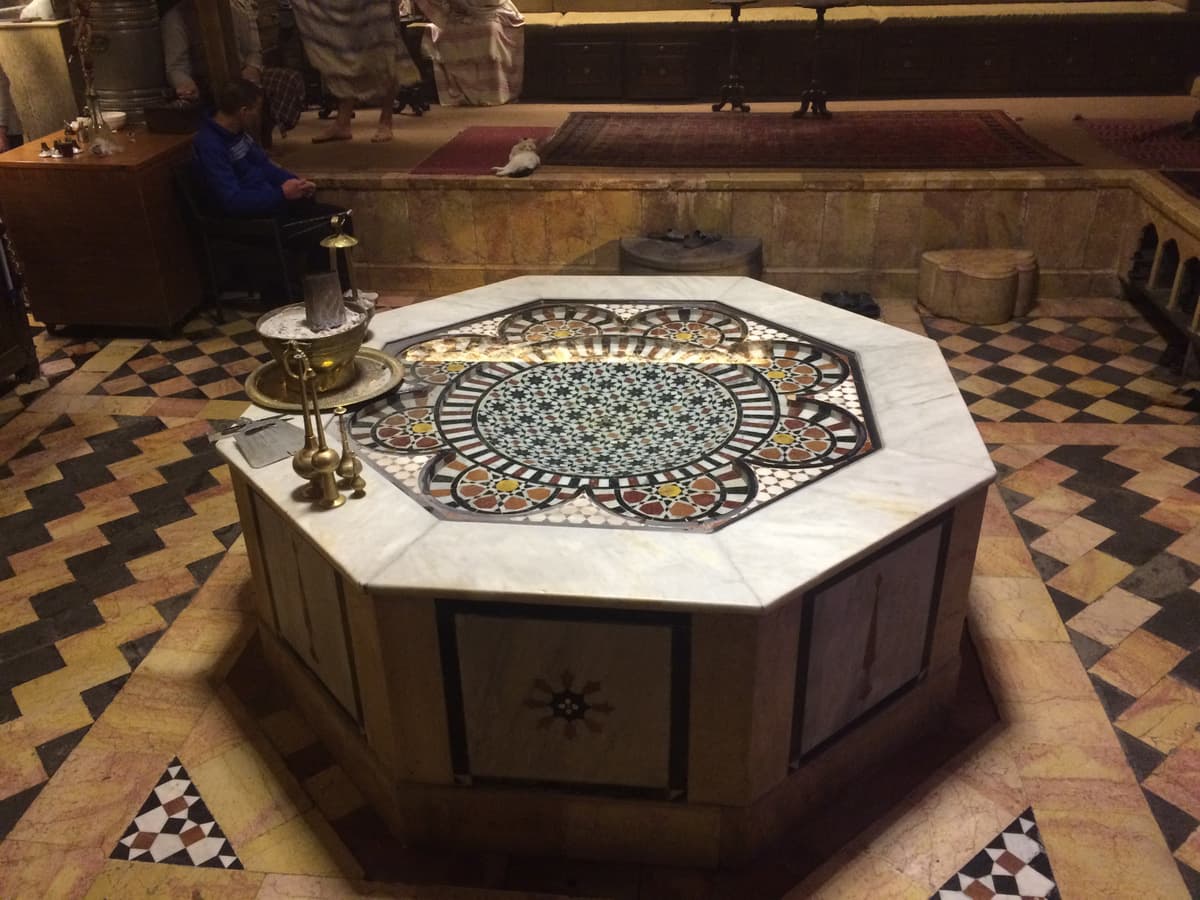
A Damascene bath works in three stages. The outer cold room, the barrani, is a wide hall with raised platforms around it and a marble basin at the centre. Niches are cut into the wall under each platform for wooden clogs, lockers sit above, and clothes hang on wooden pegs. Facing the main door is the attendant’s platform, where valuables are kept in a wooden chest. The ceiling rises on arches springing from the four walls, passes through a windowed drum and opens into a wide dome set with panes of coloured glass, with chains hanging down for lanterns.
The middle warm room, the wastani, holds the washing places and the lavatories. It is the passage between the cold room and the furnace, and its dome carries vents. The innermost hot room, the juwani, has washing iwans, single cubicles and a platform over the furnace at its centre. Steam and massage happen here.
The bath was first called the Hammam al-Aqiqi, after Ahmad ibn al-Husayn al-Aqiqi, whose house stood next door. The Mamluk king al-Sa’id Nasir al-Din bought both bath and house in 1277 and renamed it after his father, al-Zahir Baybars.
What most people miss
The basin in the cold room. It is octagonal, cut from marble, and its top is worked as a flower shaped medallion in inlaid coloured stone, red, yellow and black. The floor follows the same logic in black and white chequers and zigzags. Walk in and head straight for a locker and you will miss it. Stop just inside the door and look down first.
Tips
- Towels and a waist wrap are usually not included, so ask at the door
- Valuables go in the chest on the attendant's platform, so do not carry much cash
- Women's hours are not offered every day, so telephone ahead
Transparency
- How this was chosen
- Written by hand; opening hours, entry fee and coordinates are kept as data. A field that is not known for certain is marked as variable rather than guessed.
- Facts checked
- September 2026
- Last updated
- September 15, 2026