Heraqla
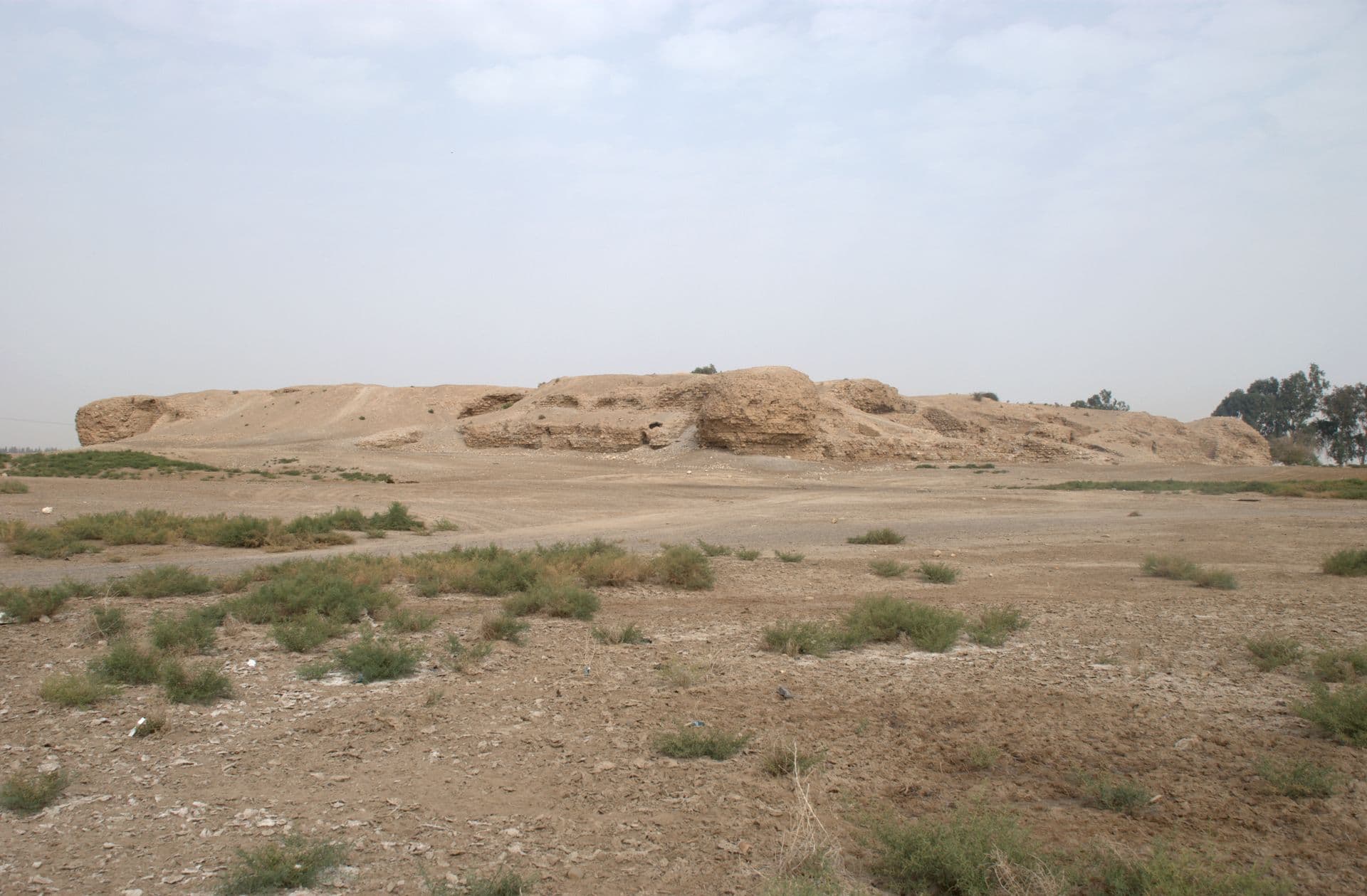
6 kilometres west of Raqqa, an Abbasid monument raised to mark a victory: a square stone platform, four round towers and a circular wall 510 metres across.
- Opening hours
- Open ground, through the day; no guard or timetable could be confirmed
- Entry
- Variable — confirm at the entrance
- Duration
- 60 minutes
- Best time
- Late afternoon, when the square platform finally throws a shadow
- Period
- Abbasid
- Address
- 6 kilometres west of Raqqa
West of Raqqa, out in the fields, a square stone platform rises from flat ground. Harun al-Rashid had it built after his victory over the Byzantines and the taking of the city of Heraclea, when he returned to Raqqa. It looks like a palace, but it was not raised to be lived in; it was raised to mark an event. There is nothing else like it in Syria.
Getting there
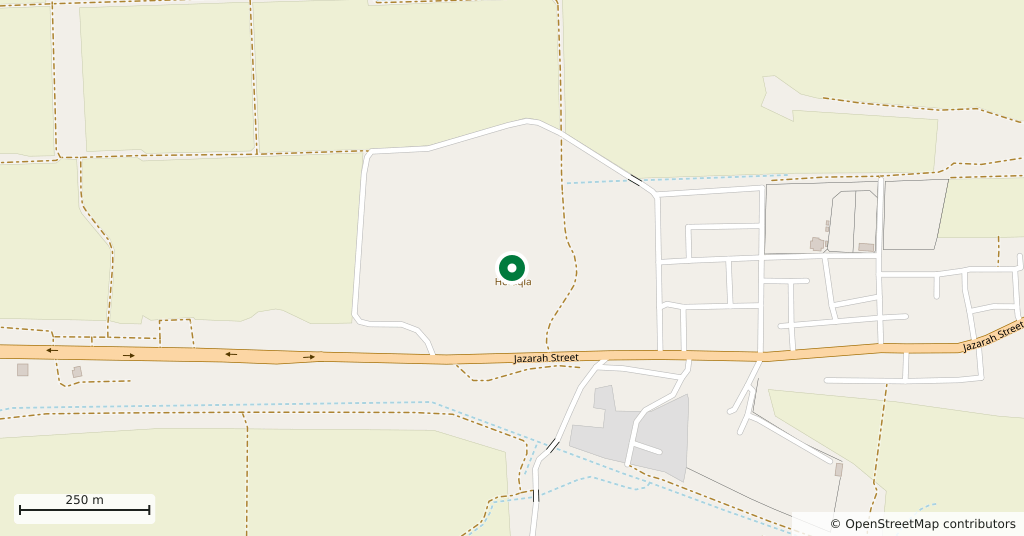
6 kilometres west of Raqqa, off the road out of the city. It stands in farmland and is visible from a distance, but the turning is narrow and you will need to ask.
How long it takes
An hour. Half of it on the platform and in the iwans, the rest walking the line of the outer wall.
What to see
The main building sits on a square plan of 100 metres by 100, with heavy round towers at the four corners. Three of its sides carry iwans that open outward, facing four large gates. The whole thing rests on a platform more than six metres high: to make soft field soil carry that weight the builder laid a deep foundation first and brought the stone from a hill near Raqqa. Around it runs a circular wall 510 metres in diameter, built of white gypsum stone, between 250 and 270 centimetres thick, with rectangular tower-like buttresses on the outside set 18 to 19 metres apart.
What not to miss
The southern stretch of the wall. Aerial photographs taken for the survey Sarre and Herzfeld carried out at the beginning of the last century showed a dry canal coming from the west toward Raqqa and cutting the wall at this point. Herzfeld thought it might be the channel called the Nil, which Harun al-Rashid drew off the Euphrates: the Balikh river was close by, but its bed lay too low to water the land north-west of Raqqa.
Where it stands now
Raqqa and its countryside saw heavy fighting between 2013 and 2017, and much of the city was destroyed. The present condition of Heraqla, and whether the site is guarded, cannot be confirmed from independent sources. Ask locally before setting out.
Tips
- Climb onto the platform; the line of the circular wall only reads from above
- There is no shade and no water on site — bring your own
- The field tracks turn to mud after rain and a low car will struggle
- See the Raqqa Museum the same day; the context for the finds is there
Transparency
- How this was chosen
- Written by hand; opening hours, entry fee and coordinates are kept as data. A field that is not known for certain is marked as variable rather than guessed.
- Facts checked
- September 2026
- Last updated
- September 15, 2026