Shrine and Mosque of Hujr ibn Adi, Adra
An Ayyubid mosque and shrine in old Adra, built with Roman columns and repaired in 1205. Wrecked in 2013 and reportedly reopened; check before you go.
- Opening hours
- Could not be confirmed — check on site
- Entry
- Variable — check on site
- Duration
- 30 minutes
- Best time
- Before noon, outside prayer times
- Period
- Ayyubid
- Address
- Adra al-Balad (old Adra), northeast of Damascus, Rif Dimashq
A mosque and shrine in Adra al-Balad, the old core of the town of Adra northeast of Damascus, built around what is held to be the grave of Hujr ibn Adi al-Kindi, killed in the 7th century. The Sunni Ayyubids, the dynasty of Saladin, built it, and it was repaired in 1205; some of its columns and bricks were taken from a nearby Roman ruin. It was attacked and wrecked in 2013. After the fall of the Assad government in December 2024 it is reported to have been rebuilt and reopened to visitors; confirm its current state before going.
Who was Hujr ibn Adi
A Muslim of the Kinda tribe who took part in the conquest of Syria. He supported Ali ibn Abi Talib and opposed Muawiya, the first Umayyad caliph; in the year 53 of the Islamic calendar, about 671-673, he was executed together with his companions. He is usually counted among the Tabiun, the generation after the Prophet’s companions, though Ibn Sad and al-Baladhuri count him as a companion.
What the building holds
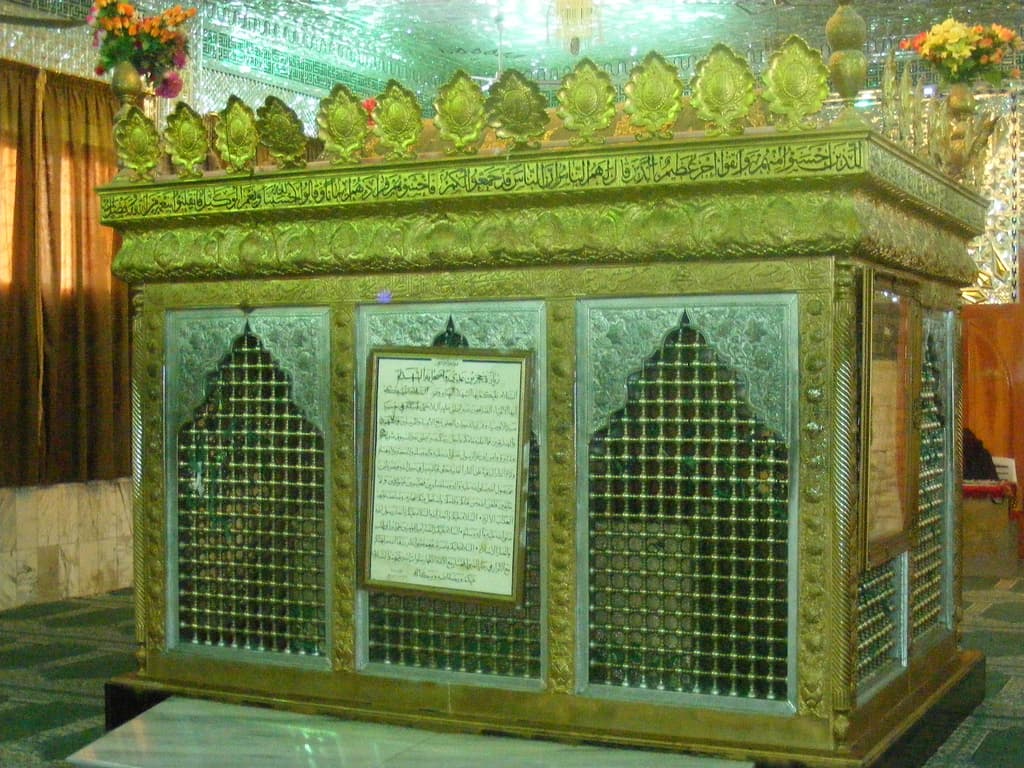
The Ayyubid mosque encloses the grave. Part of the columns and bricks are reused from a Roman building in the area. Although a Sunni dynasty built it, it became a place of pilgrimage for Twelver Shia Muslims as well. A photograph taken in 2007 shows a green and gold latticed cenotaph over the grave, framed by bands of Quranic verse, with a panel carrying the visitation prayer for Hujr and his companions. That arrangement dates from before 2013.
What happened in 2013
On 2 May 2013 Jabhat al-Nusra attacked the mosque and wrecked the tomb. Claims that the grave had been emptied spread quickly with photographs. Members of the group arrested later said no body had been found in the grave, and the photograph of a body turned out to show someone else. Arabic sources give the date of the attack as 27 April.
Can you visit today
The report that the mosque was rebuilt and reopened rests on a single unsourced statement and could not be independently confirmed. If it is open, it works as a shrine: modest dress is required, and the tomb area can fill up at prayer times.
Getting there
Adra lies northeast of Damascus on the way out to the Homs road. The shrine is in the old town, Adra al-Balad. It is not marked by name on the map, so ask for it in town.
Do not miss
The reused columns. Among the supports of the Ayyubid mosque are pieces from the Roman period, the clearest sign of the layers the building was put together from.
Tips
- Before going, ask locally whether it has reopened; only one report says it has
- Dress modestly; women need a headscarf
- Look closely at the columns; some come from the nearby Roman ruin
Transparency
- How this was chosen
- Written by hand; opening hours, entry fee and coordinates are kept as data. A field that is not known for certain is marked as variable rather than guessed.
- Facts checked
- September 2026
- Last updated
- September 15, 2026