Ibn Arabi Mosque and Tomb
The mosque built around Ibn Arabi’s grave in Salihiyya: a courtyard raised by Sultan Selim in 1518, Ottoman and Mamluk tilework, and the tomb chamber downstairs.
- Opening hours
- Open around prayer times; the tomb chamber during daylight
- Entry
- Free
- Duration
- 45 minutes
- Best time
- Between noon and mid-afternoon, when the courtyard is in shade
- Period
- Ottoman (tomb: post-Ayyubid)
- Address
- Shaykh Muhyi al-Din quarter, Salihiyya, Damascus
The Andalusian mystic Muhyi al-Din Ibn Arabi was born in Murcia in 1165, died in Damascus in 1240, and was buried in Salihiyya on the slope of Mount Qasiyun. The first structure over the grave was small: a mihrab, a minbar, a sarcophagus. What stands today was rebuilt in 1518 on the order of Sultan Selim I, to a design by Shihab al-Din ibn al-Attar. Damascenes use three names for it — the Shaykh Muhyi al-Din Mosque, the Salimi Mosque, the Khunkar Mosque.
Getting there
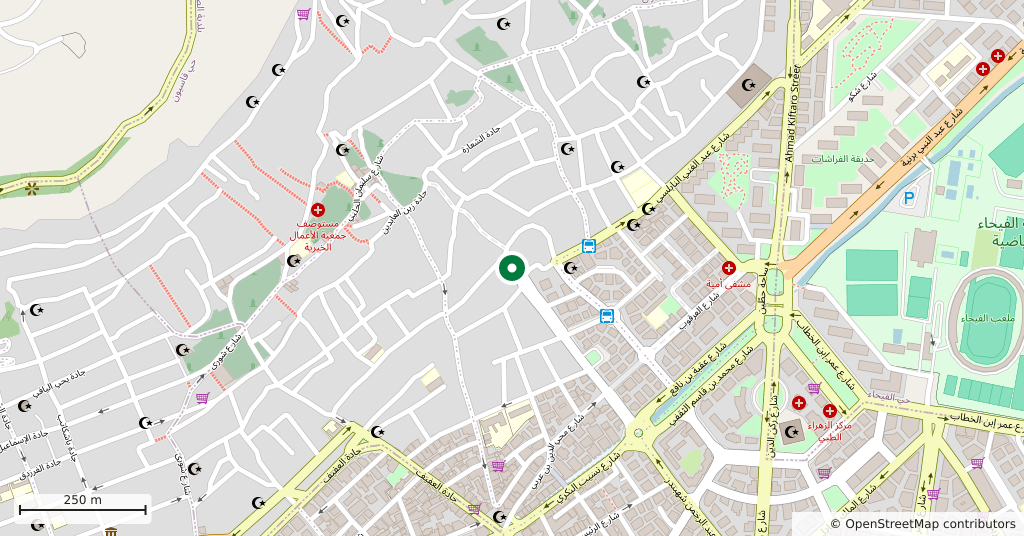
In the middle of Salihiyya, in the Shaykh Muhyi al-Din quarter beside the Yazid canal. Coming from the old city you climb north towards Qasiyun; it takes more than half an hour on foot, and shared minibuses run up to Salihiyya. The mosque sits inside the market street, and from the pavement only its minaret shows.
What to see
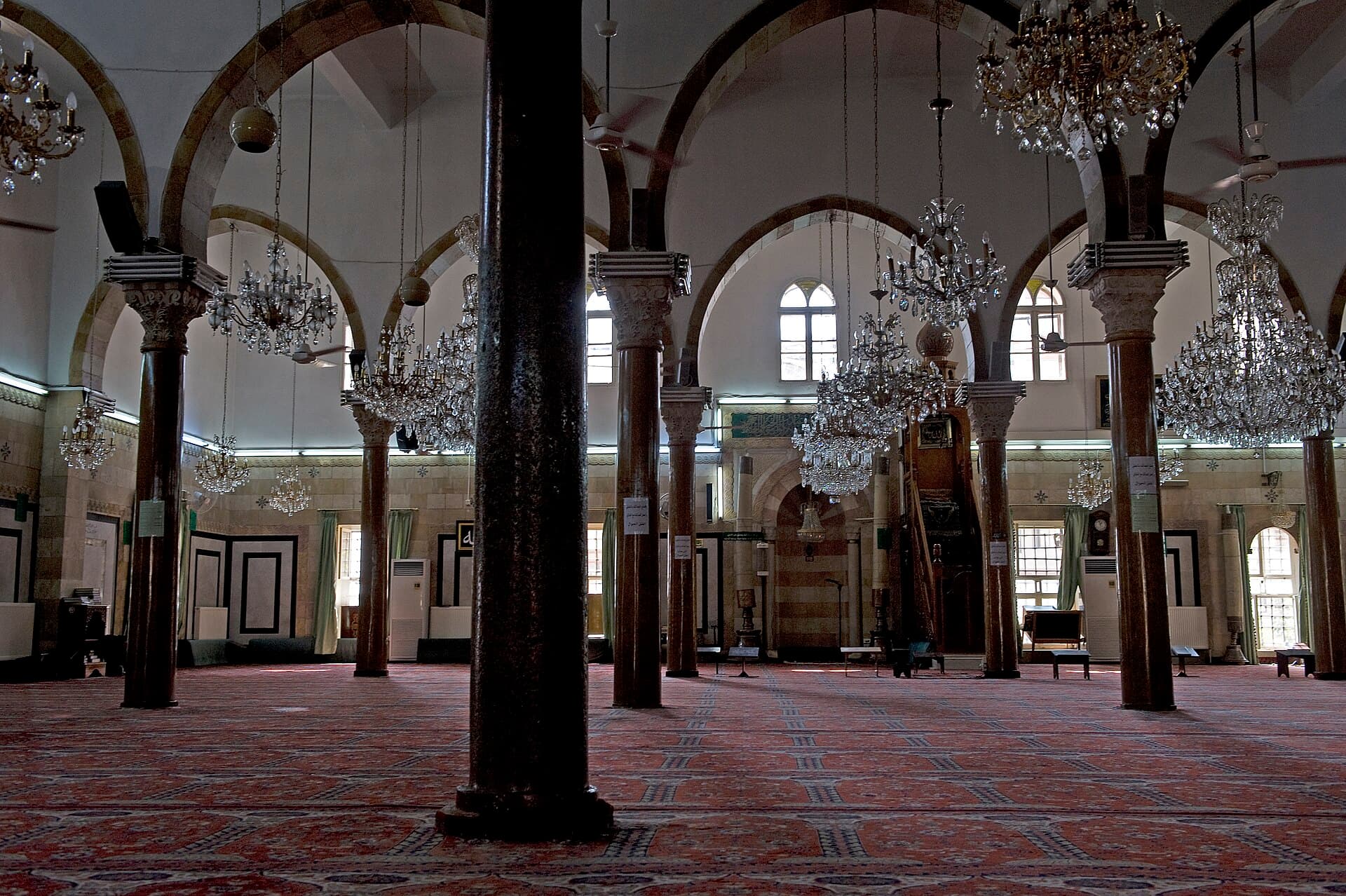
The courtyard is Ottoman in plan: coloured marble and yellow-and-white stone underfoot, a small Damascene pool in the middle, a wide portico on four arches along the south side. The prayer hall rests on five arches and four columns, taken from the building of Janbulat, the deputy governor of Damascus. The mihrab is wooden. The dome is faced in tile. Some of the tile panels on the walls are Ottoman and some Mamluk in style — they stand side by side and the difference is easy to spot.
The tomb chamber
Ibn Arabi’s grave lies in a domed room at the south-east corner of the courtyard. A stone stair goes down to it. The sarcophagus stands in the centre, behind a silver grille. His two sons, Sa’d al-Din and Imad al-Din, are buried beside him. The Algerian emir Abd al-Qadir was buried in the same room; his remains were later moved to Algeria and the empty grave is still shown.
Don’t miss
The naura, the water wheel, next to the mosque. It was built to lift water from the Yazid canal and it is still in place. Look too at the inscription over the door: it records that Sultan Selim rebuilt the mosque and gives two separate dates, one for the start and one for the finish.
Tips
- A stone stair leads down to the tomb chamber; women use a separate entrance
- Look closely at the tile panels: Ottoman and Mamluk work on the same wall
- The water wheel beside the mosque is visible from the outer lane, not the courtyard
Transparency
- How this was chosen
- Written by hand; opening hours, entry fee and coordinates are kept as data. A field that is not known for certain is marked as variable rather than guessed.
- Facts checked
- September 2026
- Last updated
- September 15, 2026