Qasr Says, the Umayyad Palace at Jabal Says
An Umayyad desert palace built by al-Walid I in 705-715 beside an extinct volcano 100 km southeast of Damascus, with a Ghassanid rock inscription from 528.
- Opening hours
- Open ground; visiting arrangements could not be confirmed
- Entry
- Variable — check on site
- Duration
- 90 minutes
- Best time
- Spring; the lake beside the crater holds water then and dries out in summer
- Period
- Umayyad
- Address
- Dumayr district, about 100 km southeast of Damascus, Rif Dimashq
About 100 km southeast of Damascus, in the Dumayr district, an extinct volcano stands where the steppe meets the volcanic country of the Hauran. At its foot lie the remains of a summer palace built for the Umayyad caliph al-Walid I (705-715): a palace, a mosque, a bath house, khans and storerooms. A rock inscription dated 528 shows the place was already a border post before the Umayyads, the dynasty that ruled from Damascus in the 7th and 8th centuries. The road crosses empty steppe, and current security and access in the area could not be confirmed.
What the place was
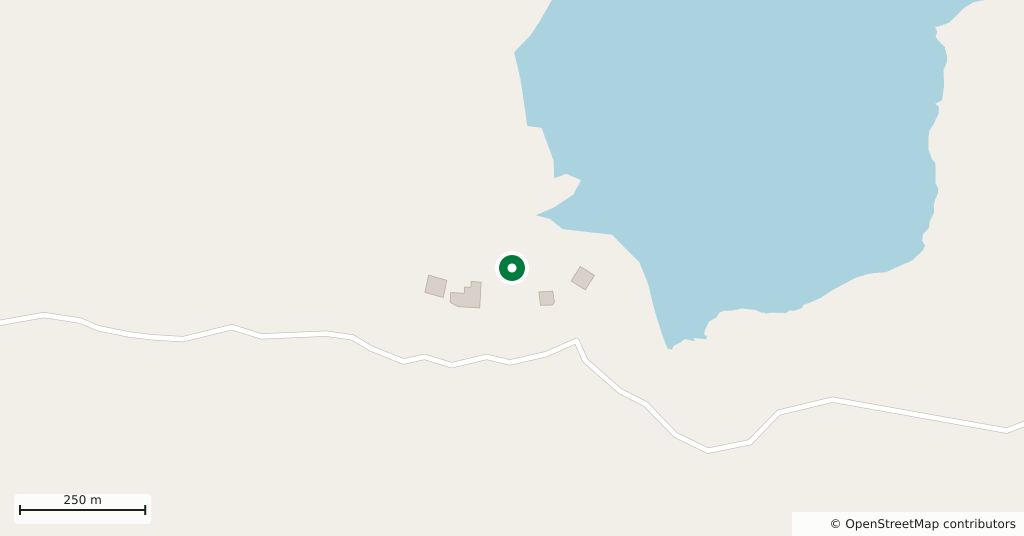
A Bedouin summer residence. According to the historian Jere Bacharach, al-Walid built it as a seasonal stop between his base at al-Qaryatayn and another desert fort, Qasr Burqu. The site depended on water. A shallow lake gathered beside the crater and dried out in summer; Yaqut al-Hamawi recorded it as Usays, and in good years it was called al-Habra. To the east begins the Safa desert, where tribes grazed their flocks in spring.
What to see
The crater is about 2 km long and half a kilometre wide. Next to the palace are the remains of houses for the caliph’s retinue. The bath house counts among the oldest Islamic baths built outside a town, and the palace among the first Islamic buildings to use carved stucco. The palace was burned and pulled down at the end of the Umayyad period. It is thought to have been repaired and reused under the Mamluks. What still stands is limited: an entrance arch, the lower courses of walls and scattered stone.
The rock inscription
The Jebel Usays inscription is dated 528 or 532/3 and written in Paleo-Arabic script. It reads: “I, Ruqaym son of Maarrif of Aws; King Harith sent me to Usays as a border guard.” King Harith is the Ghassanid ruler al-Harith ibn Jabala, and the text gives him the title al-malik. It is one of three Paleo-Arabic inscriptions known in Syria. Al-Ush published it in 1964, Grohmann in 1971.
How it came to be known
Exploration began in 1805. The first researchers took the ruins for a Roman building; later work showed they were Umayyad. In 2008 the General Establishment of Geology surveyed the area as a possible source of raw material for cement.
Getting there
Routes start from Dumayr or from east of Jabal al-Arab. There is no settlement near the ruins. Security and which roads are open could not be confirmed when this page was written; the trip only makes sense with current local information and someone who knows the area.
Do not miss
The inscription on the rocks. Most of the palace is down to its foundations; those few lines are what prove the place was a border post some two centuries before the Umayyads.
Tips
- Before setting out, get current security and road information from a local source
- There is no settlement near the ruins; fill up with fuel and water in Dumayr
- Go with a guide who knows where the Paleo-Arabic inscription is
Transparency
- How this was chosen
- Written by hand; opening hours, entry fee and coordinates are kept as data. A field that is not known for certain is marked as variable rather than guessed.
- Facts checked
- September 2026
- Last updated
- September 15, 2026