The Jarrah Mosque
A plain neighbourhood mosque beside the Bab al-Saghir cemetery. Founded in 1182 under Saladin and enlarged in 1233, with a small courtyard and timber roof.
- Opening hours
- Variable — may be locked outside prayer times, check at the door
- Entry
- Free
- Duration
- 20 minutes
- Best time
- Morning, before the cemetery visitors arrive
- Period
- Ayyubid, the dynasty founded by Saladin
- Address
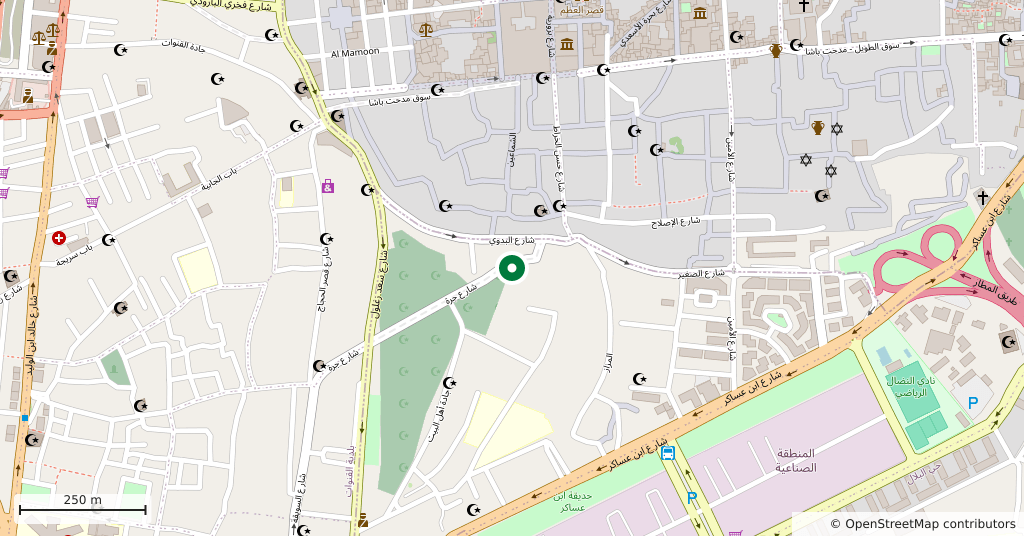
- By the Bab al-Saghir cemetery, Shaghour, Damascus
A small mosque south of the old city, just west of Bab al-Saghir. It carries almost no ornament and appears on no itinerary. The reason to come is what stands next to it: the Bab al-Saghir cemetery, where prominent Damascenes have been buried for centuries and where pilgrims still arrive daily. The Jarrah Mosque very likely worked as a cemetery mosque, serving those visitors.
Getting there
Coming from inside the walls, leave by the Bab al-Saghir gate and follow the cemetery wall; the mosque sits on its western edge. From the southern end of the Midhat Pasha Souq it is about ten minutes on foot. The lane is narrow and unsigned, so the cemetery wall is the easiest thing to steer by.
How long it takes
Twenty minutes is enough. Pair it with the cemetery. The two adjoin and work as a single stop.
What to see
The plan is close to square. A small courtyard sits in the middle, enclosed by arcades on three sides, with an ablution basin at its centre. Three arched openings lead into the prayer hall, and the windows beside them look back onto the courtyard. The hall is a single rectangular bay aligned with the qibla, roofed with timber trusses. Inside there is no carving, no tilework, no marble revetment.
The mosque was built in 1182, during the years Saladin governed Damascus. It takes its name from Jarrah al-Mudahhi, who renovated it later. In 1233 it was enlarged and restored again under the patronage of al-Ashraf Musa ibn al-Adil.
What most people miss
The bareness is the point. Madrasas going up in Damascus in the same century were given courses of black and white stone and muqarnas hoods over their doors, and this mosque received none of it. If you want to see the gap between a quarter mosque and a sultan’s foundation inside one walk, head east on leaving and look at the stonework along the Midhat Pasha line. Ten minutes separate them, and centuries of class separate what they were built to say.
Tips
- Plan it with the cemetery; it is not large enough to come for on its own
- The hall can be locked outside prayers, so step into the courtyard and ask
- Women need a headscarf, and none is lent at the door
Transparency
- How this was chosen
- Written by hand; opening hours, entry fee and coordinates are kept as data. A field that is not known for certain is marked as variable rather than guessed.
- Facts checked
- September 2026
- Last updated
- September 15, 2026