The Manjak Mosque
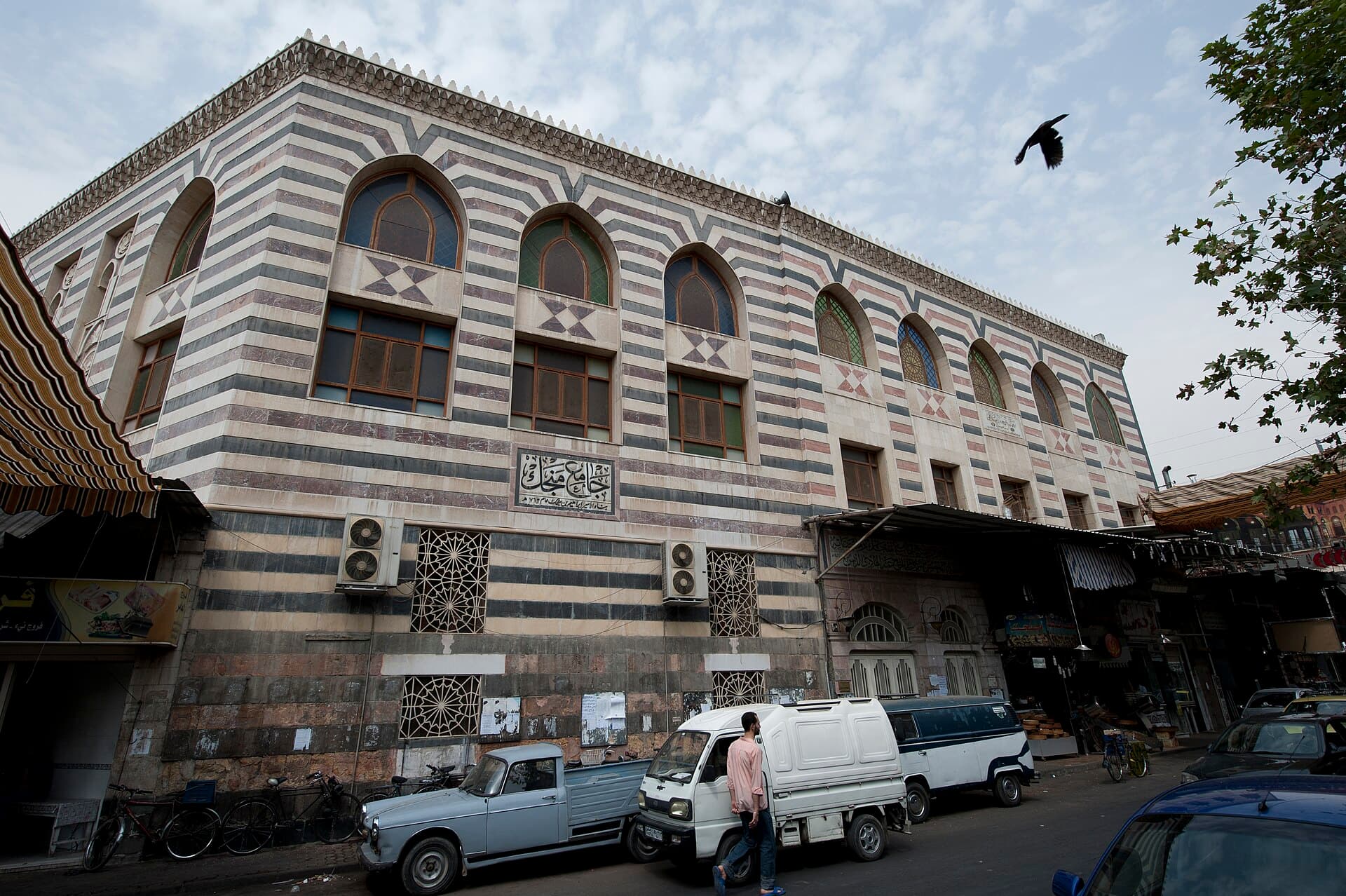
A Mamluk mosque on the market street of Midan in Damascus, on the road the pilgrim caravans took south. Its banded front runs above the rows of shops.
- Opening hours
- Daylight hours, outside prayer times
- Entry
- Free
- Duration
- 20 minutes
- Best time
- Morning, as the market opens
- Period
- Mamluk, with Ottoman and 20th-century restorations
- Address
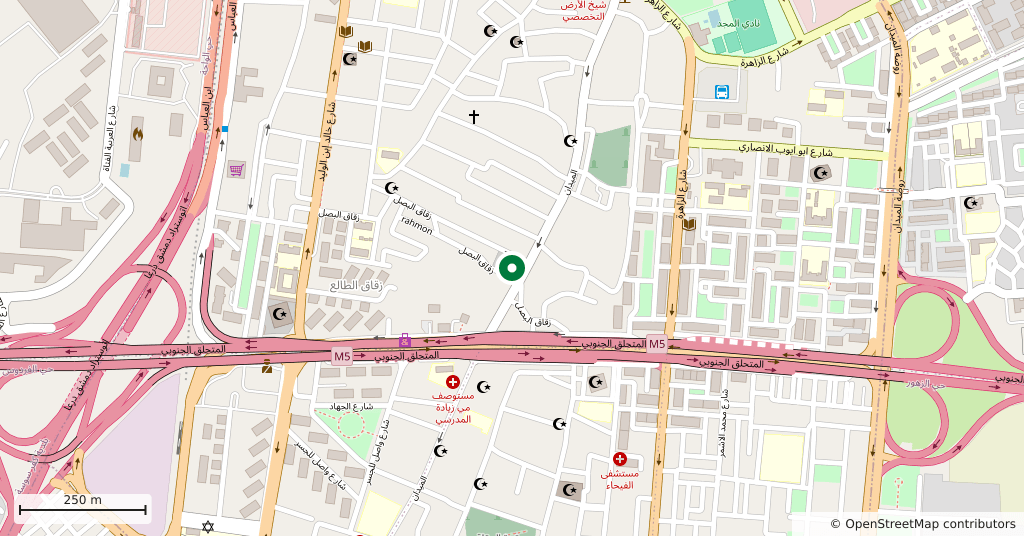
- Souq al-Jazmatiya, Jisr al-Fajl, Midan, Damascus
A mosque in Midan, in the middle of Souq al-Jazmatiya, at the Jisr al-Fajl crossing. This is the line along which pilgrim caravans left Damascus for Daraa and the south, and the long market street of Midan is that road itself. The mosque rises above the rows of shops as a block banded in black and white stone.
Who built it
The founder was the Mamluk amir Nasir al-Din Muhammad ibn Ibrahim ibn Manjak. The elder of the family, Manjak the Great, was deputy governor of Damascus, and the Manjakiya madrasa and the Manjak bath house both carry his name. Sources disagree on the year of building: some give 815 of the Hijri calendar, around 1412, while others say 1370 or 1400. Naming a single year without reading the inscription would be wrong. The first prayer hall was small; it was pulled down and rebuilt larger under Sultan Barsbay, and further comprehensive work followed in the Ottoman period and in the 20th century.
What to see
The facade. Courses of black and white stone run unbroken along the whole wall, a row of pointed-arch windows sits on the upper floor, and a stone inscription tablet is set at the corner. The ground floor is shops: the mosque sits above the souq rather than beside it. The dome and the minaret repeat the same banding.
What most people miss
The top of the minaret. The shaft is banded black and white and carries three bulbous finials — an ending you will not see on another minaret in Damascus. It is invisible from inside the market; cross to the corner opposite the mosque and look at the roofline.
How long it takes
Twenty minutes. The mosque is still in use and Quran classes are held here. The stonework surviving from the Mamluk period is mostly on the east and north walls, so give those a separate look. The restorations took away much of the original fabric, and it is better to arrive knowing that.
Tips
- To see the three bulbous finials, cross to the corner opposite the mosque and look at the roofline
- Mamluk stonework survives mostly on the east and north walls; the west front is restoration
- The mosque sits above the market street of Midan; carry the walk on through Souq al-Jazmatiya
Transparency
- How this was chosen
- Written by hand; opening hours, entry fee and coordinates are kept as data. A field that is not known for certain is marked as variable rather than guessed.
- Facts checked
- September 2026
- Last updated
- September 15, 2026