The Mar Sarkis Monastery in Maaloula
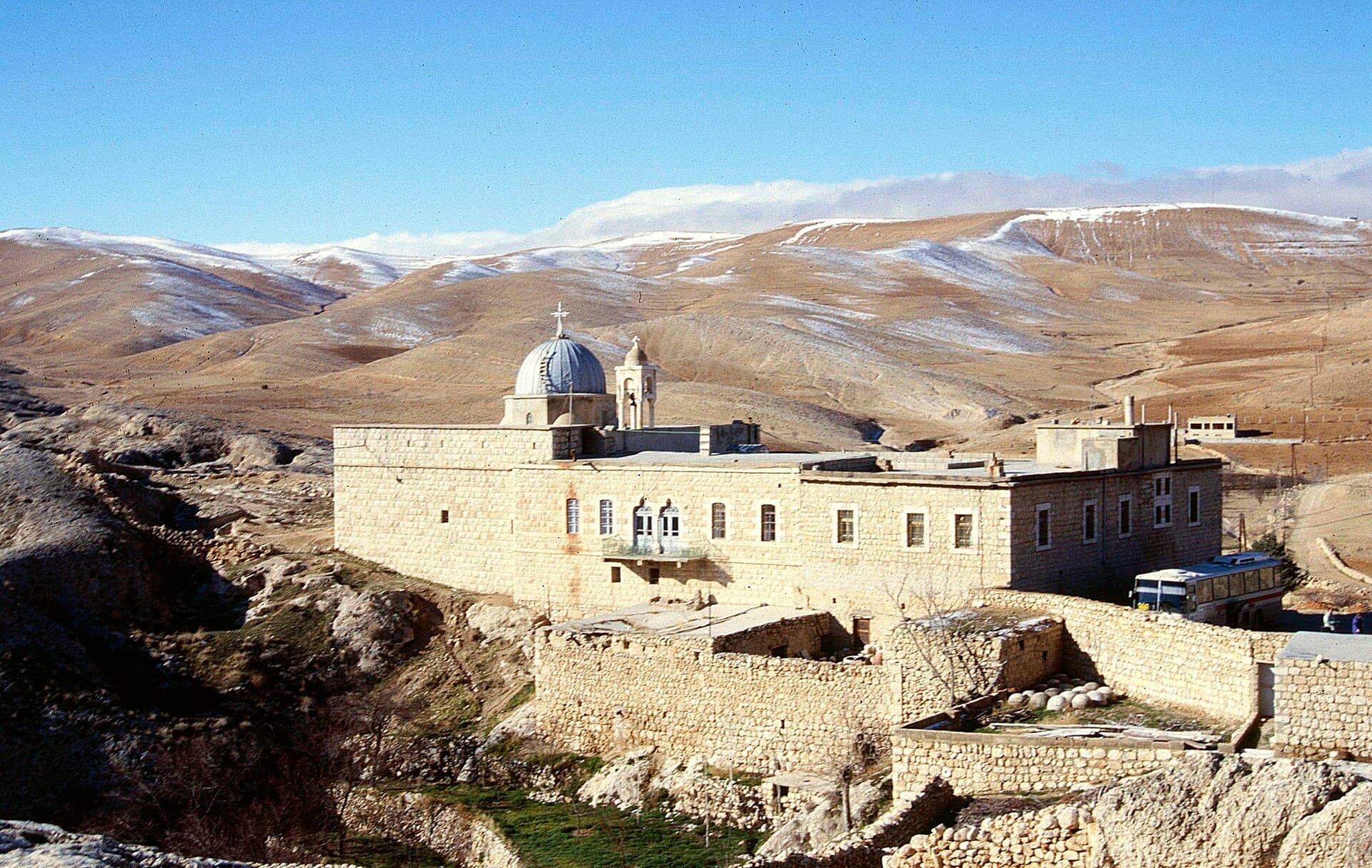
A 4th-century church built over a pagan temple on the cliff above Maaloula. Behind its icon screen is the temple’s altar stone; an icon of Thecla dates from 1820.
- Opening hours
- Daytime; current hours unconfirmed, check at the gate
- Entry
- Varies — check at the gate
- Duration
- 45 minutes
- Best time
- Spring and autumn; in winter the clifftop is windy and snowy
- Period
- 4th-century church on a temple site; Salvatorian order since 1732
- Address
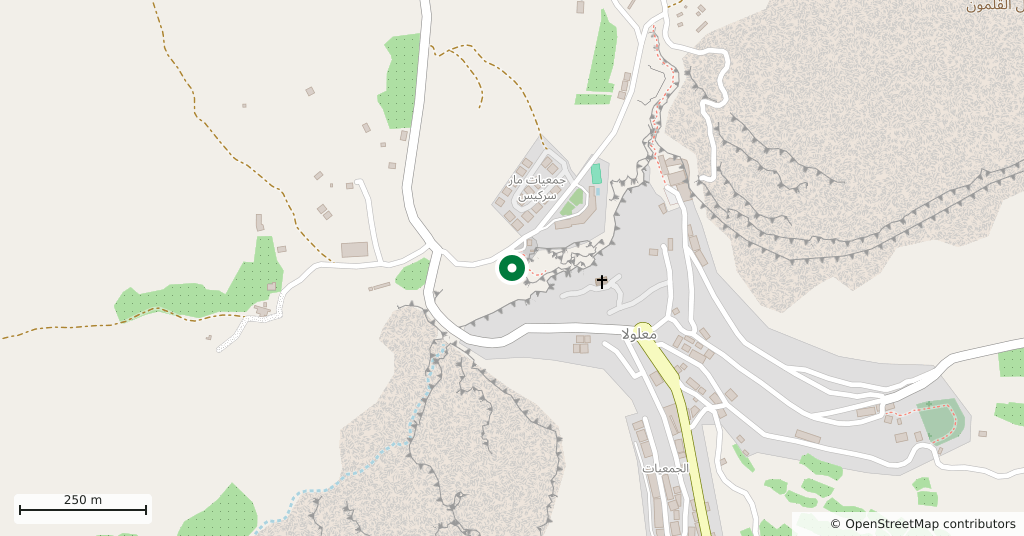
- Top of the western cliff above Maaloula, Rif Dimashq
A Melkite Greek Catholic monastery, meaning Byzantine rite in communion with Rome, on top of the cliff above Maaloula’s western gorge at over 1500 metres. Since 1732 it has belonged to the Basilian Salvatorian order, known in Arabic as al-Mukhallisiyya. The church is older than the monastery and was built over a pagan temple. Sources date the church to between 313 and 325, and the founding of the monastery to around 500.
Where the name comes from
Sergius and Bacchus were two Roman officers. They were martyred at Resafa around 297, under the emperor Maximian. The monastery keeps their feast on 7 October.
Getting there
The monastery sits above the village on the flat top of the western cliff, and a road runs up to the gate. The Convent of Saint Thecla below is close to 400 metres away in a straight line, and the gorge between them links the two. From Damascus to Maaloula is a little over an hour by car.
How long it takes
Forty-five minutes. The church is small; most of the time goes on the icons and the altar stone.
What is there
The church is built of local stone, with a marble altar under a wooden dome. According to eSyria, the temple beneath it was dedicated to Apollo, and Ionic capitals from it can still be seen in place. The cedar beams in the walls date from the 19th century. The monastery’s original wooden entrance door is now kept in its museum.
Among the icons is one that joins the Last Supper and the Crucifixion on a single panel. There is also an icon of the Virgin known as “Our Lady of the Spring”, and an icon of Saint Thecla dated 1820. A 13th-century icon of Sergius and Bacchus was lost in 2013.
What most people miss
The altar stone behind the iconostasis, the screen of icons in front of the sanctuary. The slab is said to survive from the temple, and a channel for the blood of sacrifices runs across it. It broke in two in 2013-2014, and the villagers later glued the pieces back together.
Recent history
In September 2013 the building next to the monastery became a base for armed fighters and was flattened in the fighting; it is no longer there. The monastery walls were damaged but stayed standing. Basic repairs were done in 2016 and the monastery reopened to visitors. How visits run in 2025-2026 could not be confirmed.
Tips
- The altar stone is behind the iconostasis; ask before stepping through to see it
- Covered shoulders and knees are expected
- The Convent of Saint Thecla is close to 400 metres below; the gorge links the two
- Ask before taking photos in the church, and do not take them during a service
Transparency
- How this was chosen
- Written by hand; opening hours, entry fee and coordinates are kept as data. A field that is not known for certain is marked as variable rather than guessed.
- Facts checked
- September 2026
- Last updated
- September 15, 2026