The Rock-Cut Temples of Mar Takla at Manin, North of Damascus
A Roman sanctuary cut into Mar Takla mountain above Manin, 20 km north of Damascus: a temple, two chapels, a monumental rock-cut gate and an inscription dated 449.
- Opening hours
- Open ground; guard and access not verified, ask in Manin
- Entry
- Varies — confirm at the entrance
- Duration
- 90 minutes
- Best time
- A spring or autumn morning; the hilltop is rocky and exposed
- Period
- Roman — early Byzantine (inscription of 449)
- Address
- Mar Takla mountain, north of Manin, rural Damascus
On Mar Takla mountain, north of the town of Manin and 20 km north of Damascus, lies a sanctuary from the Roman period. On a rocky spur at 1263 metres, looking down 100 metres onto the village, a temple and two chapels are cut into the rock. An inscription dated 449 shows that the place was still in use in the early Byzantine period.
How the site is laid out
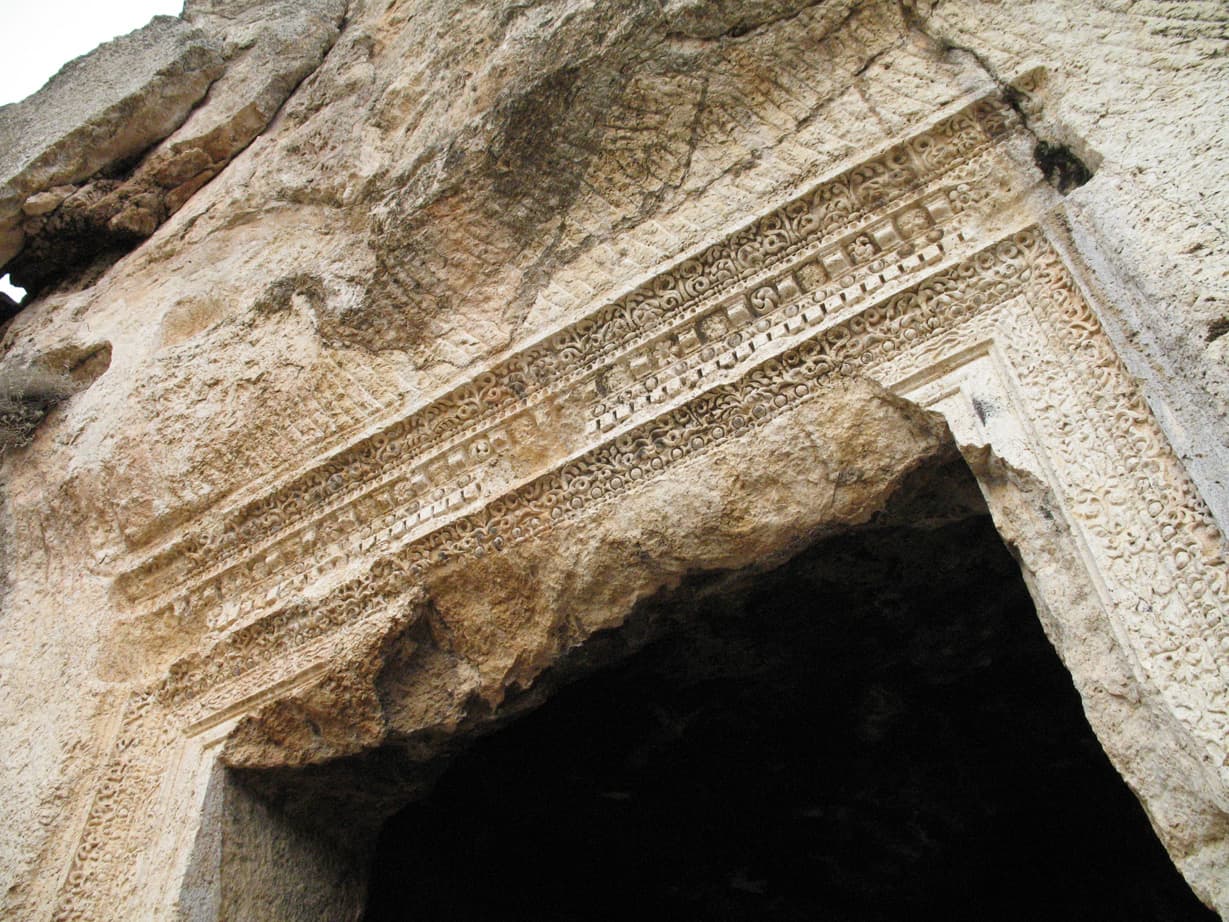
The site has three parts: the old village on the summit, a necropolis on the southern slope, and the rock-cut sanctuary to the west. A laid-out path runs through the necropolis and climbs to a monumental gate cut into the rock, its door jambs worked with three stepped mouldings. That gate is the entrance to the sanctuary.
What to see
The large temple had a portico of four columns in front, each more than a metre across. A monumental staircase cut into the rock leads up to it. Beside the temple, two rectangular chapels hold richly carved niches and platforms. The staircase in front of the southern chapel is half cut from the rock and half built of stone, framed on both sides by projecting wall ends. A large platform that locals call Qasr Mariye is also part of the site.
A stonemason’s inscription at the entrance of the northern chapel carries the year 449 and records that a press was installed there (SEG 7, 243). The site kept being put to new uses after the temple period.
What travellers saw
The Italian traveller Ludovico di Varthema wrote in 1503 that he saw two churches here. Porter drew the four-column portico in 1855. When Thoumin came in 1929 the portico had fallen. No current source describes its state today.
What has been found
Local publications, among them eSyria and Joseph Zeitoun, report the finds. The list includes the base of a bronze candlestick decorated with lion paws, a bronze eagle figurine, bronze coins with imperial portraits and stone sarcophagi. A bronze statuette of the god El seated on a throne and a limestone head of Aphrodite dated to the 2nd century are among them too. Excavation has not been completed.
The name Mar Takla
Tradition says that Saint Thecla stayed here for two days on her way to Maaloula. The site should not be confused with the Mar Takla Monastery in Maaloula, which is a different place.
What not to miss
The rock-cut gate at the end of the path from the necropolis. Its three stepped mouldings show that the path and the monumental entrance were designed together. Stop there before the temple and look back at the village; it is the quickest way to understand how the site is arranged.
Before you go
Manin was a conflict zone between 2012 and 2014. The current state of the site, whether it has a guard, and where the climb starts could not be verified, so ask in town before heading up the hill. The Manin spring feeds a branch of the Barada, but modern pumping has cut its flow sharply.
Tips
- Ask in Manin about the current state of the site and the path before climbing
- Do not confuse it with the Mar Takla Monastery in Maaloula; this site is north of Manin
- Follow the path through the necropolis: it leads to the monumental rock-cut gate
- The rock underfoot is uneven; wear closed shoes with grip
Transparency
- How this was chosen
- Written by hand; opening hours, entry fee and coordinates are kept as data. A field that is not known for certain is marked as variable rather than guessed.
- Facts checked
- September 2026
- Last updated
- September 15, 2026