The Mawlawiyya Tekke and Mosque
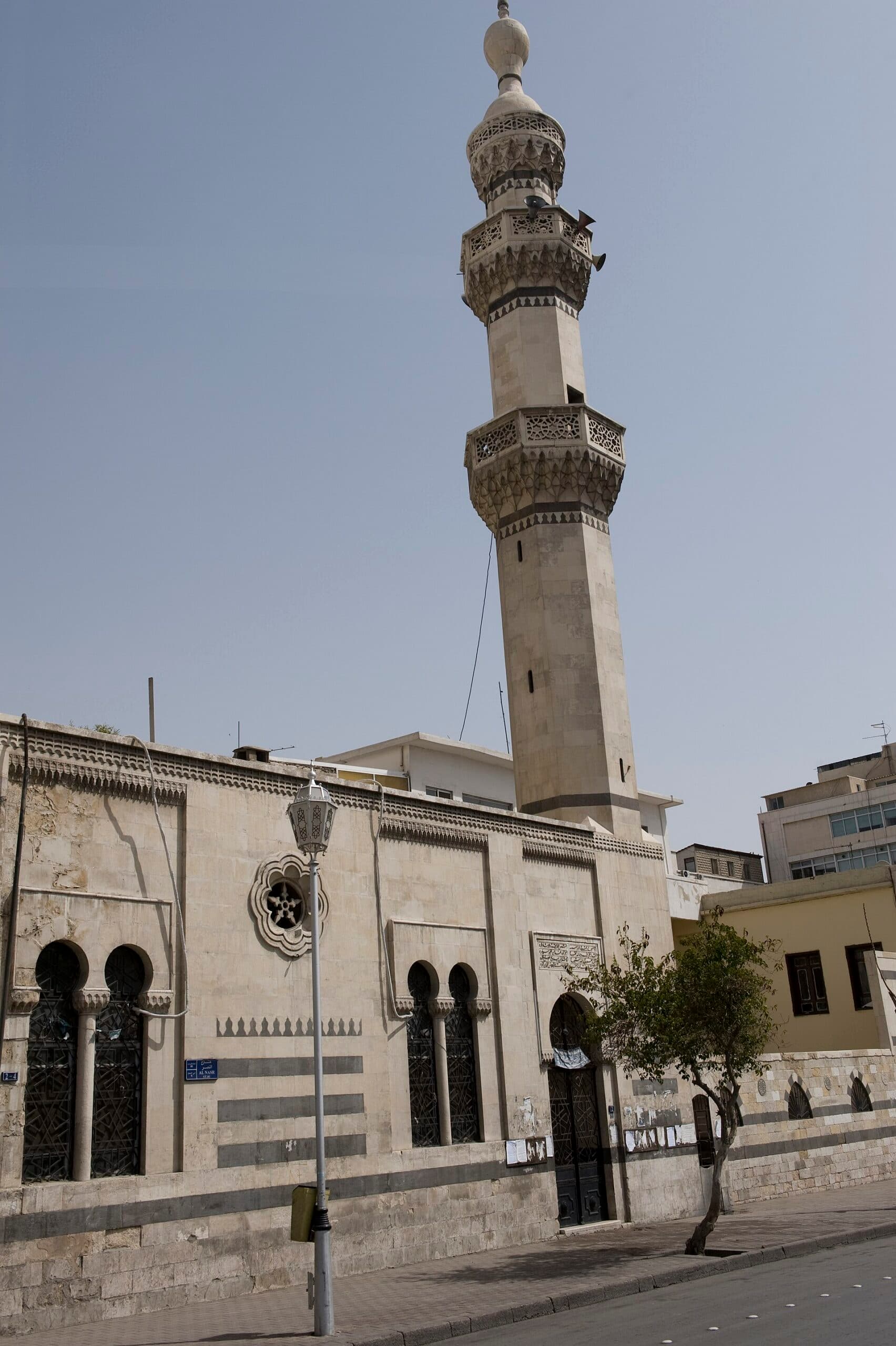
The Mawlawiyya tekke and mosque on An-Nasr Street, between the Hijaz Station and the citadel. The plaque at the door says one thing: built in Ottoman times.
- Opening hours
- Open at prayer times — check at the door
- Entry
- Free
- Duration
- 20 minutes
- Best time
- Before noon, while the facade is in sun
- Period
- Ottoman
- Address
- An-Nasr Street, outside the walls, Damascus
Outside the walls, at the northwest end of An-Nasr Street. The Hijaz Station stands at the west end of that street and the Damascus Citadel at the east end, and the tekke sits on the line between them. The plaque of the Waqf Directorate at the door gives the building’s name as the Mawlawiyya Mosque and says one thing about its age: it was built in the Ottoman period.
What a tekke is
Tekke is the Turkish word that answers to the Arabic khanqah and zawiya. The Ottomans founded such houses first of all to shelter people with no provider, those unable to work, the old, widowed women, and strangers passing through — above all those on their way to the pilgrimage. As the Mawlawiyya order spread, some tekkes became the place where dervishes lived: worship, dhikr, the turning ceremony and music. That is why Mawlawiyya tekkes also count as places where thought, poetry and music developed.
After the First World War the sufi orders were banned in Turkey, and most Mawlawiyya tekkes were pulled down, some turned into museums and the rest closed. This building in Damascus stayed open as a mosque, and it still works as one.
What to see
The facade is pale dressed stone with courses of black and white striping along the lower part. The windows come in pairs under pointed arches, with slender stone columns between them and wrought-iron grilles; a stone rose window sits in the wall and an inscription panel high above it. Along the low wall facing the street a row of fan-shaped stone motifs runs.
The detail that matters is the minaret. An octagonal shaft, two tiers of muqarnas balcony, and a bulbous stone finial at the top; seen from the wide mouth of An-Nasr Street it is the tallest thing on it. The door is framed in black and white stone, its leaf a wrought-iron star pattern, and a reused column stands in the passage.
What the records do not have
A founding year. There is no encyclopaedia entry for the building and no data record opened in its own name — the label on the maps links to the general article about Mawlawiyya lodges, not to this house. No coordinates were entered either: the point on the open map and the one located photograph of the place are seventy metres apart, and that photograph shows the street rather than the building. So this page carries no map.
How long it takes
20 minutes. Walk east along An-Nasr Street from the Hijaz Station and the road delivers you to the citadel, with the tekke near the start of the walk. The Takiyya al-Sulaymaniyya and the Naqshbandi Mosque are already on this site; the Mawlawiyya order enters Damascus here.
Tips
- Frame the minaret from the pavement across the street; the shaft is invisible from the door
- The waqf plaque beside the door is the building's only source for a date — read it
- The Hijaz Station is within walking distance; put the two on the same line
Transparency
- How this was chosen
- Written by hand; opening hours, entry fee and coordinates are kept as data. A field that is not known for certain is marked as variable rather than guessed.
- Facts checked
- September 2026
- Last updated
- September 15, 2026