The Monastery of the Vision of Saint Paul, Kawkab
On a basalt hill 18 km southwest of Damascus, tradition places Paul’s fall to the ground on the road to Damascus. The present monastery was built in 1962.
- Opening hours
- Varies — check at the gate
- Entry
- Varies — check on arrival
- Duration
- 60 minutes
- Best time
- The 29 June feast for the crowds; another morning for a quiet visit
- Period
- Modern building of 1962; traces from the early Christian and Crusader periods
- Address
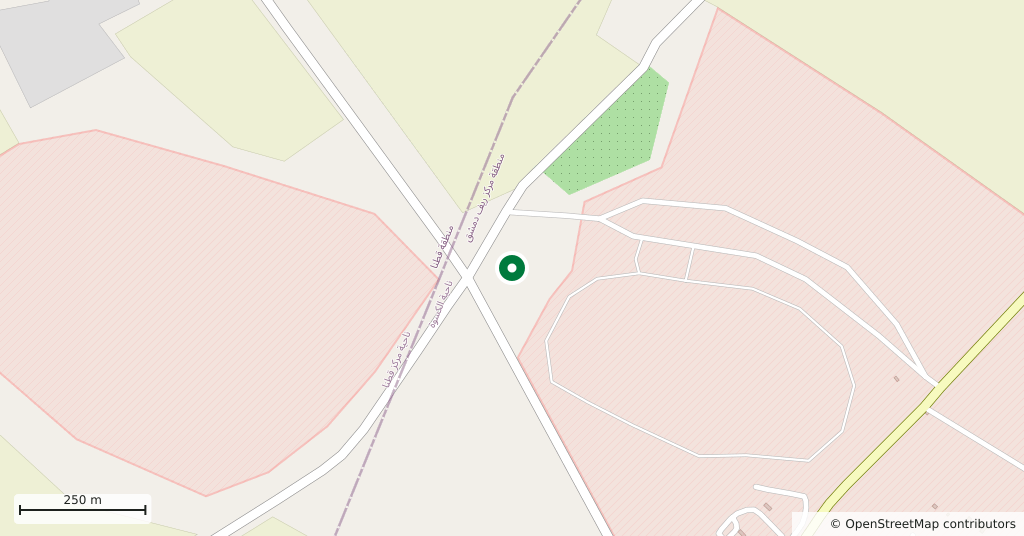
- Tell Kawkab, Kawkab village, Qatana district, 18 km southwest of Damascus
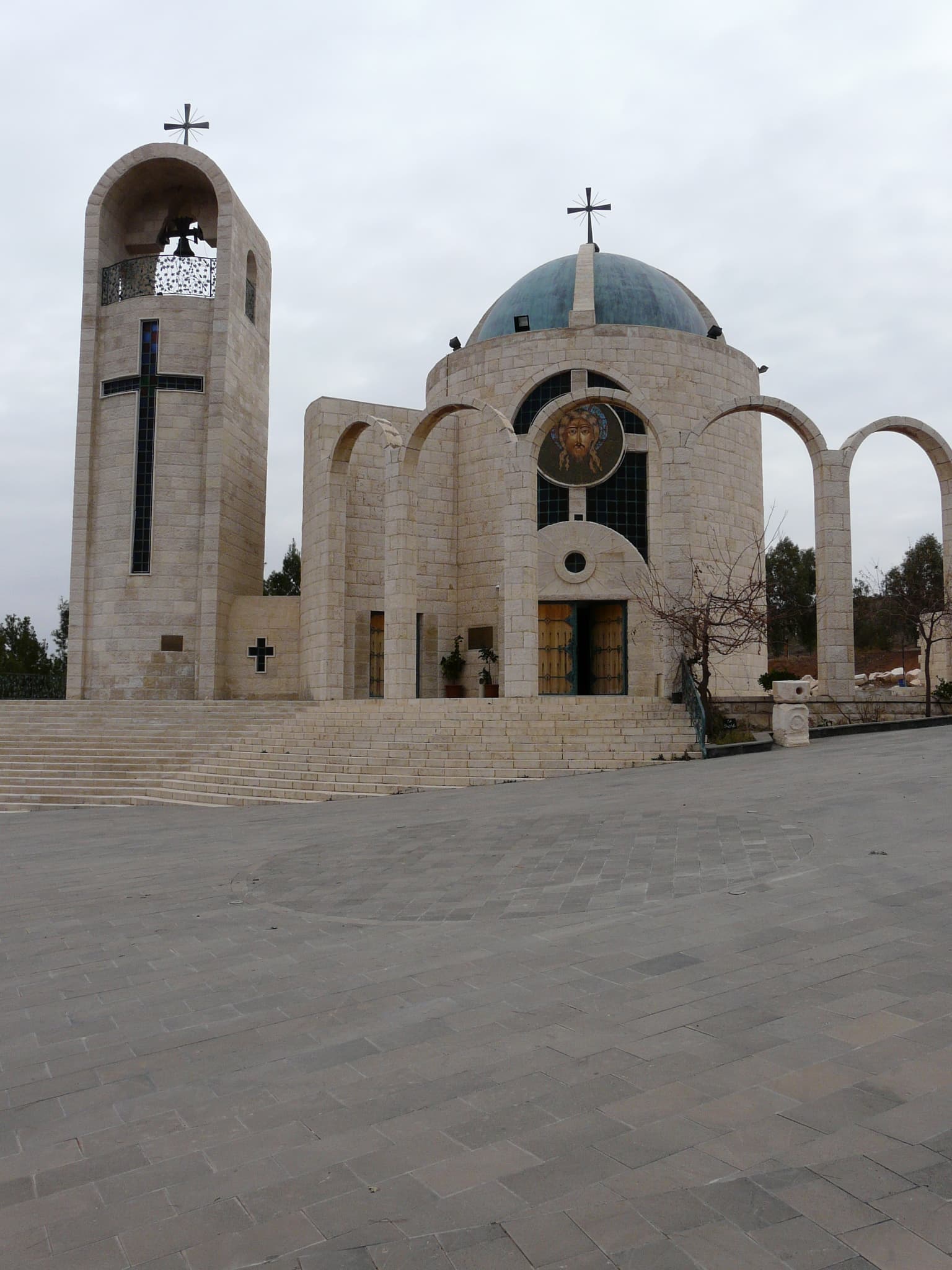
Eighteen kilometres southwest of Damascus, beside the road to Quneitra, rises a volcanic hill of black basalt: Tell Kawkab. On top stands a monastery of the Greek Orthodox Patriarchate of Antioch. Its official name is the Patriarchal Monastery of the Vision of Saint Paul the Apostle; locally it is simply Deir al-Ruya, the Monastery of the Vision. Tradition holds that Saul of Tarsus, on his way to Damascus, was struck to the ground here by a light from heaven, the story told in chapter 9 of the Acts of the Apostles. The present building went up in 1962 on the ruins of an older monastery.
Getting there
Take the Quneitra road out of Damascus. The monastery is on the hill above the village of Kawkab in the Qatana district, about 3 kilometres from Jdeidet Artouz. Conditions on roads towards Quneitra have been unsettled since 2025. Before you set out, check the road and whether the monastery is receiving visitors.
What to see
At the centre is a round, domed church ringed by a portico of columns and arches, with a bell tower beside it. In the garden is a bronze statue of Paul attributed to the Russian sculptor Alexander Rukavishnikov. Gardens, an open-air theatre, a boundary wall and an entrance gate complete the grounds. Inside the church hangs a painting of Paul falling from his horse.
Two traditions
The writers who place Paul’s conversion at Kawkab date from the Crusader period and after: Jacques de Vitry, Tafur, who passed through in 1434, and later Pococke and d’Arvieux. Earlier sources, Antoninus of Piacenza around 570 and Willibald in the 8th century, put the event much closer to the city. In Damascus, the Memorial of Saint Paul in Tabbaleh, southeast of Bab Kisan, carries that other tradition. There is no need to choose between them; they are two addresses for the same story.
The recent history of the site
In the 1930s Patriarch Alexander Tahhan bought the land from a Muslim family of Damascus, who had chosen to hand it to the Orthodox rather than to foreign monks. Money problems and military use left it empty until 1961. In those years the hill still showed faint marks on dressed stones, a Corinthian capital, two rainwater cisterns, exposed foundations and the remains of a church between the hill and the Roman road. The monastery was built in 1962 on the initiative of Patriarch Theodosius VI Abu Rjaili, with a donation from the Russian Patriarchate. In the 1960s farmers found a gold censer from the early Christian period on the hill.
What most people miss
29 June. On the feast of the Apostolic See of Antioch the monastery holds its yearly celebration, and thousands of pilgrims come from Damascus, from other Syrian cities and from Lebanon. On any other day the hill is quiet. In that quiet it changes the view to remember that on 30 September 1918 the Australian 4th and 12th Light Horse Regiments charged Kawkab up this same ridge.
Tips
- This is a working place of worship; clothing that covers shoulders and knees is appropriate
- Check conditions on the road towards Quneitra before you set out
- The Memorial of Saint Paul in Tabbaleh is the other address for the same story; visit both
- Look for the painting of Paul falling from his horse inside the church
Transparency
- How this was chosen
- Written by hand; opening hours, entry fee and coordinates are kept as data. A field that is not known for certain is marked as variable rather than guessed.
- Facts checked
- September 2026
- Last updated
- September 15, 2026