The Nabi Habeel Mosque: the Tomb of Abel
A shrine in the mountains north-west of Damascus, above the Barada valley. Held to be the tomb of Abel; the 1599 building holds a 7-metre sarcophagus.
- Opening hours
- Daylight hours; no fixed times — check on site
- Entry
- Free
- Duration
- 45 minutes
- Best time
- Morning, when the valley is clear and the mountain road is empty
- Period
- Ottoman
- Address
- Above Souq Wadi Barada, Zabadani, Rif Dimashq
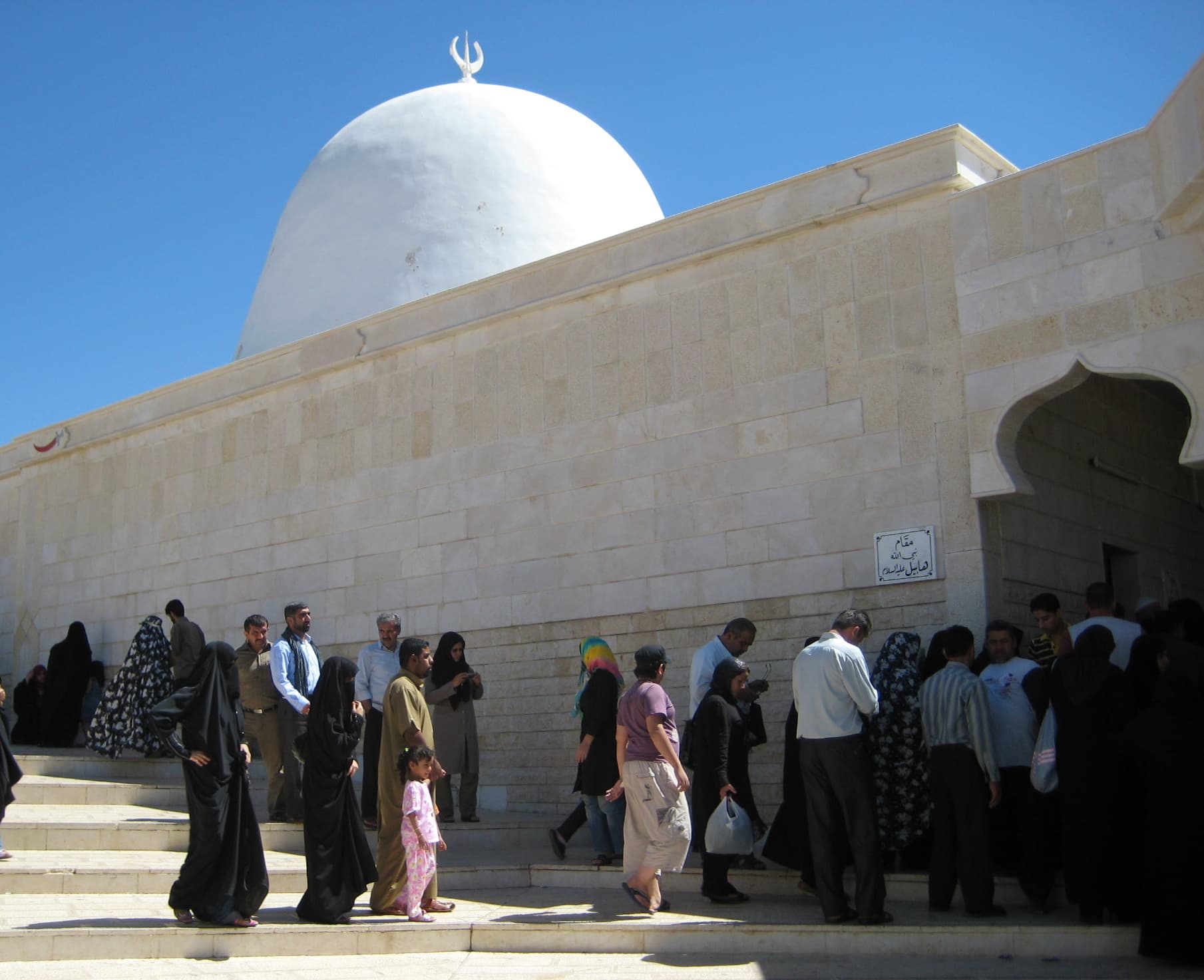
A shrine in the mountains north-west of Damascus, looking down on the Barada valley. Muslim tradition places the grave of Abel, the son of Adam, here. The building you see was put up by the Ottoman governor Ahmad Pasha ibn Ridwan in 1599, and inside it stands a sarcophagus 7 metres long under a covering of green silk.
Getting there
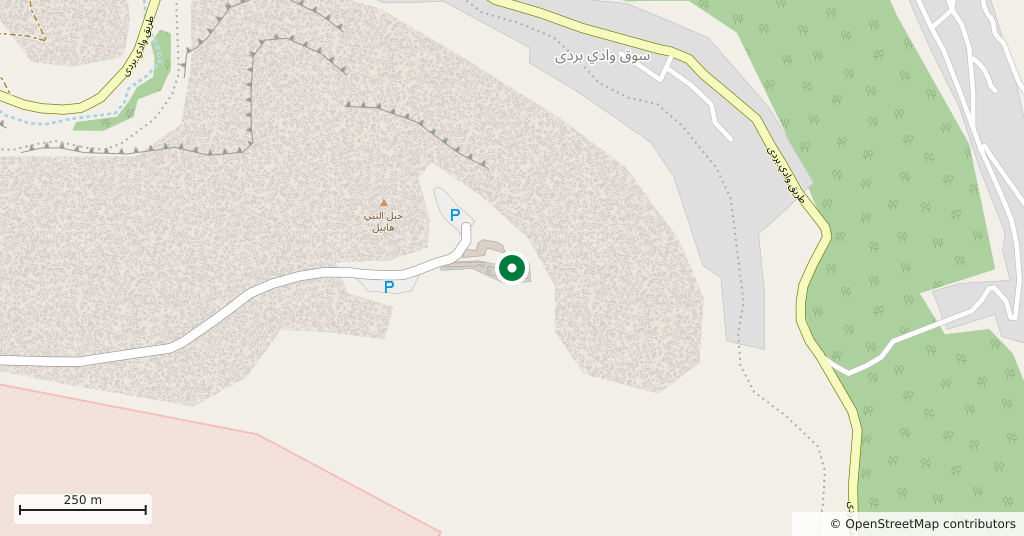
Damascus is 20 kilometres away as the crow flies. You turn off the Zabadani road into Wadi Barada, then climb the slope above the village of Souq Wadi Barada. The shrine sits at 1260 metres and the last stretch is a narrow mountain road. Ain al-Fijeh is further down the same valley; the two fit into one day.
How long it takes
Forty-five minutes. The building is not large; what takes the time is the wait around the sarcophagus and the view outside.
What to see
From outside: a whitewashed dome, cut stone walls and an arched entrance. Inside is the sarcophagus, 7 metres long, draped in green silk embroidered with verses from the Qur’an. The building is said to have 40 mihrabs.
Who comes here
The shrine is holy to the Druze community and it also appears on Shia pilgrimage routes. People from three or four different communities end up standing in the same courtyard.
What most people miss
Before you go in, stop at the head of the steps and look down. The villages of the Barada valley line up below you: Souq Wadi Barada, Basimah, Deir Qanun, Ain al-Fijeh. The water Damascus drinks comes out of that valley.
Where things stand
Wadi Barada was a battlefield in late 2016 and early 2017, and the damage is still visible in the villages. Ask about the state of the road and whether the shrine is open before you set out.
Tips
- The last stretch is a narrow mountain road; agree the trip and the return with your driver first
- Ain al-Fijeh is lower down the same valley, put the two together in one day
- This is a working place of worship: shoes come off and modest dress is expected
- Look down over the valley from the landing at the top of the steps, before you go in
Transparency
- How this was chosen
- Written by hand; opening hours, entry fee and coordinates are kept as data. A field that is not known for certain is marked as variable rather than guessed.
- Facts checked
- September 2026
- Last updated
- September 15, 2026