The Nur al-Din Madrasa
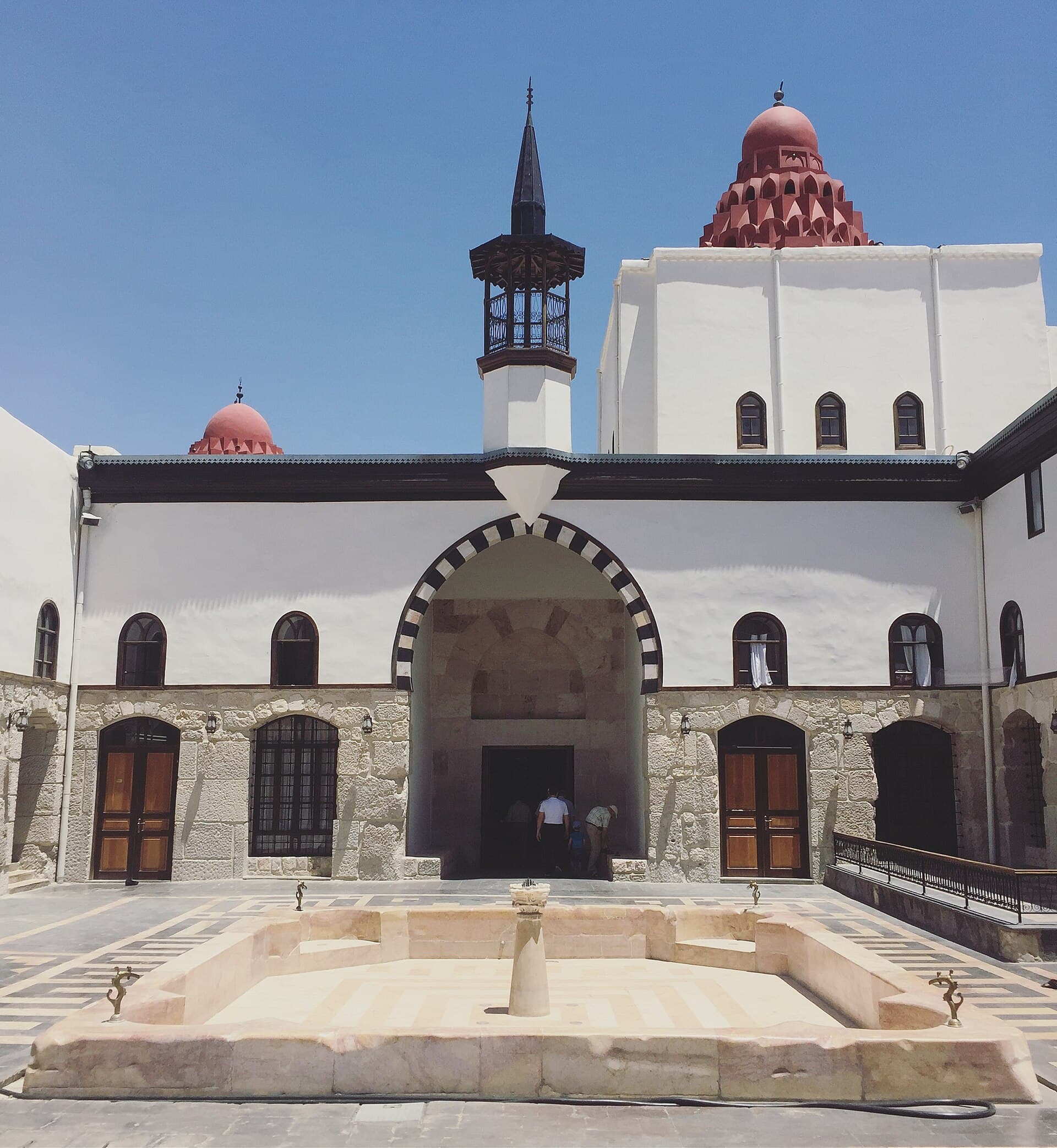
The madrasa Nur al-Din Zengi founded in 1172, and the tomb where he lies. Inside the tailors’ souq, known for its pointed muqarnas dome and courtyard pool.
- Opening hours
- Variable — check at the door
- Entry
- Variable — check at the door
- Duration
- 30 minutes
- Best time
- Late morning, while the courtyard is still in shade
- Period
- Zengid, the dynasty that ruled Syria before Saladin
- Address
- Suq al-Khayyatin, Old City, Damascus
A plain door inside the tailors’ souq of Damascus, easy to walk past. Behind it is one of the oldest and most written-about madrasas in the Islamic world, and the grave of the man who built it. Nur al-Din Zengi ruled Damascus during the crusading century and cleared the path Saladin later took. His tomb is still inside the building that carries his name.
Getting there
South-west of the Umayyad Mosque, along the line of the tailors’ souq. From the eastern end of the Al-Hamidiyah Souq, turn south and walk five minutes. The lane is narrow and the door unmarked, so it is quicker to steer by the pointed muqarnas dome rising above the roofline than to look for a number.
How long it takes
Half an hour. The courtyard is small and there is one tomb chamber. There is nothing to do but sit and look, which is enough.
What to see
The door opens onto a paved courtyard. A rectangular pool holds the centre, with taps along its rim and black and white stone laid geometrically underfoot. Across the court a tall iwan arch is built in alternating courses of black and white stone, with the prayer hall behind it. To the right rises the minaret, its wooden balcony under a pointed cap. The dome over the tomb is the building’s signature: not hemispherical but pointed, carried on stacked tiers of muqarnas, and terracotta coloured from outside. It is among the earliest of its kind in Damascus.
Nur al-Din Mahmud ibn Zengi founded the madrasa in 1172. He died in 1174 and was buried here. The Andalusian traveller Ibn Jubayr counted it among the finest looking madrasas anywhere. He wrote separately about the water: it spills from a fountain slab, runs along a channel, and falls into the pool at the centre of the court.
What most people miss
Three buildings in Damascus share versions of this name. This one is the Great Nuriyya. The Dar al-Hadith al-Nuriyya in the Asruniyya quarter is known as the Lesser Nuriyya, and a third, small Hanafi Nuriyya sits in the citadel mosque. When asking for directions, make clear which you mean. Naming the tailors’ souq is the shortest way.
Tips
- Shoes come off in the tomb chamber, so wear socks
- For the muqarnas dome, move to the north corner of the court; it will not fit in frame from anywhere else
- The Al-Buzuriyah Souq is a short walk away, so pair the two
Transparency
- How this was chosen
- Written by hand; opening hours, entry fee and coordinates are kept as data. A field that is not known for certain is marked as variable rather than guessed.
- Facts checked
- September 2026
- Last updated
- September 15, 2026