Qadam Railway Station
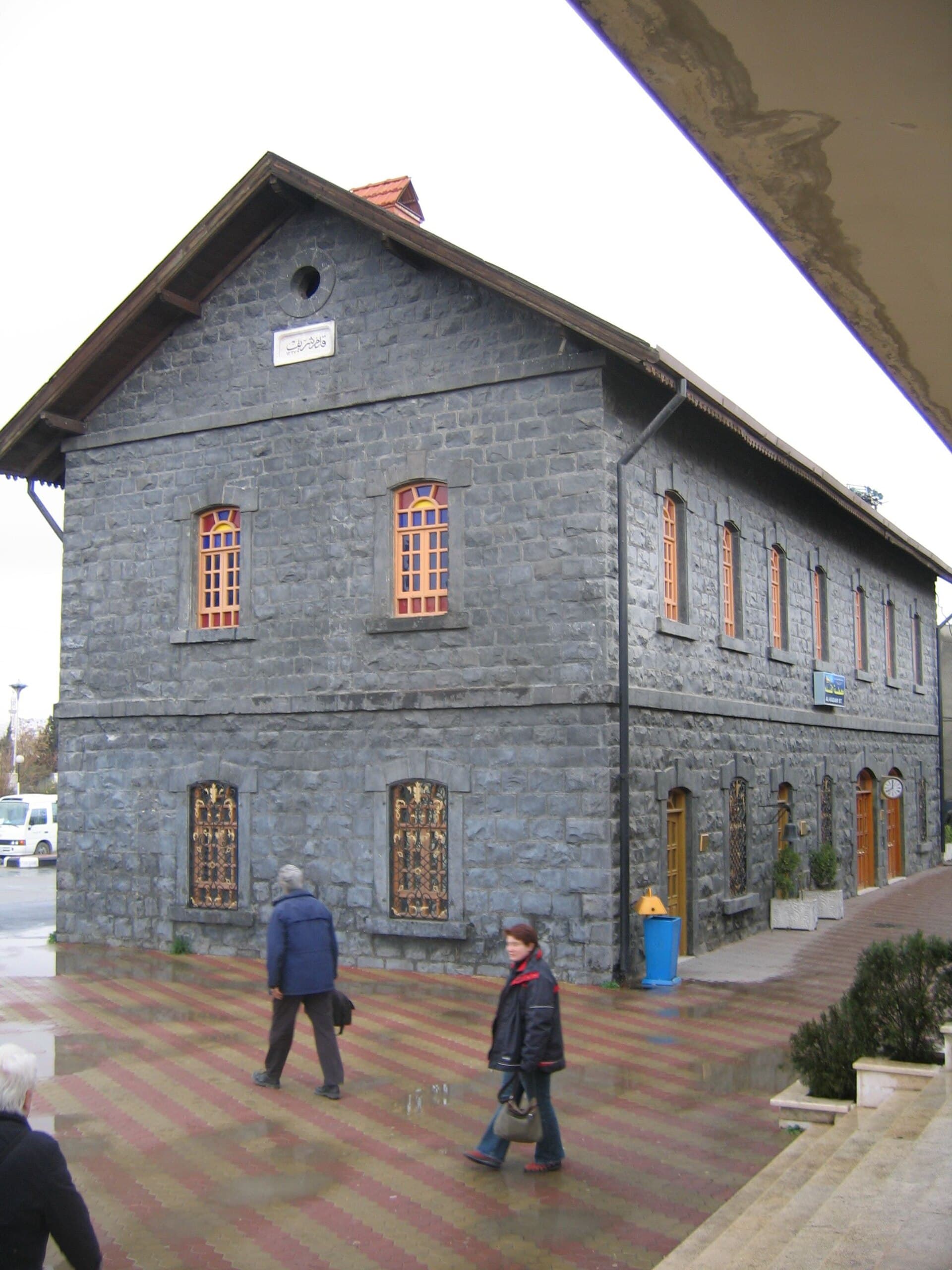
The basalt Hejaz railway station on the southern edge of Damascus. Its workshops made it the city’s working rail hub, and it was badly damaged in 2013.
- Opening hours
- Varies — confirm at the entrance
- Entry
- Varies — confirm at the entrance
- Duration
- 30 minutes
- Best time
- Morning, with side light on the basalt facade
- Period
- Ottoman — Hejaz railway
- Address
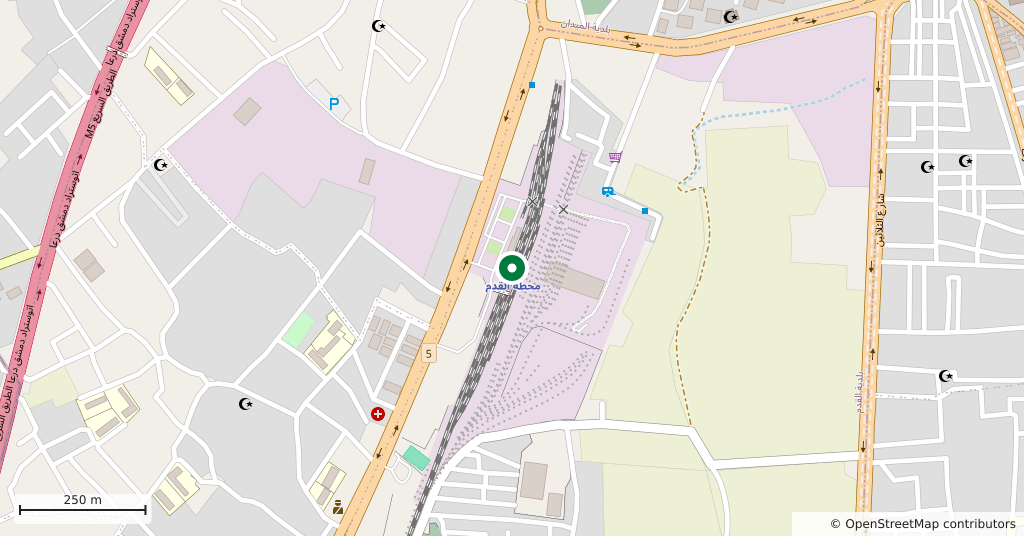
- Qadam district, southern Damascus
A station on the southern edge of Damascus, in the Qadam district. The Hejaz station in the city centre was the shop window; the work happened here. Built in the early 20th century as part of the Hejaz railway, it became one of the busiest stations in Syria after the Ottoman period.
Getting there
South from the city centre into the Qadam district. Around twenty minutes by taxi from inside the walls; the station building stands beside the main road, its dark basalt facade setting it apart from the concrete around it.
What to see
A two-storey basalt block with a timber-eaved gable and arched windows glazed in coloured glass. A marble plaque under the gable carries the station name in Ottoman Turkish. Behind it stretch the workshop buildings and the yard where old rolling stock stood.
What not to miss
The plaque on the gable. It is one of the few legible Ottoman-period traces left on the Hejaz line, and it says more than the building does.
How it stands today
The station was badly damaged in the fighting of 2013, which hit both the buildings and the carriages standing on the tracks. Rail services stopped across the country and limited services resumed in 2018. The site is a working railway facility, so entry needs permission; looking from outside does not.
Tips
- Read the Ottoman Turkish plaque under the gable; the station name is on it
- This is an operating railway site, so ask staff before taking photographs
- Pair it with the Hejaz station in the city centre; they are two ends of one line
Transparency
- How this was chosen
- Written by hand; opening hours, entry fee and coordinates are kept as data. A field that is not known for certain is marked as variable rather than guessed.
- Facts checked
- September 2026
- Last updated
- September 15, 2026