Qal’at Ja’bar
A hill above the Euphrates that became an island when the reservoir filled. Nur ad-Din’s brick castle, its slender minaret, and how the site stands today.
- Opening hours
- Daylight hours; confirm on arrival
- Entry
- Variable — confirm at the entrance
- Duration
- 90 minutes
- Best time
- Spring and autumn; there is no shade out on the lake in summer
- Period
- Uqaylid — Zengid — Mamluk
- Address
- Lake Assad, Tabqa, Raqqa governorate; 175 km east of Aleppo
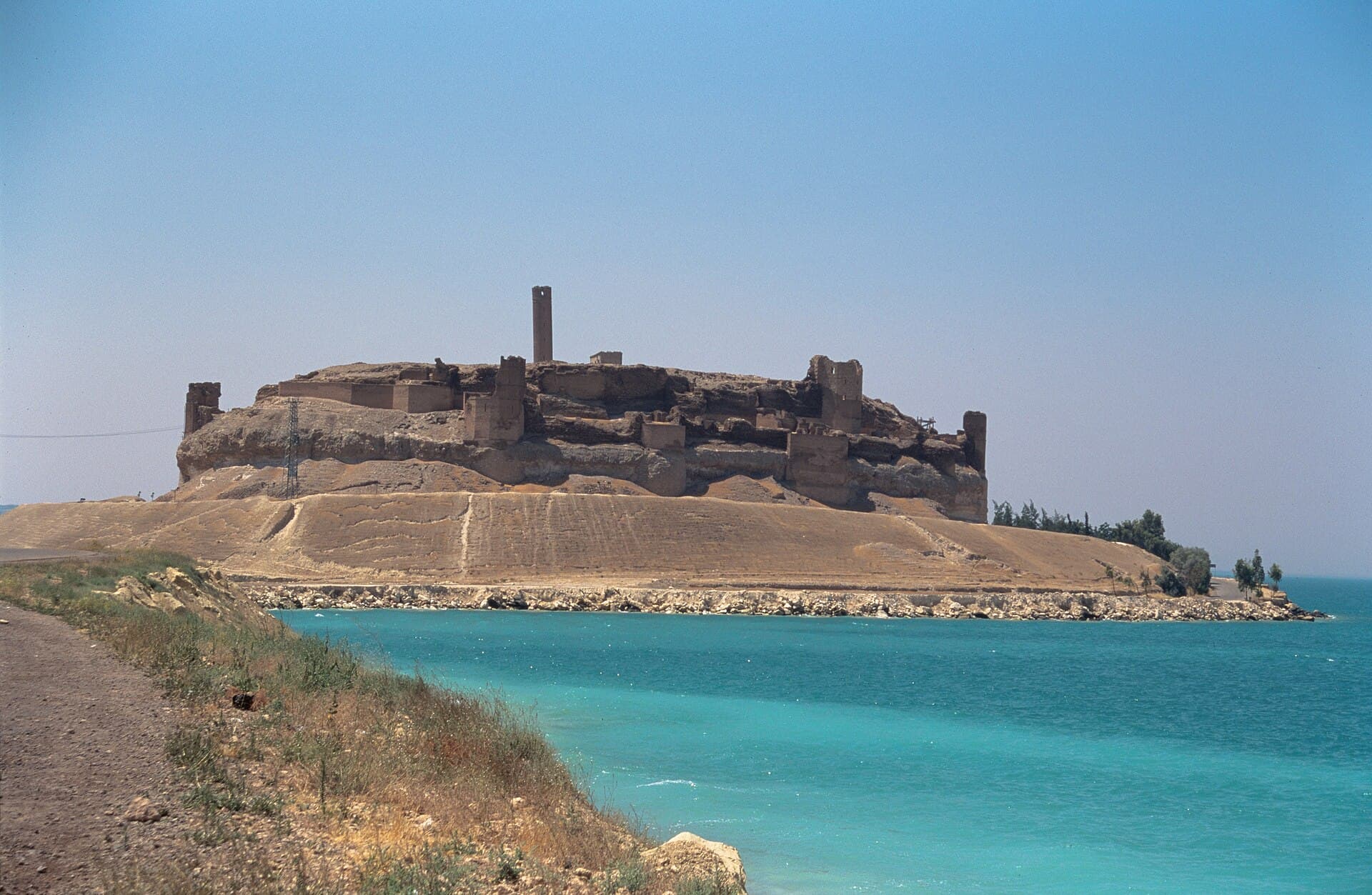
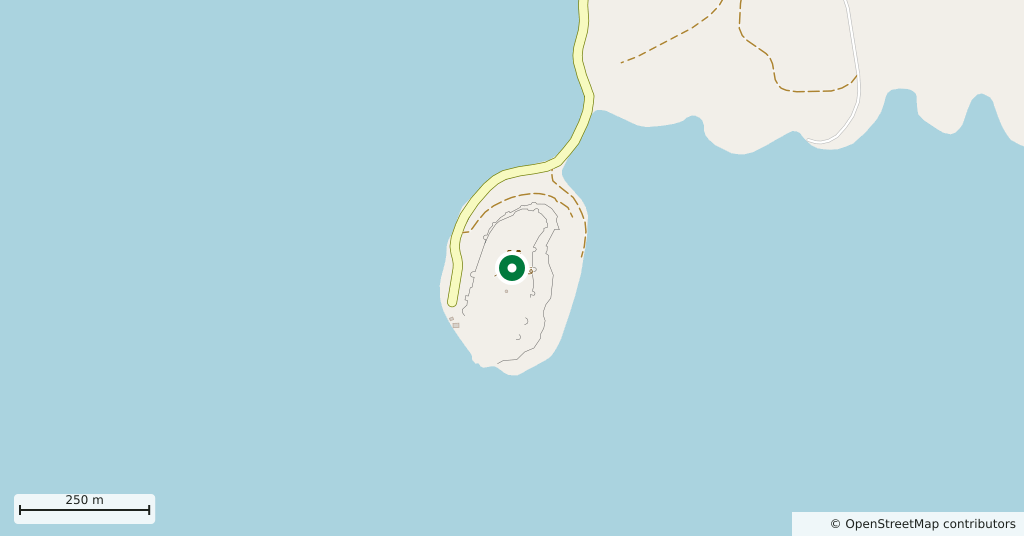
For a thousand years Qal’at Ja’bar stood on a rock outcrop above the Euphrates valley. When work on the Tabqa Dam began in 1968 the water rose; the hilltop was never submerged, but everything around it was, and the castle became an island in Lake Assad. It is now joined to the shore by an artificial causeway, and its brick outline rising out of turquoise water makes it one of the most recognisable castles in Syria.
Getting there
175 km east of Aleppo, in the Tabqa area of Raqqa governorate. It takes more than four hours by road, so a day trip from Aleppo is hard; travellers following the Euphrates usually put it on the same route as Manbij and Tabqa. The causeway runs up to the castle and the last stretch is on foot.
What to see
The castle covers an area of 370 by 170 metres. A stone wall with 35 bastions rings the rock core, with a dry moat along part of it, and the upper structures are built of baked brick. A gatehouse and a ramp cut winding out of the rock take you inside, where the remains of a vaulted hall survive. The plan recalls the Aleppo citadel, because the same century’s builders gave the castle its present shape.
What not to miss
The highest point of the castle is the minaret. It most likely dates from Nur ad-Din’s rebuilding after 1168 and is visible from every shore of the lake, yet most visitors look at the walls and leave without climbing to it. Much of the brick surface you see today is restoration work by the Syrian Directorate-General of Antiquities.
History and the present
The hill was called Dawsar before Islam. The castle takes its name from Ja’bar ibn Sabiq, who was killed here. It passed to the Seljuks in 1086 and was granted to Salim ibn Malik in exchange for his surrender of the Aleppo citadel. In 1146 Zengi besieged the castle and was murdered here by one of his own men; in 1168 it came to his son Nur ad-Din, and most of what stands is his. Just north of the castle stood a tomb long attributed to Suleyman Shah. From 1921 until 1973 the ground it sat on counted as Turkish territory; when the lake rose, the tomb was moved north and the site became Syrian. The castle was taken by ISIL in 2014, which dug tunnels and stores into the grounds, and was retaken in early 2017. The ground is still not sound everywhere, so keep to the marked path.
Tips
- Climb the minaret: it is the highest point and shows the lake end to end
- The last stretch of the causeway is on foot; wear closed shoes
- It is over four hours from Aleppo, so pair it with Manbij and Tabqa
- Tunnels were dug into the site and the ground is uneven; stay on the marked path
Transparency
- How this was chosen
- Written by hand; opening hours, entry fee and coordinates are kept as data. A field that is not known for certain is marked as variable rather than guessed.
- Facts checked
- August 2026
- Last updated
- September 15, 2026