The Qaymariyya Quarter
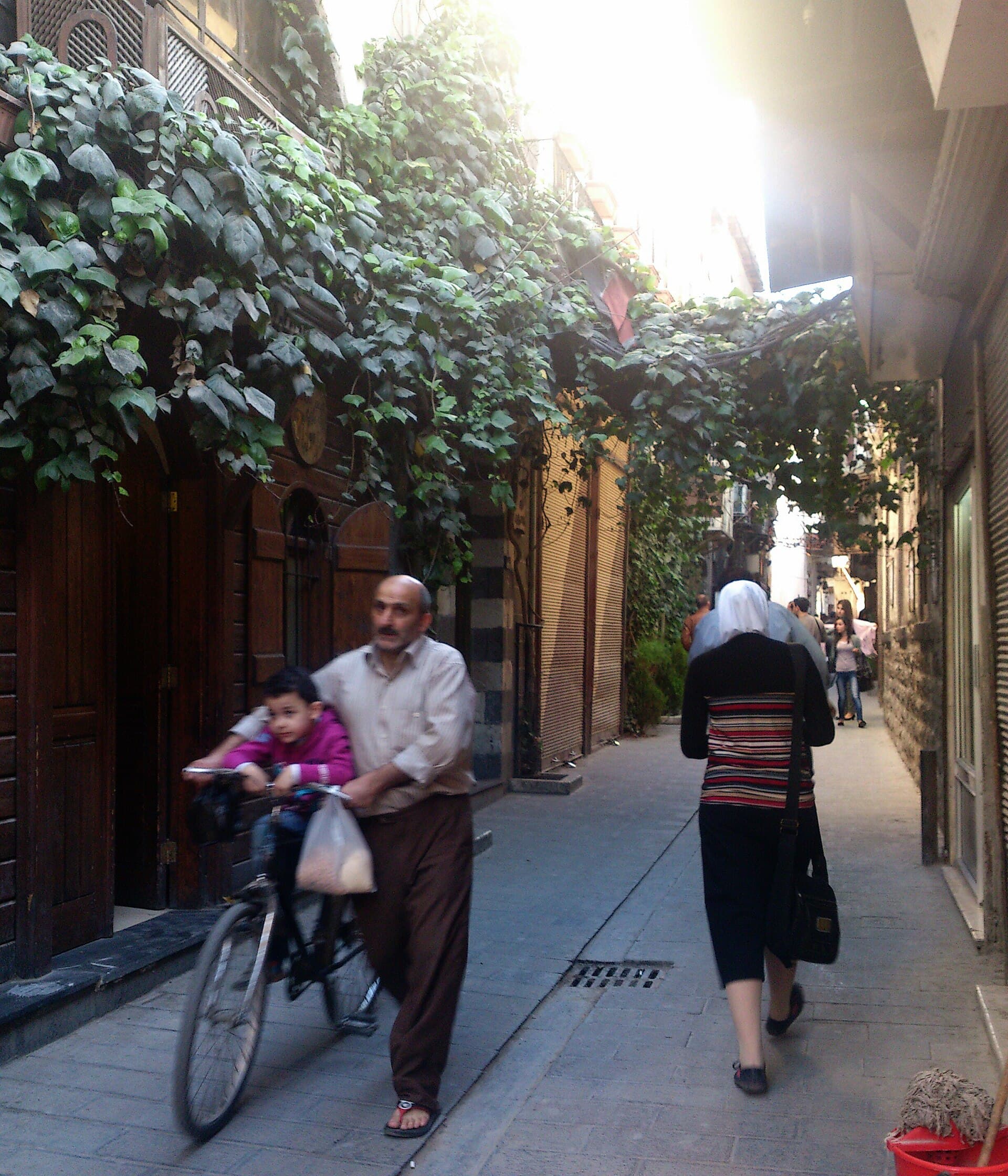
The lived-in quarter east of the Umayyad Mosque: narrow lanes under vines, closed wooden doors and the courtyards behind them. A place to wander, not to tick off.
- Opening hours
- Lanes at any hour; shops open around 10:00
- Entry
- Free
- Duration
- 120 minutes
- Best time
- Around 10:00; the lanes fill up in the late afternoon
- Period
- Ayyubid — Ottoman
- Address
- East of the Umayyad Mosque, Old City, Damascus
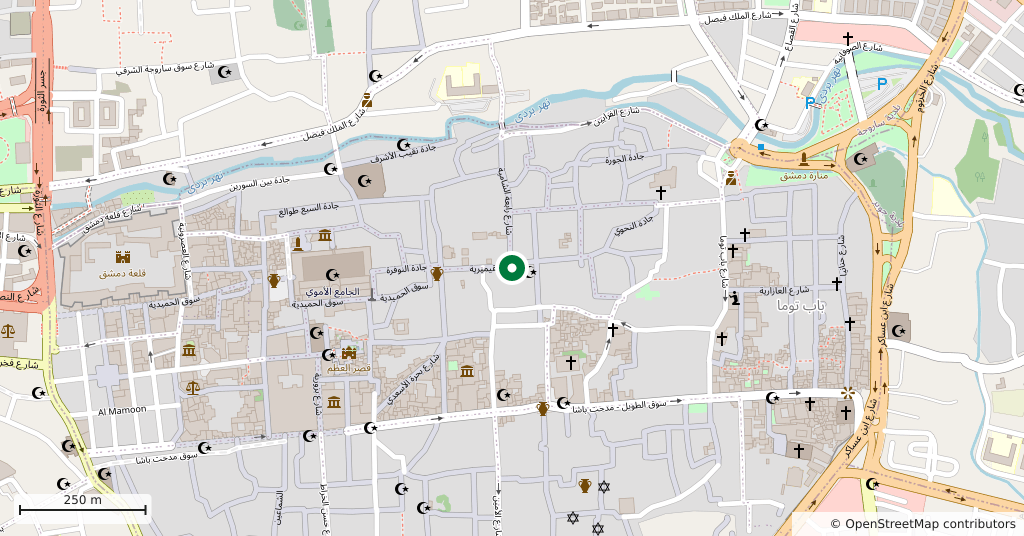
Qaymariyya is a quarter rather than a monument. It begins at the eastern wall of the Umayyad Mosque and runs towards Bab Touma, with the Midhat Pasha souk to the south and the Joura quarter to the north. The lanes are two or three metres wide and roofed by vines and awnings; the ground floors are shops and the upper floors are still homes. Ask where to walk in old Damascus and this is the shortest answer.
How the quarter began
The name comes from Nasir al-Din al-Husayn ibn Abd al-Aziz al-Qaymari, a Kurdish emir of the Ayyubid period. He built the Great Qaymariyya Madrasa that gave the quarter its name, and Damascenes now call it the old madrasa, or the madrasa of the cats. A second account traces the name to the Mariamite church. In the late 19th and early 20th century this was a middle-class residential quarter of merchant families. Weaving and embroidery were its trade, so it was known as the embroiderers’ market, and the sheer density of business earned it the nickname little India. The 1936 census counted 5817 Muslims and 241 Christians here; by 2004 the population had fallen to 4034.
Getting there
Leave the Umayyad Mosque by its eastern gate. Once you pass under the Roman arch of Bab Jayrun you are in front of the Nawfara coffee house, and the quarter starts there. Keep walking east and you reach Bab Touma square in 10 minutes. Coming from the south, any lane turning north off the Midhat Pasha souk takes you in.
What to see
The arch of Bab Jayrun, left from the Roman temple of Jupiter, stands at the western mouth of the quarter. At the eastern end are the Mariamite Cathedral and the Greek Orthodox Patriarchate. In between the lanes hold the Saadiyya zawiya, the Bakri and Nur al-Din bath houses, the courtyard of Maktab Anbar and the tailors’ market. Some of the courtyard houses have become restaurants, galleries and small hotels; the rest are still lived in.
How long it takes
Two hours. The distances are short, but the lanes loop into one another and passing the same corner twice is normal. Mornings are quiet as the shutters go up; by late afternoon the quarter is full.
What most people miss
Look at the doors. All the street shows you is a wooden leaf and a stone threshold, and behind it lies a courtyard with a lemon tree. If a door stands open, ask before you step in. This is a lived-in quarter, not a museum.
Tips
- Enter under the arch of Bab Jayrun; the quarter starts there
- Turn off the main lane — one step in, it is another place
- Ask before entering a courtyard or taking a photograph
- The eastern end comes out at Bab Touma; finish the walk there
Transparency
- How this was chosen
- Written by hand; opening hours, entry fee and coordinates are kept as data. A field that is not known for certain is marked as variable rather than guessed.
- Facts checked
- September 2026
- Last updated
- September 15, 2026