The Queen of the Universe: the Armenian Catholic Cathedral of Damascus
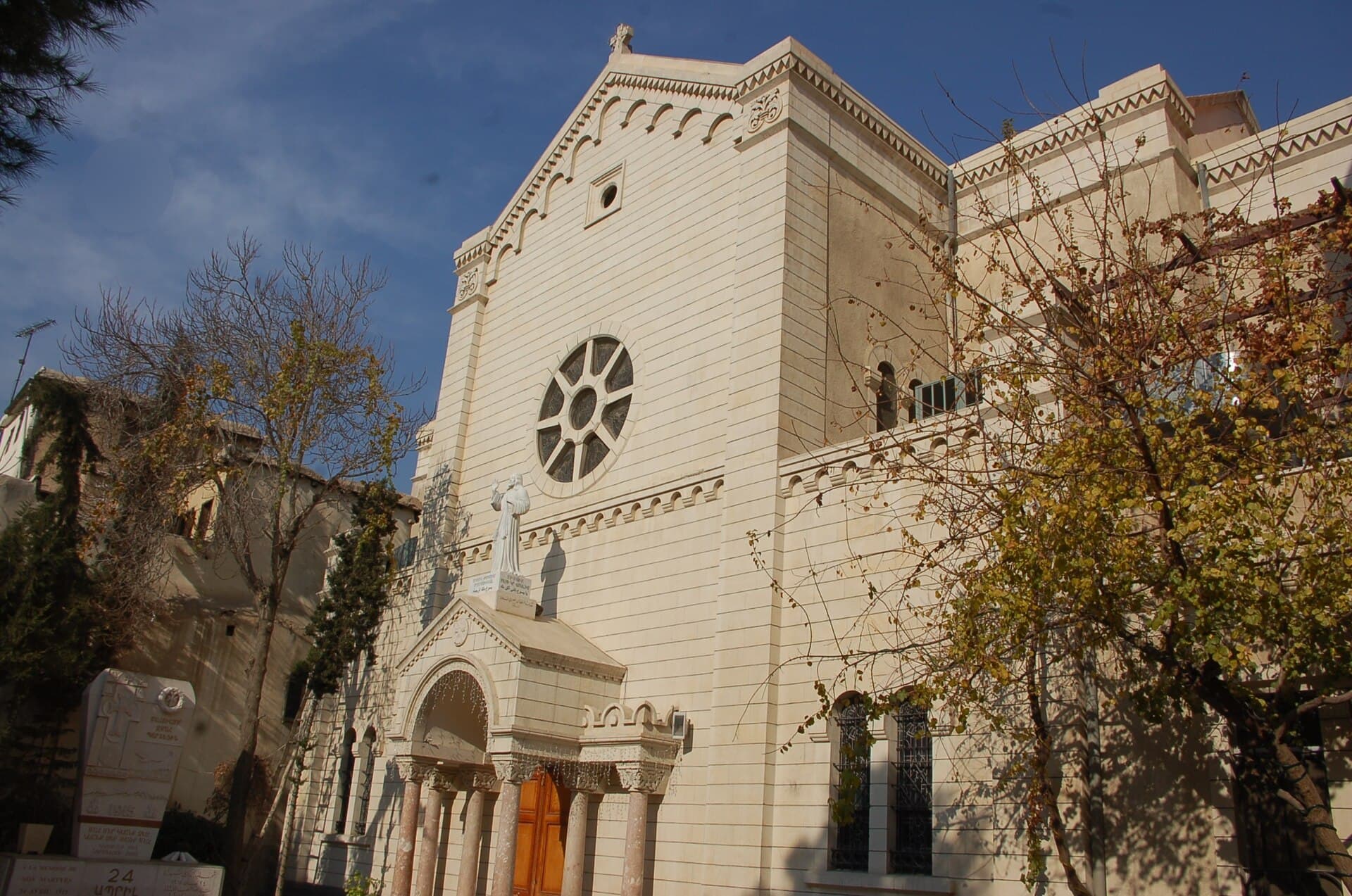
The Armenian Catholic cathedral in the al-Tall quarter. Built in 1930 as a Jesuit church, a cathedral since 1984, entry free, with a rose window on the front.
- Opening hours
- Open at service times; outside them, ask the attendant at the gate
- Entry
- Free
- Duration
- 25 minutes
- Best time
- Sunday morning during the liturgy; afternoon light for the façade
- Period
- Modern — 1930
- Address
- Qanayat al-Hatab Street No. 54, al-Tall, Old City, Damascus
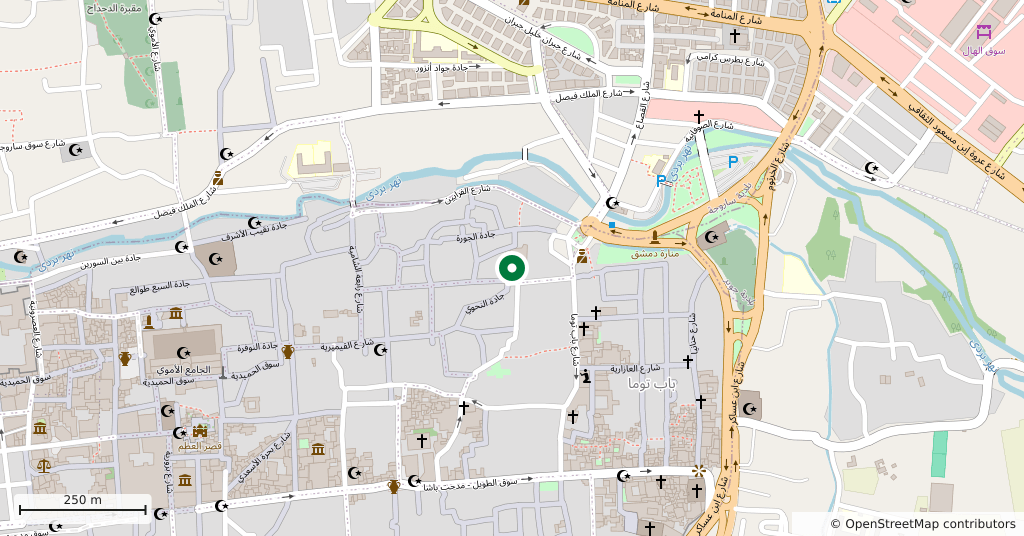
Turn west off Bab Touma Street into Qanayat al-Hatab Street. A hundred metres along, on the left at No. 54, a two-storey church front faces you: a large rose window, a portico beneath it, and a statue of Christ on the portico roof. This is the Church of the Queen of the Universe, the centre of Armenian Catholic life in Damascus. The Hammam al-Bakri across the pavement is roughly 500 years old, so this one street carries two very different periods.
Getting there
Enter Qanayat al-Hatab Street from Bab Touma square and walk west. The street runs through the al-Tall quarter of the old city and is narrow, but the church front is open to it, so the rose window shows from a distance. The door number is 54.
What to see
The plan is a cross, the building has two storeys, and the façade is open rather than closed. Most churches in the old city hide behind a courtyard wall; this one presents itself to the street. The rose window sits at the centre of the front and its size is unusual for Damascus. The statue of Christ on the portico roof is visible from the pavement. On the diocesan building there is a carved khachkar, the Armenian cross-stone.
How the church became Armenian Catholic
The first Armenian Catholic community in Damascus formed in 1763. Its old church stood beside the Lazarist monastery and was badly damaged in the massacre of 1860. The building you see was put up by the Jesuits in 1930, and old maps still label it the Jesuit Church; the bishop’s residence to its right dates from 1920. The Jesuits could not hold on to it. The land and the building passed to the Armenian Catholic community in 1959, paid for by the benefactor Hanin Ilyas Qudsi, and the school was finished with her money in 1961. When the Armenian Catholic Patriarchal Exarchate of Damascus was created on 6 November 1984 the church became a cathedral; it was renovated between 2000 and 2001 and took its present name. In the 2000s some 5,000 Armenian Catholics lived in Damascus, in 700 families.
What not to miss
The khachkar on the diocesan building. The church itself dates from 1930, but that stone carries a far older tradition of Armenian carving, and most visitors look at the rose window and walk past it. Glance at the Hammam al-Bakri opposite as well: four hundred years separate the two sides of one pavement.
Tips
- The door number is 54; the street is narrow but the front is open and the rose window shows from a distance
- The carved khachkar on the diocesan building is the piece most visitors miss
- The Hammam al-Bakri across the pavement is roughly 500 years old; both fit into one stop
- Do not photograph during the service; ask afterwards
Transparency
- How this was chosen
- Written by hand; opening hours, entry fee and coordinates are kept as data. A field that is not known for certain is marked as variable rather than guessed.
- Facts checked
- September 2026
- Last updated
- September 15, 2026