Resafa (Sergiopolis)
A walled Byzantine pilgrimage city standing alone in the steppe south-west of Raqqa: church facades, vast underground cisterns and a carved north gate.
- Opening hours
- Open site; if a guard is present, check at the entrance
- Entry
- Variable — check at the entrance
- Duration
- 120 minutes
- Best time
- A spring or autumn morning; in summer there is no shade at all
- Period
- Roman — Byzantine — Umayyad
- Address
- 45 km south-west of Raqqa, Ithriya road, Raqqa Governorate
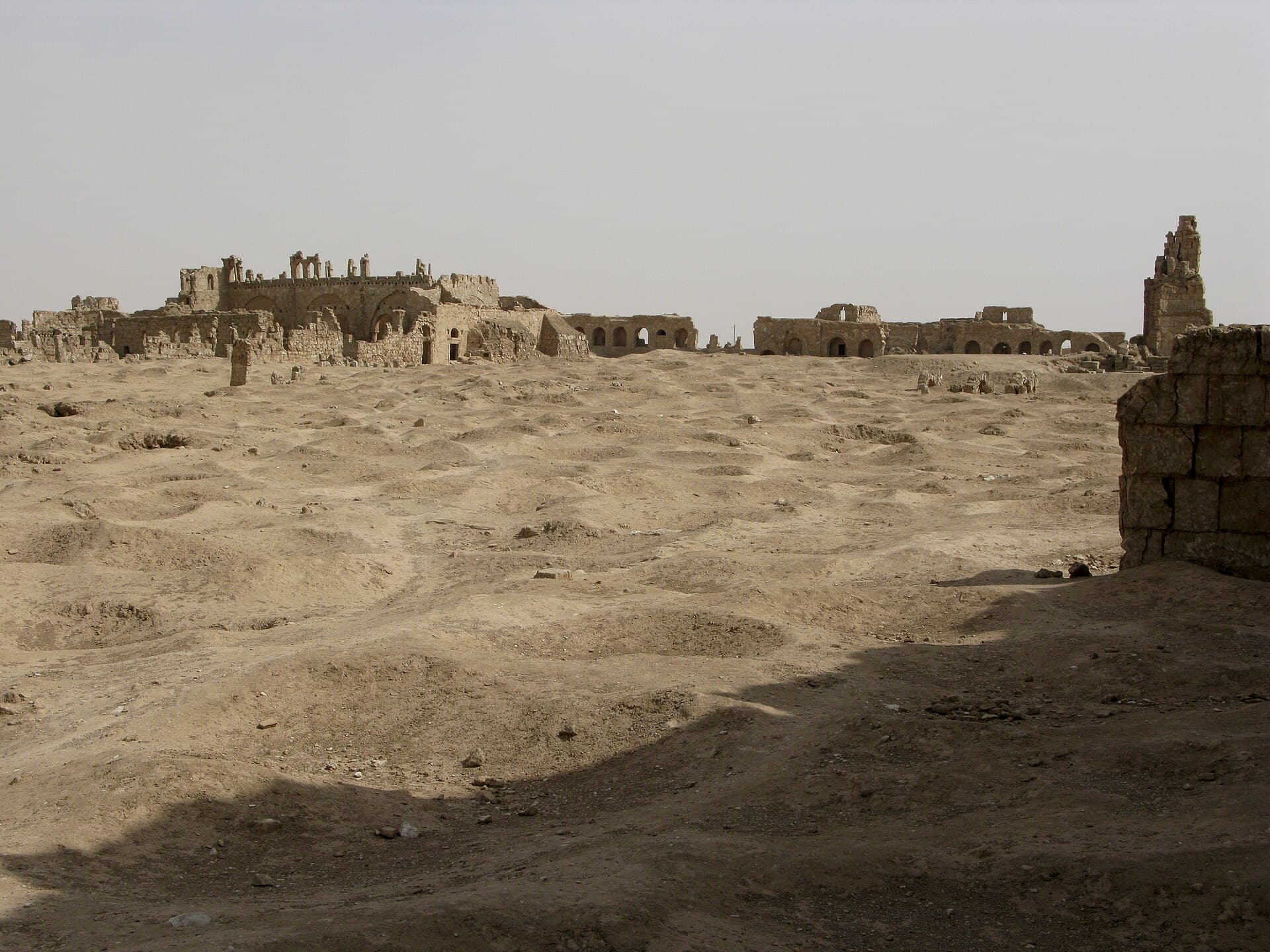
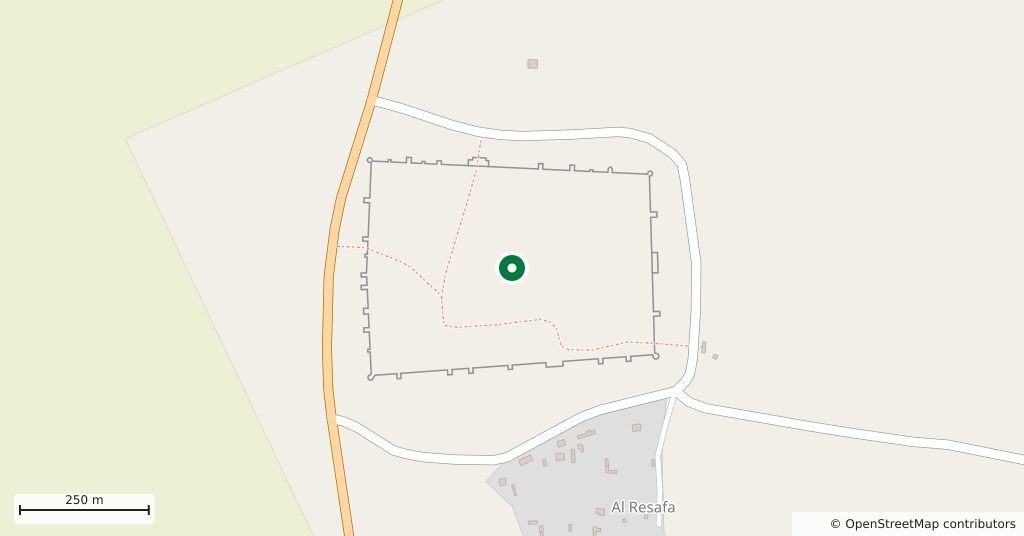
A city alone in the steppe, walled on all four sides. The wall runs about 500 metres one way and 300 the other, with towers every thirty metres, and much of it is still standing. Inside are church facades, ranks of arches and what is left of a caravanserai. The place became Sergiopolis in the 4th century. A church went up over the grave of Sergius, a Roman soldier killed here in the persecution under Diocletian. The town then grew into the busiest pilgrimage centre in the Byzantine East after Jerusalem.
Getting there
Some 45 kilometres south-west of Raqqa, on the west side of the road between Raqqa and Ithriya. There is no public transport; you hire a car and driver in Raqqa and the round trip takes a day. The site was held by ISIS until June 2017, so ask locally about the road and the site before you set out.
How long it takes
Two hours. That covers entering by the north gate, walking the line of the wall, and seeing the three churches and the cisterns. There is no shade and no water; bring your own.
What to see
The north gate is the most worked piece of building on the site: the column capitals and the carved vine running over the arch are still in place. Inside, the largest of the three churches keeps the long arcaded front that faces the steppe. Outside the wall, to the east and south, lie the remains of palaces built by the Umayyad caliph Hisham ibn Abd al-Malik, who made this his preferred residence between 724 and 743.
What most people miss
The underground cisterns. Resafa had no spring; the city lived entirely on huge reservoirs that caught the winter and spring rain. The largest, in the south-west corner, is the size of a cathedral, vaulted in stone, and you go down into it by a stair. Most visitors walk between the wall and the churches and never see it — and it holds the answer to how the place existed at all.
Tips
- Carry water and a hat; the walls are the only shade on the site
- Enter by the north gate and walk the line of the wall
- Go down into the big cistern in the south-west corner; the steps are stone and slippery
- Ask in Raqqa about the road and the site before you go
Transparency
- How this was chosen
- Written by hand; opening hours, entry fee and coordinates are kept as data. A field that is not known for certain is marked as variable rather than guessed.
- Facts checked
- September 2026
- Last updated
- September 15, 2026