Saidnaya
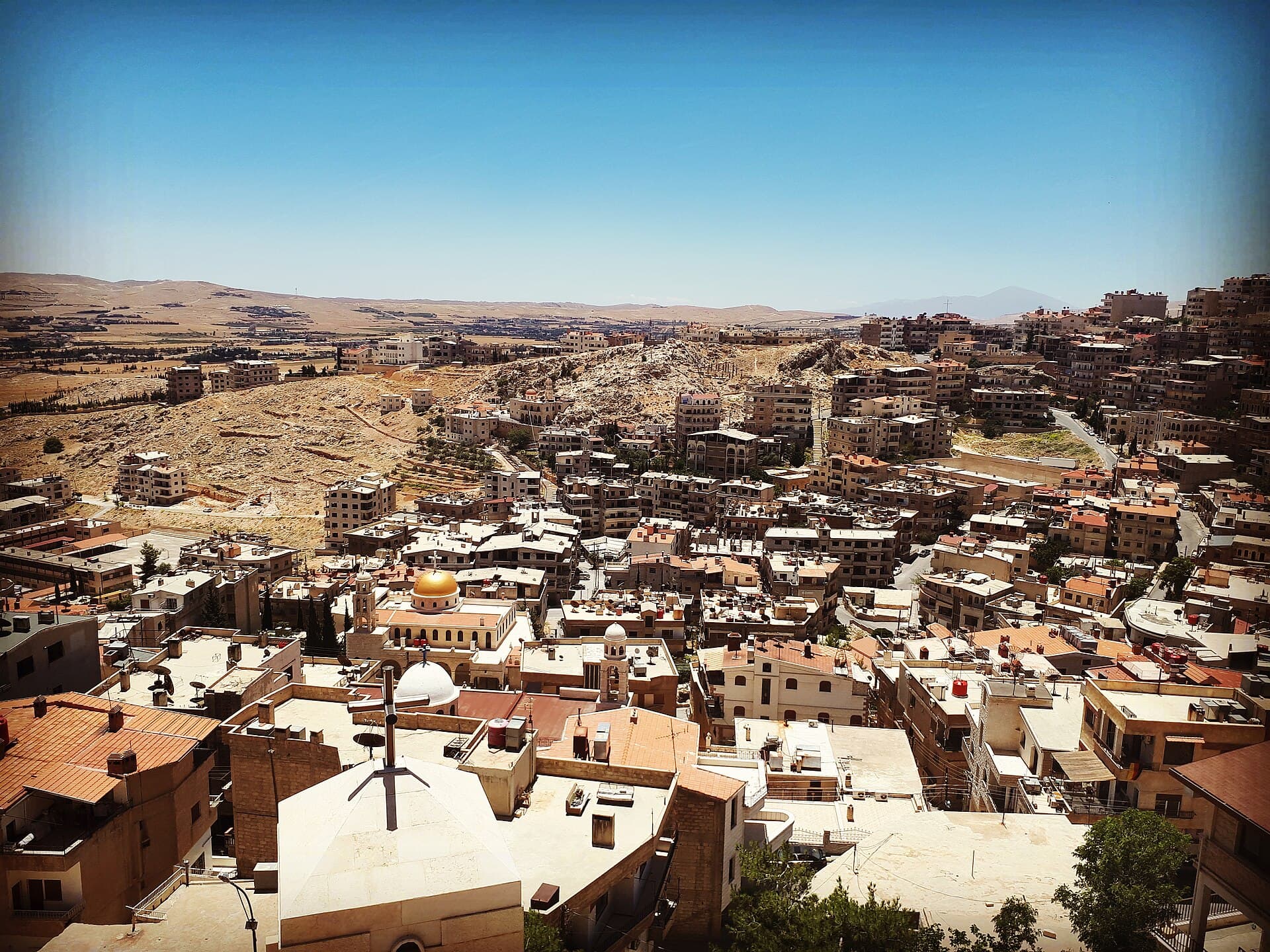
A pilgrimage town at 1450 metres, 30 kilometres north of Damascus, with over 40 churches and chapels, 21 monasteries and an icon medieval pilgrims wrote about.
- Opening hours
- An open town; each church and monastery keeps its own hours, check at the door
- Entry
- The town is free; check churches at the door
- Duration
- 180 minutes
- Best time
- Spring and autumn; the 8 September feast is crowded, snow in winter
- Period
- Aramaic Danaba — Roman — medieval pilgrimage centre — today
- Address
- Saidnaya, 30 km north of Damascus, Rif Dimashq
A town in the Qalamoun mountains about 30 kilometres north of Damascus, between 1450 and 1500 metres up. It has drawn pilgrims since the Middle Ages, and today it counts more than 40 churches and chapels and 21 monasteries. The monastery of Our Lady of Saidnaya on its rock and the Cherubim monastery on the mountain have their own pages; this one is about the town itself, its name and the other stops around it.
Getting there
About forty-five minutes north of Damascus by car. Maaloula is further along the same road, and the two fit into one day.
How long it takes
Three hours for the monastery, the churches in the centre and a view over the town from above. Half a day if you also go up to the Cherubim monastery.
What the name means
That is disputed. Local tradition explains it as “where the gazelle stopped”. A reading from Syriac is more likely: “sayd” (hunting) plus the place ending “-naya”, giving “hunting ground”. Jacques Briend links the name to the Sidonians instead. The town’s Aramaic name was Danaba, and people have lived here since the 6th century BC at the latest.
Medieval pilgrims
Word of Saidnaya reached Europe. The German pilgrim Magister Thietmar gave four pages of his account to the town’s icon of the Virgin. In September 1240 the Benedictine monk Benoît d’Alignan came here on pilgrimage with the sultan’s permission. According to 13th-century sources, the Knights Templar took holy oil from here for their churches in Europe. In the 17th century Makarios, Patriarch of Antioch, counted Saidnaya among seven old bishoprics under Damascus.
What is there
The town’s churches and monasteries include Our Lady, the Cherubim, Saint Thomas (Mar Touma), Saint George (Mar Georgis) and Hagia Sophia. The list goes on with the monasteries of Saint Peter, Saint John and the Transfiguration, the church of Saint Barbara, and the shrines of Saint Thecla and Saint Christopher. Two kilometres north of the town, at Mar Touma, are the remains of a Roman sanctuary with a temple. On 14 October 2013 a statue of Christ, paid for by the Russian Orthodox Church and the Russian government, was put up on the Cherubim hill.
What most people miss
8 September. On the feast of the Nativity of the Virgin, Christian and Muslim visitors come to the town together, and that is the day it is clearest why Saidnaya has drawn pilgrims for centuries. If you want quiet, the opposite holds: that week is best skipped.
Who lives here, and the climate
The town’s Christians belong to the Greek Orthodox, Greek Catholic, Syriac and Evangelical churches. Snow falls in winter, and the temperature drops to between 12 and 16 degrees below zero. At this height the evenings stay cool even in summer.
Tips
- Saidnaya and Maaloula are on the same road and fit into one day
- Covered shoulders and knees are expected in churches and monasteries
- The town is very crowded on 8 September; pick another week for a quiet visit
- Winter brings snow and frost, and mountain roads can ice over
Transparency
- How this was chosen
- Written by hand; opening hours, entry fee and coordinates are kept as data. A field that is not known for certain is marked as variable rather than guessed.
- Facts checked
- September 2026
- Last updated
- September 15, 2026