The Temples of Si’ (Seeia)
A hilltop sanctuary near Qanawat with three temples, the largest built for Baalshamin. Two of its basalt inscriptions are now in Paris, at the Louvre.
- Opening hours
- Open ground; current access not confirmed
- Entry
- No known ticket office
- Duration
- 60 minutes
- Best time
- Morning; the open hilltop has no shade in the afternoon
- Period
- Nabataean — Roman
- Address
- Near Qanawat, Suwayda governorate
A hilltop sanctuary just outside Qanawat, in the northern Hauran. Its ancient name was Seeia. The sources describe three large temples and a necropolis here. The largest temple belonged to Baalshamin, the Lord of the Heavens; the gods of the other two are unknown. The site is thought to have been one of the region’s pilgrimage centres.
Getting there
North-east from Suwayda on the Qanawat road. Si’ lies just beyond Qanawat. The site is not marked on map services and its coordinates could not be confirmed, so you have to ask someone local in Qanawat for the way.
What to see
The three temples stood together within one sacred precinct. The architecture is not purely Nabataean: it combines the styles of the cultures along the northern border of the Nabataean kingdom. In one of the smaller temples an inscription to the local goddess Seeia was found; that building may have served her cult, and the site may take its name from her. The Princeton expedition under Howard Crosby Butler recorded the site in the early 20th century and gave Seeia its own section in the published volumes. How much still stands today could not be confirmed from an independent source.
Whose inscriptions are they?
The inscriptions in the main temple use Nabataean script and Aramaic. That does not mean the people who carved them were Nabataeans. The archaeologist Avraham Negev warned about this in 1988: the texts refer not to the Nabataeans but to the ‘Ubaishat, a tribe of the Safaitic-Thamudic group. This happens often in the Hauran. Some inscriptions use the Nabataean language and are even dated by the regnal years of Nabataean kings, yet the communities behind them were different.
What not to miss
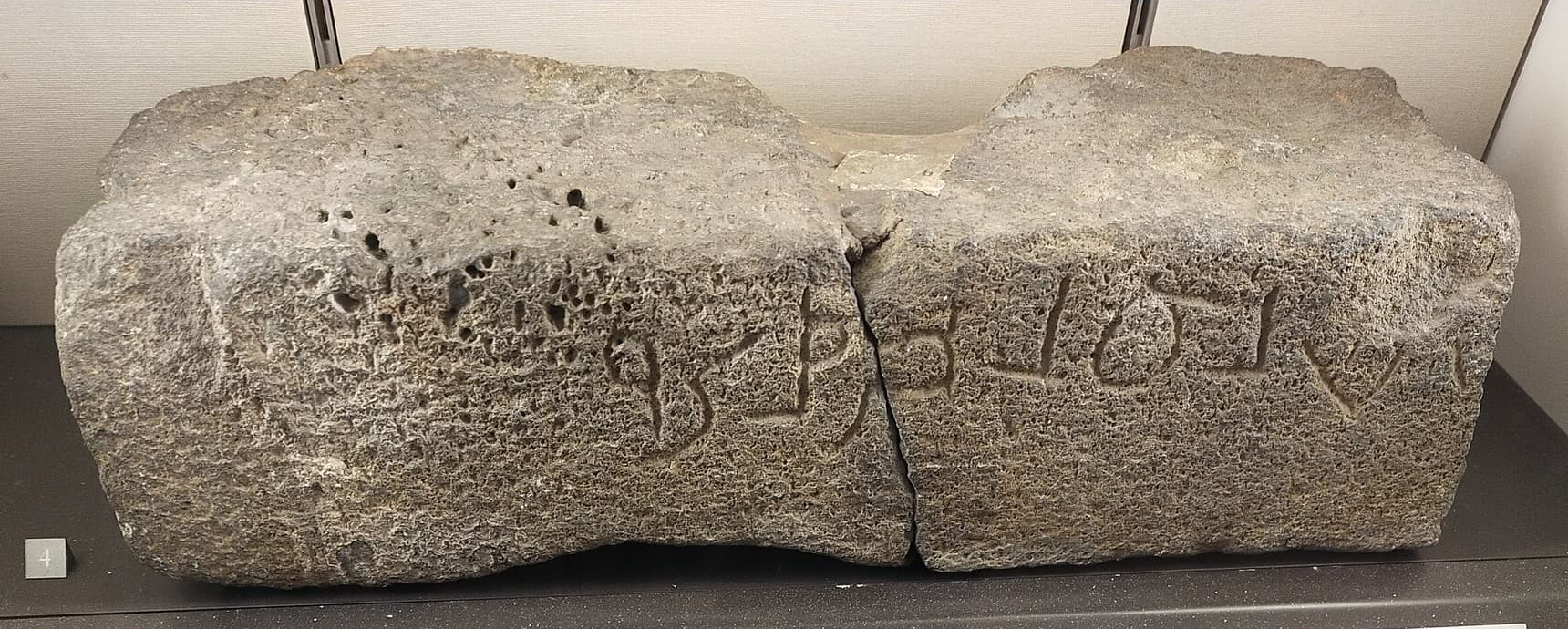
Two stones from Si’ are in Paris, in the Louvre’s Nabataean case. Both are basalt and both date from the 1st century. Block AO 4988 carries a dedication to the god Qasiu; the museum label says it came with the Marquis de Vogüé’s expedition of 1860. AO 4991 is a fragment signed “Shudu, the artisan”. The name of a craftsman who worked at the sanctuary survives through that signature.
Where it stands now
Si’ is in Suwayda governorate, which has been inside an armed conflict since July 2025. The present condition of the site cannot be confirmed from independent sources, and access to the region is not regular. This page tells you what Si’ is; it does not tell you that you can go there today.
Tips
- See Qanawat first; Si' is just outside it and the way is asked there
- Look up AO 4988 and AO 4991 in the Louvre's online catalogue before you go
- The basalt ground is uneven; thick-soled shoes help
Transparency
- How this was chosen
- Written by hand; opening hours, entry fee and coordinates are kept as data. A field that is not known for certain is marked as variable rather than guessed.
- Facts checked
- September 2026
- Last updated
- September 15, 2026