Serjilla
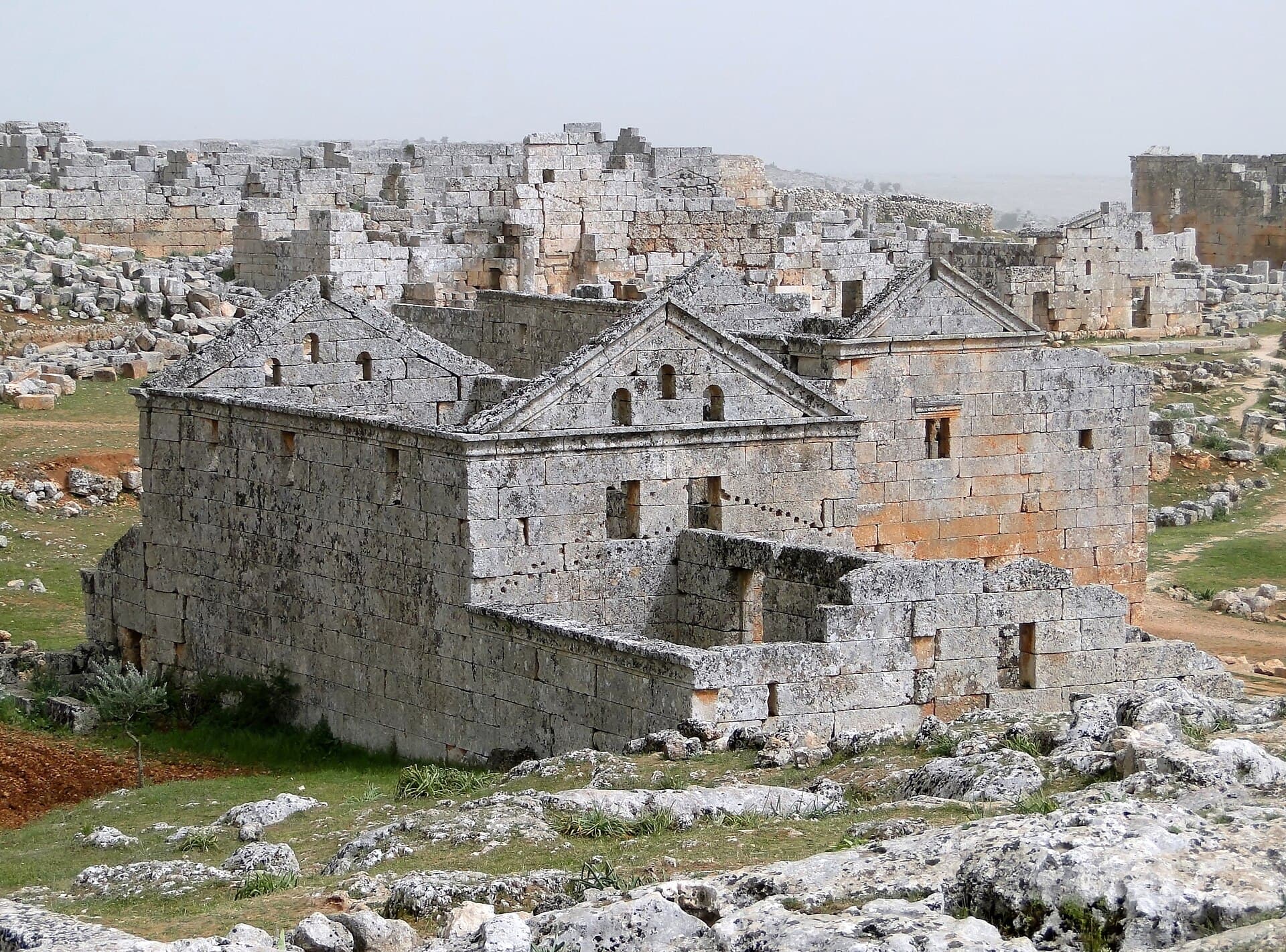
The best preserved of Syria’s Dead Cities: a bath house, an andron and two-storey stone houses, roofless but standing. Built around 473, empty by the 7th century.
- Opening hours
- Open site; if a guard is present, check at the entrance
- Entry
- Variable — check at the entrance
- Duration
- 90 minutes
- Best time
- Spring, while the ground between the stones is green and before the heat
- Period
- Byzantine — 5th to 6th century
- Address
- Jebel Zawiya, near al-Bara, Idlib
The best preserved of the Dead Cities, and the easiest to read. It sits in a natural basin in the Jebel Zawiya, south of Idlib: a bath house, an andron — the hall where the men of the village met — directly opposite it, and two-storey stone houses around them. The roofs were timber and are gone; the walls, door frames and triangular pediments are where they were built. The settlement went up around 473, emptied in the 7th century, and nothing has been built on top of it since. What you walk through is not an excavation but an abandoned village.
Getting there
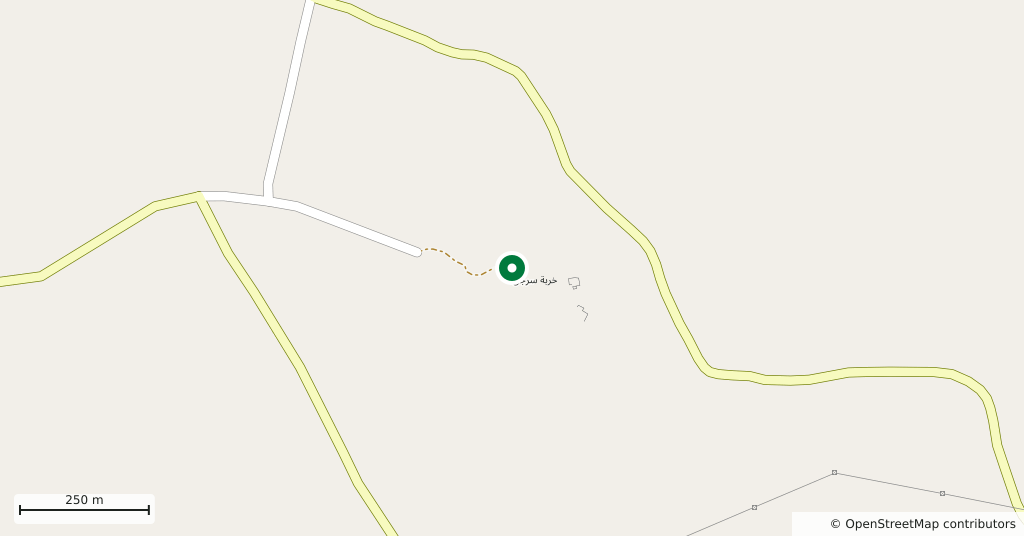
South of Idlib, in the Jebel Zawiya hills. Al-Bara is 7 kilometres away and the two fit into the same half day. There is no public transport; you hire a car and driver in Idlib or Ariha. The last stretch is unsurfaced and turns to mud after rain.
How long it takes
An hour and a half is enough. The three central buildings — bath house, andron, two-storey house — stand within a few hundred metres of each other and the site is walked. With another half hour, climb to the rim of the basin: the plan of the settlement only reads from above.
What to see
The bath house and the andron stand side by side, both under triangular pediments. There was a mosaic on the floor of the baths: a Princeton team found it in 1899, and when they came back six years later it was gone. Most of the houses are two storeys and carry the trace of a colonnaded porch across the front. There are the remains of a small church to the north, and rock-cut sarcophagi on the slopes.
What most people miss
The sunken building behind the andron is an olive press. This is what kept Serjilla alive: olive oil and grapes, sold onto the road between Antioch and Apamea. When that road went, the village went with it. Most visitors walk between the baths and the houses and never see the press.
Tips
- Hire a car and driver; the last stretch is unsurfaced and muddy after rain
- Look for the sunken olive press behind the andron
- Climb to the rim of the basin — the plan only reads from above
- The stone is uneven and slippery; wear shoes with a firm sole
Transparency
- How this was chosen
- Written by hand; opening hours, entry fee and coordinates are kept as data. A field that is not known for certain is marked as variable rather than guessed.
- Facts checked
- August 2026
- Last updated
- September 15, 2026