Khirbet al-Khatib, Temple and Church Ruins on Jebel Barisha
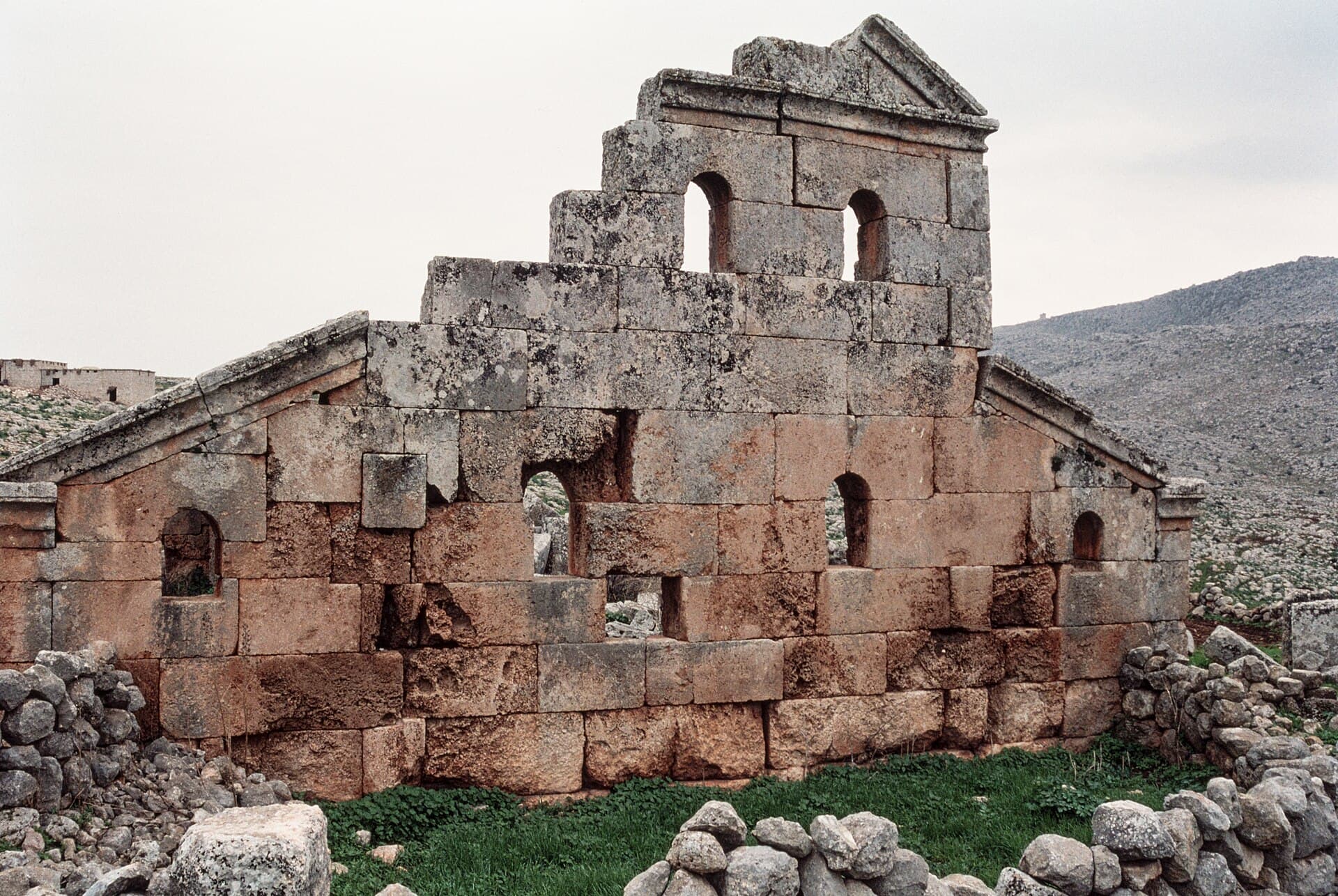
Temple remains, a church dated 473 and a baptistery dated 532 share one slope of Jebel Barisha. Butler found the second moulding in its apse in no other church.
- Opening hours
- Open site, daylight hours
- Entry
- Variable — confirm on arrival
- Duration
- 45 minutes
- Best time
- Spring and autumn, before the summer heat
- Period
- Roman — Byzantine
- Address
- Northern Jebel Barisha, Idlib
A small ruin field in the north of Jebel Barisha, with an unusually well-documented history. Three layers share the site: the remains of a pagan temple from the 2nd and 3rd centuries, a columned church dated by its inscription to 473, and a baptistery dated 532. Few places on the mountain show the move from temple to church this plainly on a single slope. The site is one of the components of the Jebel Barisha park within the Ancient Villages of Northern Syria, a UNESCO World Heritage property.
Getting there
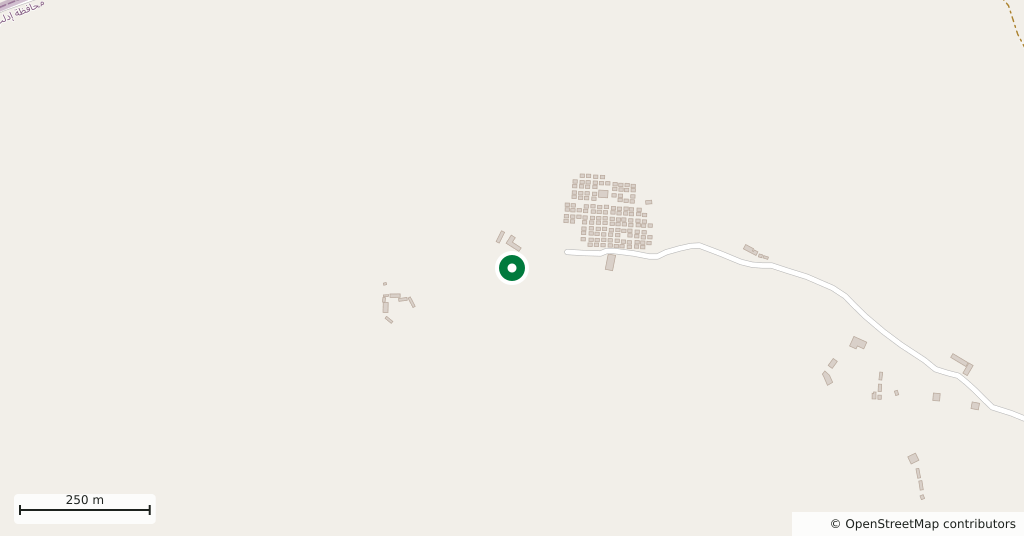
North of Idlib, in the northern part of Jebel Barisha. In a straight line Baqirha is 2 kilometres away and Dar Qita about 2500 metres. There is no public transport; you hire a car and driver in Idlib. Nothing is signposted, so the driver needs to know the place. Sources spell the name two ways: Khirbet al-Khatib and Khirbet al-Katib.
How long it takes
Forty-five minutes. The church, the baptistery and the houses around them make a short walk. Baqirha fits easily into the same morning.
What you see
The church. In Early Churches in Syria, published in 1929, Howard Crosby Butler counts it among the least decorated of the region’s small village churches. It is a short basilica, only four bays long. The west front still stands: a tall central section under a triangular pediment, with round-headed windows below. Photographs in the Dumbarton Oaks archive show acanthus and Ionic capitals inside, and columns lying where they fell.
The baptistery. A small, plain building about 5 metres south-east of the church, dated 532 by a Syriac inscription. Its east wall is thicker than the others and holds a niche with a shallow basin at its foot. The doorway carries a lintel cut with decorative bands. The windows are small, each a single opening.
The temple. The ICOMOS evaluation of 2011 records the remains of a pagan temple from the 2nd and 3rd centuries here. We found no detailed account of how much of it can still be picked out. The Dumbarton Oaks team also photographed an opening they thought might be the entrance to a hypogeum, an underground tomb.
Don’t miss
The apse Butler described. A moulding runs round it where the half-dome begins; that much is standard. What is not standard is a second moulding halfway up the apse. It projects, turns and runs down onto the piers, so the pier capitals sit between the two mouldings. Butler wrote that he met this motif in no other church.
Tips
- Give the driver both names: Khirbet al-Khatib and Khirbet al-Katib
- Look for the second moulding halfway up the apse; Butler found it in no other church
- The baptistery is about 5 metres south-east of the church; look at the niche with a basin in its east wall
- Baqirha is 2 kilometres away in a straight line; put the two in one morning
Transparency
- How this was chosen
- Written by hand; opening hours, entry fee and coordinates are kept as data. A field that is not known for certain is marked as variable rather than guessed.
- Facts checked
- September 2026
- Last updated
- September 15, 2026