The Shahba Mosaic Museum
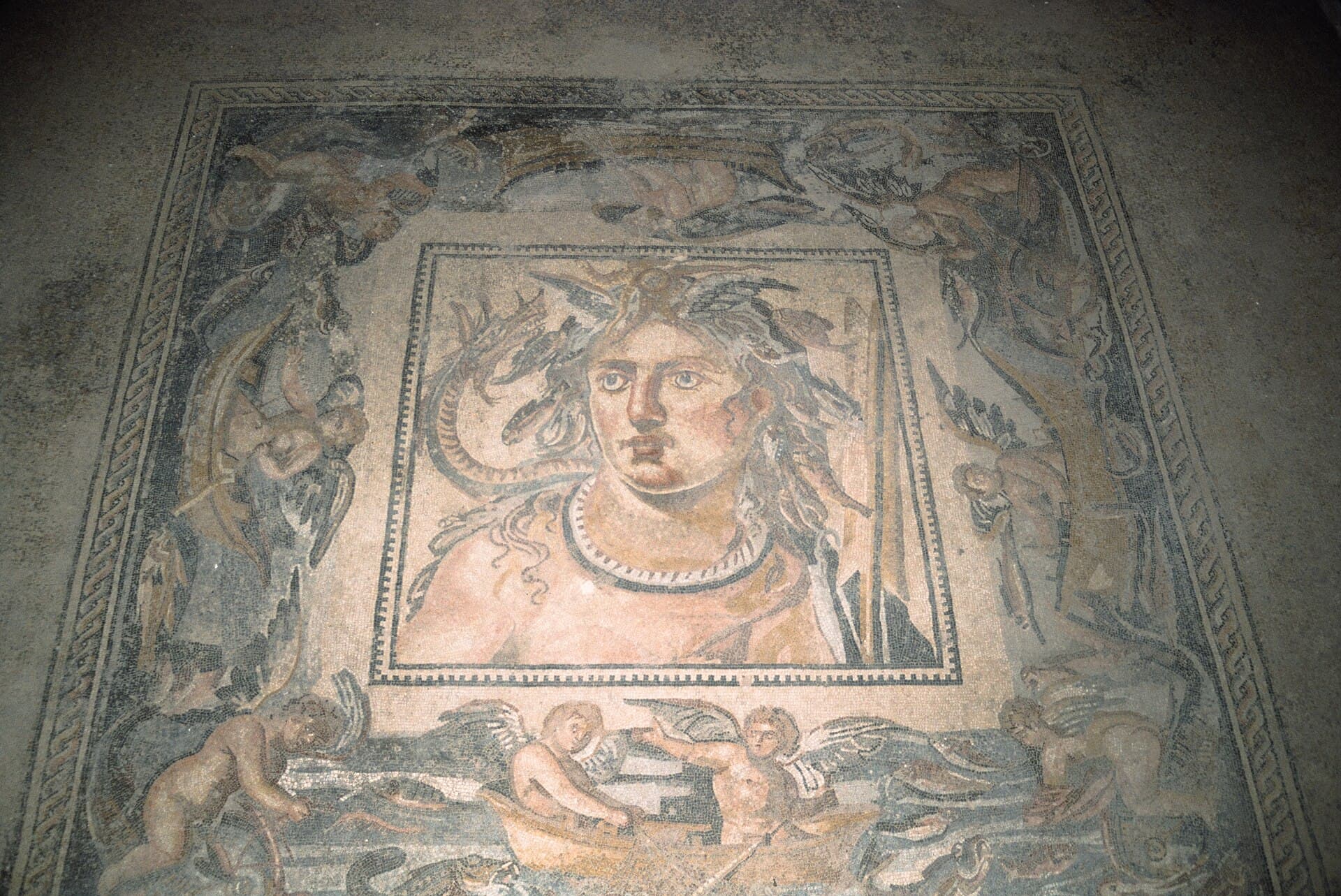
A museum set up in 1962 inside a Roman building at Shahba. Its Tethys, Orpheus, Ariadne and Dionysus, and Aphrodite and Ares mosaics stay where they were laid.
- Opening hours
- Variable — current status not confirmed, check locally
- Entry
- Variable — check at the entrance
- Duration
- 60 minutes
- Best time
- Midday; an indoor stop in the hottest hour of the ruins walk
- Period
- Roman
- Address
- South of the imperial baths, Shahba, Suwayda governorate
A small museum in Shahba, built into a Roman structure uncovered by excavation. Some of the mosaics are still where they were laid: you do not walk into a gallery the pieces were moved to, but into the room where they were found. Four large panels show scenes from Greek myth, and this is the most direct look you get inside the houses of Philippopolis, Roman Shahba.
How the museum began
Excavators found a building of 28 rooms and halls south of Shahba’s imperial baths. Rather than lift the mosaics, the Syrian Directorate-General of Antiquities and Museums decided in 1962 to put the museum inside the same building, which was repaired and fitted out for display.
Getting there
Shahba is about twenty kilometres north of Suwayda on the road to Damascus. The museum is inside the town, on the south side of the imperial baths. It falls on the same walk that takes in the theatre, the Philippeion and the baths.
What to see
- Tethys: the sea goddess at the centre, with thick hair and wings on her brow. Around her are fish, a dog-headed sea dragon, and Erotes riding dolphins and boats.
- Ariadne and Dionysus: Ariadne enthroned and hung with jewellery, Dionysus beside her with his staff, Heracles in the scene. The border carries vine leaves, hunting and grape-harvest scenes, with the four seasons in the corners, which is why the panel is also called the Four Seasons mosaic.
- Orpheus: seated on a rock, playing the lyre, surrounded by the animals his music draws in, among them a peacock, a tiger, an eagle, a snake, an elephant and a horse.
- Aphrodite and Ares: women and Erotes compete to take the weapons of Ares.
At the entrance are temple fragments, inscribed stones and a Dionysus mosaic. Inside is a white marble head of Emperor Philip the Arab, Shahba’s most famous son. The Dumbarton Oaks archive also photographed a Three Graces mosaic here.
What not to miss
Orpheus’s clothes. The Thracian singer of the myth is dressed here in eastern Syrian costume. The workshop that laid the mosaic moved the legend into its own world, and the detail is easy to lose among the animals at first glance.
Where it stands now
Shahba is in Suwayda governorate, which has been inside an armed conflict since July 2025, and the town’s name appeared in reporting on the fighting through 2026. Whether the museum is open and what state the mosaics are in cannot be independently confirmed. This page tells you what the museum is; it does not tell you that you can go there today.
Tips
- The large Glory of the Earth mosaic found in 1952 is not here but in the National Museum in Damascus
- Fit it into the ruins walk; the museum is south of the baths, on the same route
- Ask locally whether it is open before driving to Shahba
Transparency
- How this was chosen
- Written by hand; opening hours, entry fee and coordinates are kept as data. A field that is not known for certain is marked as variable rather than guessed.
- Facts checked
- September 2026
- Last updated
- September 15, 2026