Shahba (Philippopolis)
The city a Roman emperor built on the village where he was born, left unfinished when he died. What to see at Shahba, how long it takes, what it is like now.
- Opening hours
- The ruins lie within the streets of the town and can be seen through the day; no timetable for the museum could be confirmed
- Entry
- Variable — confirm at the entrance
- Duration
- 120 minutes
- Best time
- The first hour of the morning; there is no shade and the basalt heats up after noon
- Period
- Roman
- Address
- Shahba, 20 kilometres north of As-Suwayda
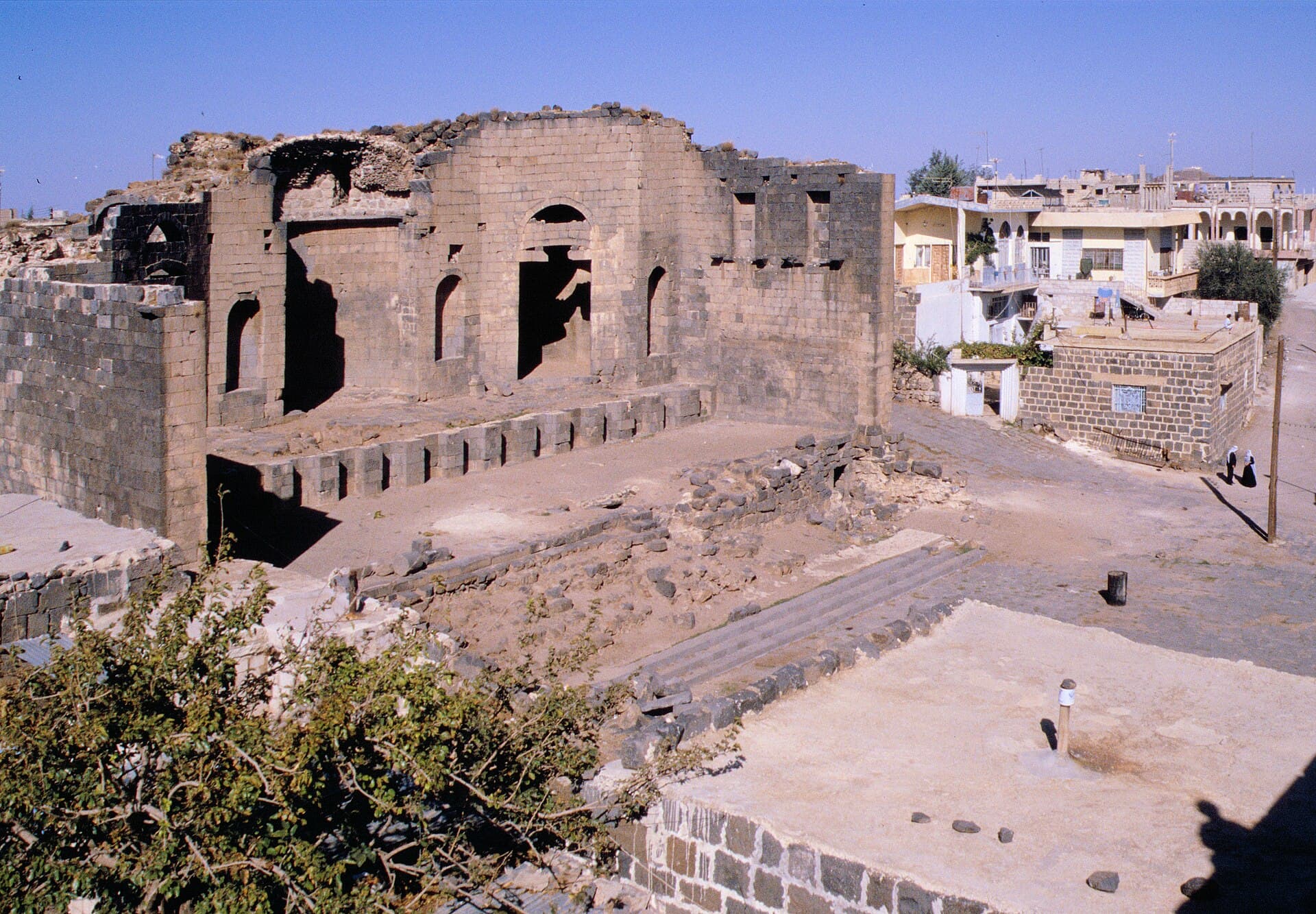
The last city Rome founded in the East, and it was never finished. When Philip the Arab became emperor in 244 he rebuilt the village he came from and named it Philippopolis. A regular Roman grid was drawn from scratch: two colonnaded avenues crossing at right angles, a wall with ceremonial gates, baths, a theatre, a temple with six columns across the front. When he died in 249 the building stopped. Most of the blocks the streets divide never had houses put on them — what you walk through is the plan of a city that was never completed.
Getting there
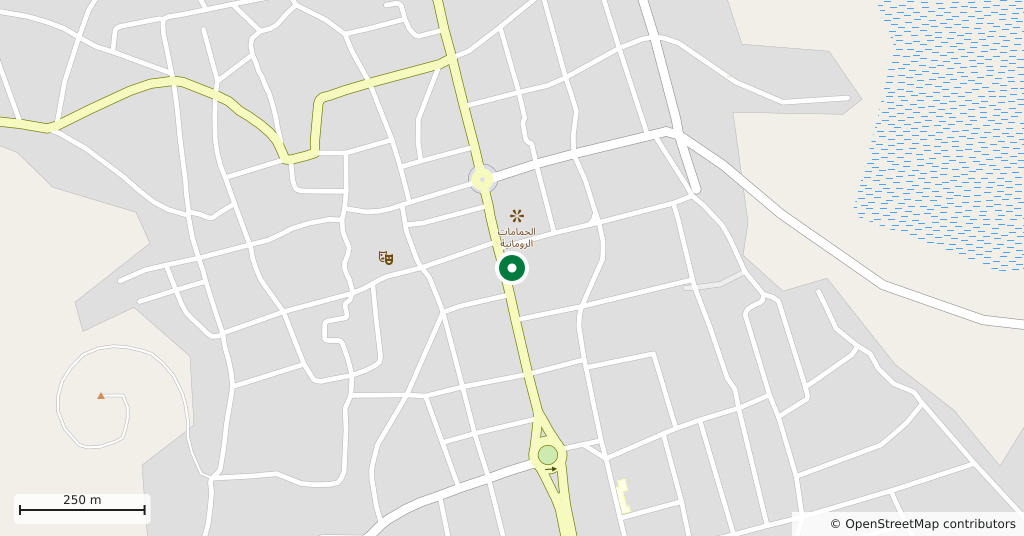
Twenty kilometres north of As-Suwayda and about eighty-seven kilometres from Damascus. The ruins are not a fenced site but part of the town: the open-fronted shrine known as a kalybe stands at the edge of the main square, the theatre is a few streets away, and the baths and the council house sit among the houses in between. You park and walk.
How long it takes
Two hours. Half an hour for the kalybe and the temple on the square, half an hour for the theatre, an hour for the baths, the Philippeion and the streets between them. Add another hour if the mosaic museum is open.
What to see
The stone here is black basalt throughout, and the Roman buildings are plain, thick and heavy with it. The theatre is small but sound, its seating and the arched passages behind it still in place. The Philippeion, a monument raised for the emperor’s family, stands beside the square. The kalybe is a building type peculiar to the Hauran: not an enclosed cella but a cult façade open to the air. Between them lie the baths, the council house and the traces of the colonnaded avenues that set out the grid. Shahba’s mosaics are a subject of their own. The great one found in a house in 1952 was moved to the national museum in Damascus; the museum in the town keeps other panels where they were laid.
What not to miss
Ask yourself why so much of it is still standing. Shahba was far from any settlement large enough to want cut stone, so there was nobody to strip an abandoned Roman city. That is why most ancient sites near Aleppo and Damascus are gone and why this one is here. The second detail is in the streets: the empty blocks where no house was ever built are the marks of a building site abandoned two thousand years ago.
Where it stands now
Shahba is in Suwayda governorate, which has been inside an armed conflict since July 2025. The town’s name appeared in reporting on the fighting through 2026. The condition of the ruins cannot be independently confirmed, it is not known whether the museum is open, and access to the region is not regular. This page tells you what Shahba is; it does not tell you that you can go there today.
Tips
- Start at the kalybe on the square; the theatre and the baths are within walking distance
- The largest mosaic is not here but in the national museum in Damascus — don't confuse the two
- The ruins stand among people's houses; ask before stepping into a courtyard
- The town is above a thousand metres, with snow and ice in winter; April and October are easier
Gallery
Transparency
- How this was chosen
- Written by hand; opening hours, entry fee and coordinates are kept as data. A field that is not known for certain is marked as variable rather than guessed.
- Facts checked
- September 2026
- Last updated
- September 15, 2026