Souq Saruja
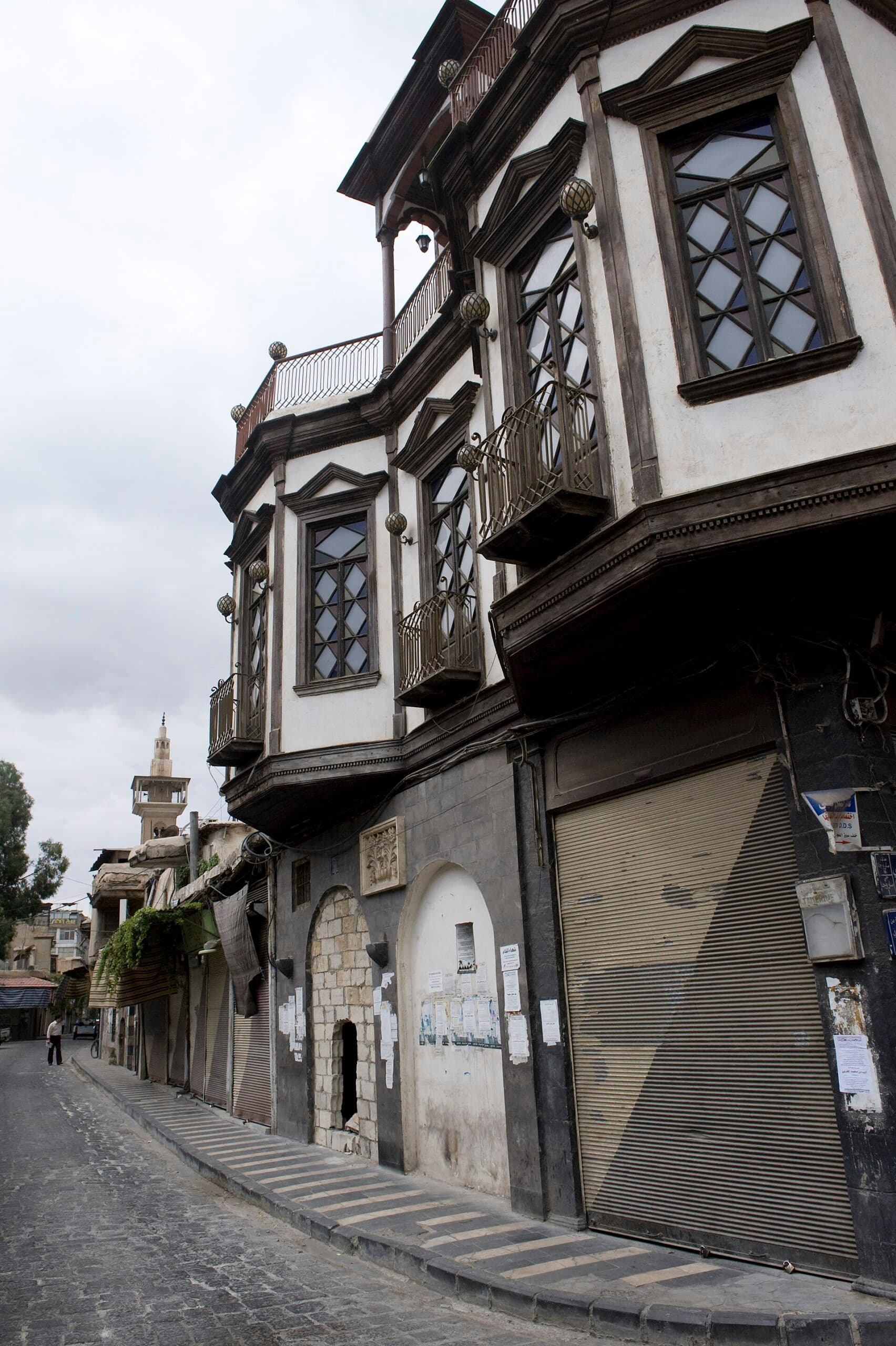
A Mamluk-era quarter north of the walls: timber upper floors overhanging the lane, a market street lined with workshops, old Damascus outside the old city.
- Opening hours
- Lanes at any hour; shops morning to evening, closed Friday until midday
- Entry
- Free
- Duration
- 90 minutes
- Best time
- Morning; the market gets crowded after midday
- Period
- Mamluk — Ottoman
- Address
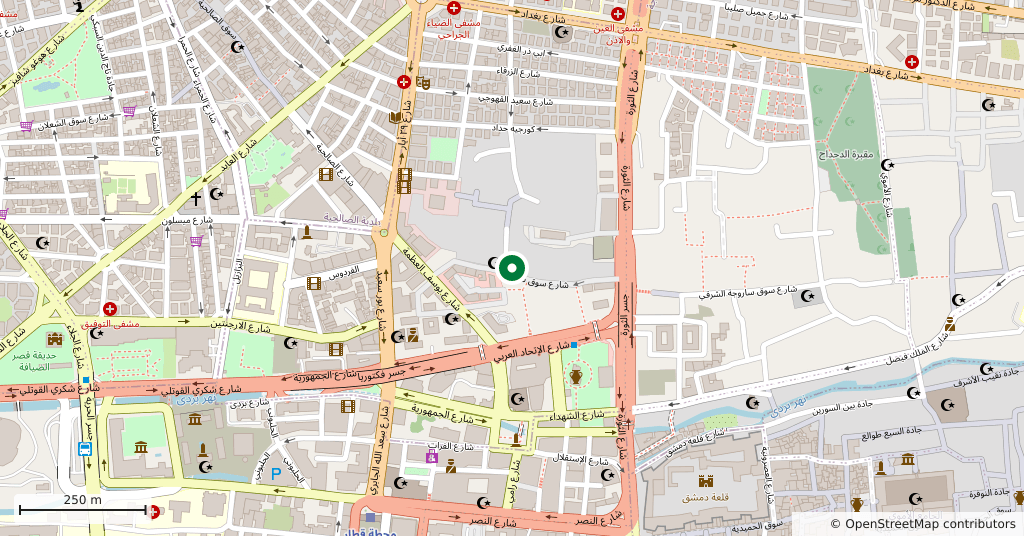
- North of the walls, ten minutes north of Marja Square, Damascus
Souq Saruja is a quarter outside the walls of the old city, on the slope between the citadel and Salihiyya, and one of the first places Damascus spread to in the north. The name covers both a market street and the quarter around it. The first thing you notice on the ground is the timber upper floors jutting out over the lane, with shops lined up underneath.
How the quarter began
The quarter was founded by the Mamluk emir Sarim al-Din Saruja al-Muzaffari, and the sources date it to 760 in the Hijri calendar, that is 1358. Its first name was Suwayqat Saruja, the little market of Saruja. Through the Ottoman centuries this was where officials and large families lived: the Azm, Yusuf and Abid families had their mansions here, and the house of the former prime minister Khalid al-Azm still stands. The institute of oriental music founded by Fakhri al-Barudi also worked in this quarter. When French artillery shelled the city in 1945, Souq Saruja was among the places that burned, and the wide avenues cut through in the second half of the 20th century took another part of it. What is left is two or three lanes wide, but it holds together.
Getting there
Walk north from Marja Square, ten minutes. From the Hejaz station it is the same distance to the northeast. The Tekkiye Suleymaniye lies to the west and the Damascus citadel to the southeast; the quarter sits on the slope between them.
What to see
The spine is the market street, shops down both sides: hardware, cloth, stationery, repairs. In the alleys off it stand Ottoman houses of stone ground floors, timber upper storeys and iron-grilled windows. Some have their doors open and a courtyard turned into a workshop or a store room; some have been restored into cultural venues; some stand empty. The stone corbels under the overhangs and the inscriptions above the doors are worth stopping for.
How long it takes
An hour and a half is enough. The quarter is small, but the lanes slope and cross one another, and there is none of the regular grid of the old city.
What most people miss
Look up. At some points the overhanging floors of two facing houses almost touch, and the gap below them stays in shadow even at noon: no detail explains how the quarter was built better than that one.
Tips
- Come on foot from Marja Square; from a taxi you see none of the lanes
- Turn off the market street into the alleys; the houses are there
- On Friday morning most shops are shut and the lanes are empty
- Combine the walk with the Damascus citadel or the Tekkiye Suleymaniye
Transparency
- How this was chosen
- Written by hand; opening hours, entry fee and coordinates are kept as data. A field that is not known for certain is marked as variable rather than guessed.
- Facts checked
- September 2026
- Last updated
- September 15, 2026