The Tankiz Mosque
On An-Nasr Street beside Marjeh Square: what the Mamluk viceroy Tankiz built in 1317 survives as one minaret, two portals and a mosaic mihrab in his tomb.
- Opening hours
- Open at prayer times; other hours vary — ask at the door
- Entry
- Free
- Duration
- 25 minutes
- Best time
- After midday prayer, once the courtyard empties
- Period
- Mamluk — rebuilt in the 20th century
- Address
- An-Nasr Street, near Marjeh Square, Damascus
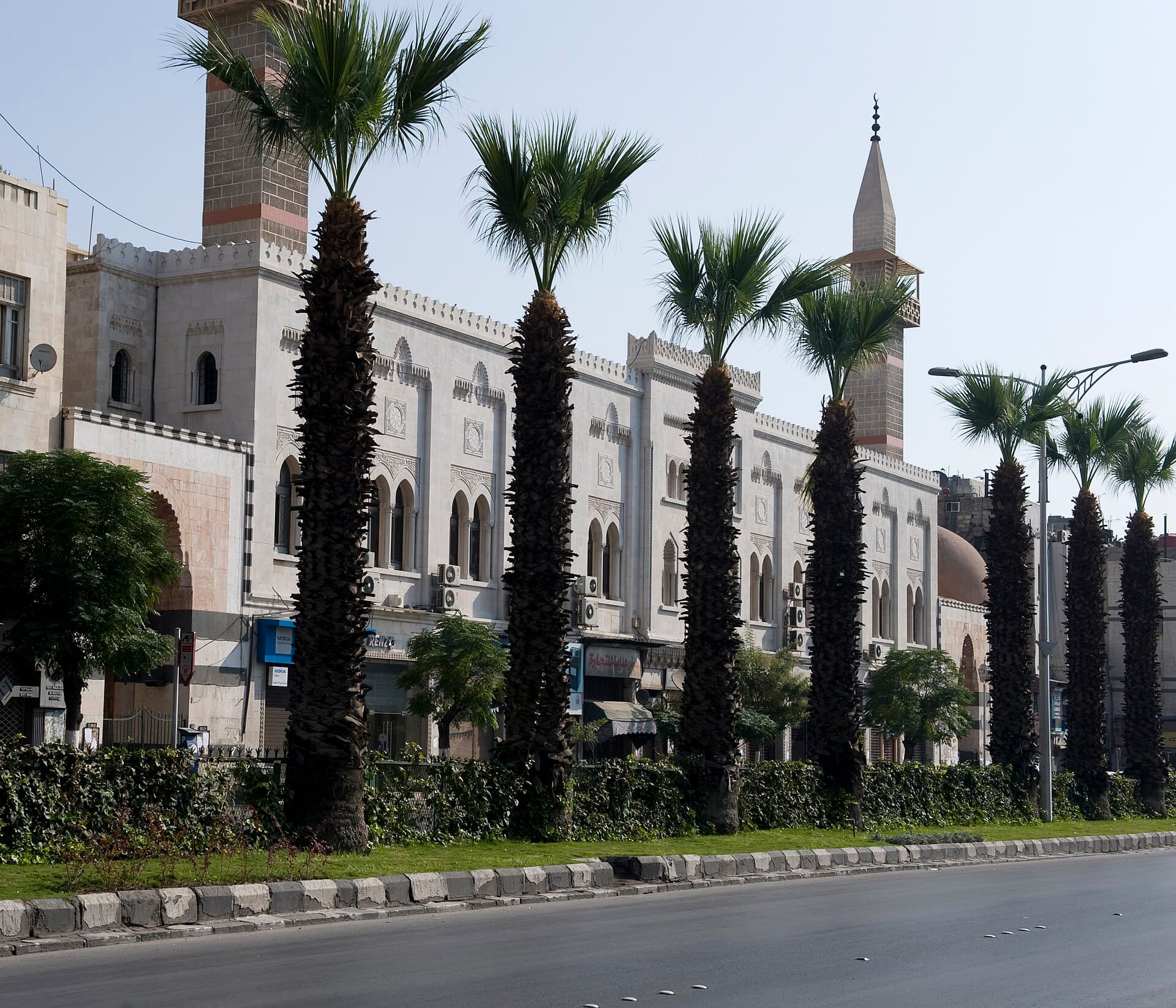
A Mamluk endowment on An-Nasr Street, about 150 metres south-west of Marjeh Square. Sayf al-Din Tankiz, the Mamluk viceroy of Damascus, built it in 1317, but the building you see from the street went up in 1951. From the original mosque there remain the Mamluk minaret on the north side, two portals, the mihrab and Tankiz’s tomb. The rest is concrete and white stone.
Getting there
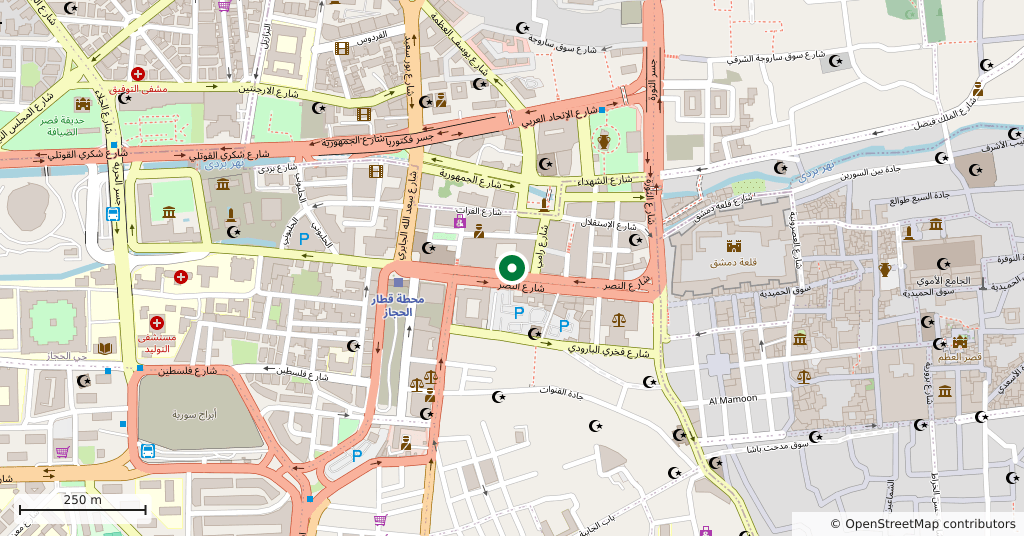
Walk 250 metres east from the Hijaz Station; the mosque is on the avenue. From the Citadel of Damascus the direction is west and the distance 450 metres. Two minarets show above the facade. The older one is known by its banded stone and brick shaft, while the slim white one was added later.
What to see
The tomb is on the right of the first entrance, and the mihrab inside it is covered in mosaic in the Umayyad manner, the oldest surface in the complex. Both portals are Mamluk work as well. When the direction of prayer was argued over, the matter was settled on the opinion of Ibn Taymiyyah, and only then did building start. The Banias branch of the Barada once ran through the middle of the courtyard, and worshippers took their ablutions from it.
Why it was rebuilt
Ibrahim Pasha of Egypt turned the mosque into barracks in 1831. Under the French Mandate it became a military school, was evacuated in 1937 and opened as a mosque again. It burned in 1945, when Damascus was shelled. In 1951 the religious endowments office pulled down what was left, put shops on the site and a new mosque of concrete and white stone above them, keeping the old minaret, the mihrab and the tomb where they stood.
What most people miss
The mihrab in the tomb. An eye that knows the mosaics of the Umayyad Mosque will read the same language here, and without the crowd. Most visitors glance at the street facade and walk on.
Tips
- The tomb is on the right of the first entrance; step inside for the mosaic mihrab
- The old Mamluk minaret is on the north side, known by its banded stone and brick shaft
- The Hijaz Station is 250 metres west; add it to the same walk
Transparency
- How this was chosen
- Written by hand; opening hours, entry fee and coordinates are kept as data. A field that is not known for certain is marked as variable rather than guessed.
- Facts checked
- September 2026
- Last updated
- September 15, 2026