Tuttul (Tell Bi’a)
A 40-hectare mound just north-east of Raqqa where the Balikh meets the Euphrates: the city of the god Dagan, with a Byzantine monastery on its summit.
- Opening hours
- Open ground, daylight hours
- Entry
- Free
- Duration
- 60 minutes
- Best time
- A spring morning; there is no shade on the mound in summer
- Period
- Akkadian — Old Babylonian — Byzantine
- Address
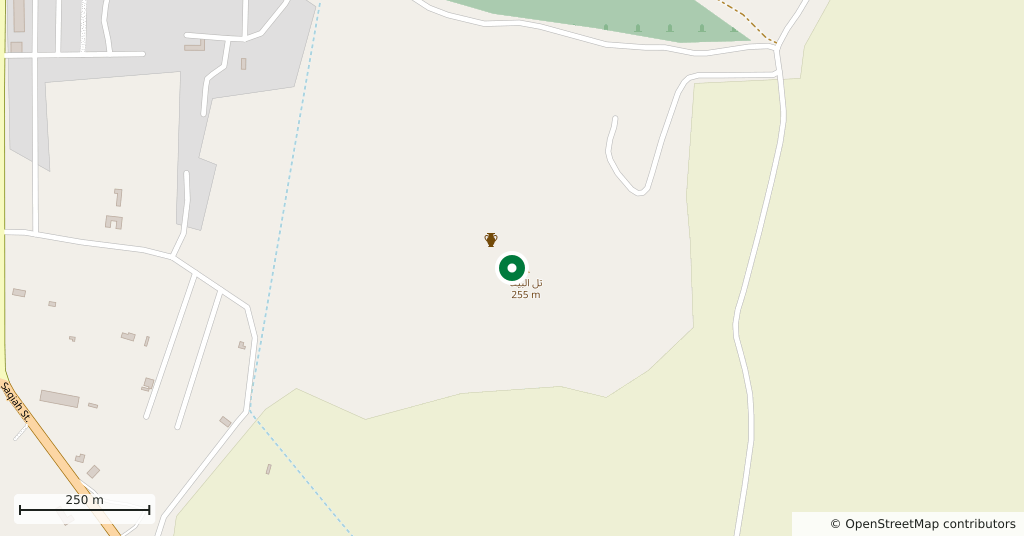
- Balikh–Euphrates junction, north-east of Raqqa
A mound of 40 hectares on the flat ground 3 kilometres north-east of Raqqa, where the Balikh river runs into the Euphrates. This is the site of the city that cuneiform records call Tuttul; its Arabic name, Tell Bi’a, means “mound of the church” and comes from the Byzantine monastery found on its summit. The two names describe two cities stacked on each other.
Getting there
A short drive out of Raqqa on the road running north-east. The mound sits among fields and reads from a distance as a single low ridge. There is no gate, no sign and no ticket office; ask locally about the approach.
What to see
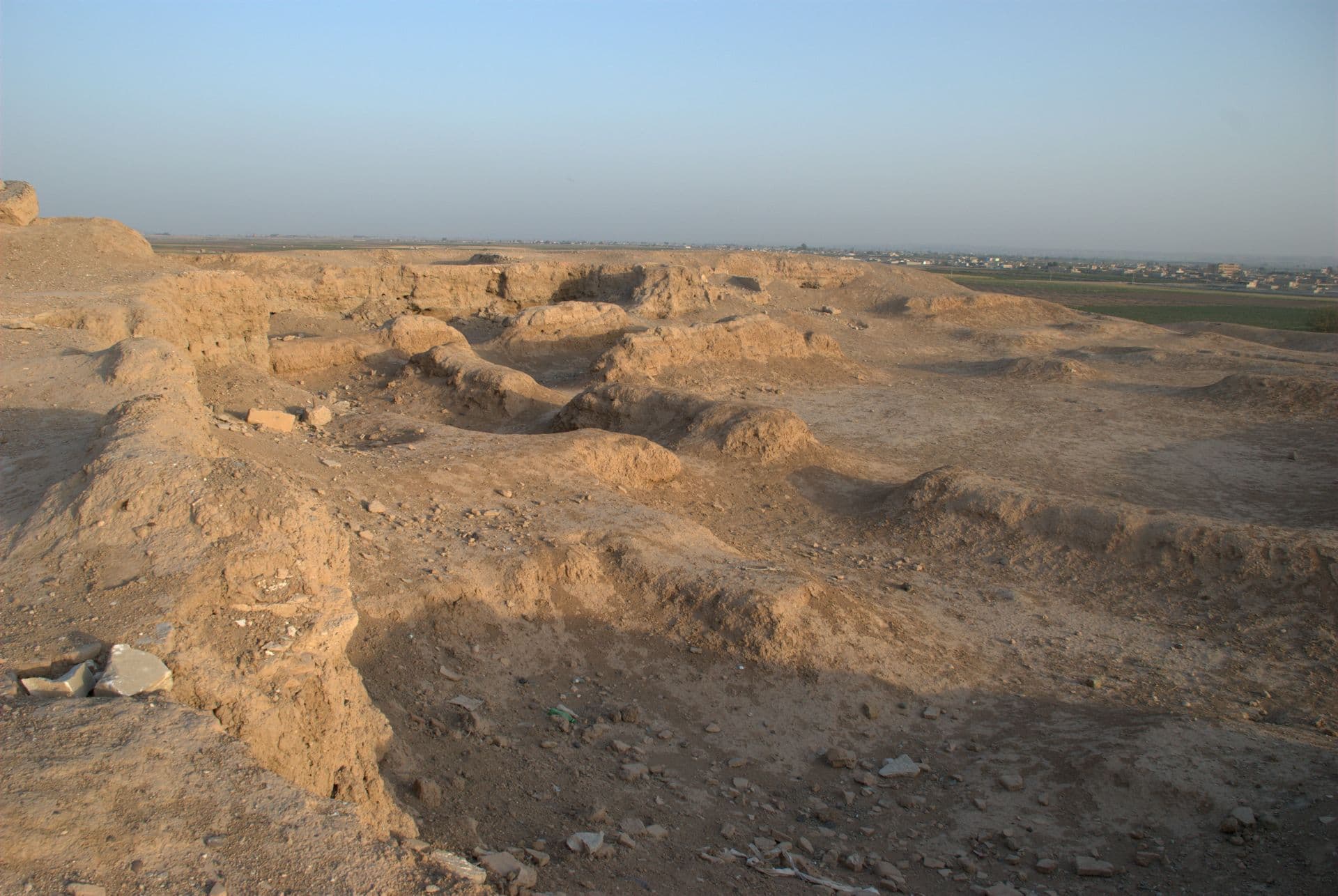
The central mound and the low ridges that ring it. Those ridges are what is left of the city wall and they mark the limit of the site. Excavation trenches are still open. The mudbrick walls can be read layer by layer in section.
What remains
A team led by Eva Strommenger for the German Orient Society dug here between 1980 and 1995. At the summit they found a Byzantine church with mosaic floors and its refectory. Below it lay a palace holding cuneiform tablets of the time of Shamshi-Adad, around 1800 BC. Below that again came an Early Bronze Age palace and a building of the Akkadian period. The mound was looted heavily during the war years, and satellite imagery shows tunnels cut with machinery. What you find on the ground is the sum of both.
What not to miss
Tuttul was known for the temple of Dagan, the grain god. Sargon of Akkad’s own text says he bowed down to Dagan in Tuttul, and that the god then gave him Mari, Yarmuti and the upper land as far as Ebla. Standing on the mound and knowing that the hill under your feet entered a foundation text of an empire changes what you are looking at.
Tips
- Ask in Raqqa about the approach; no signposted road leads to the mound
- Trench edges are loose, keep away from the cut sections
- The walls standing on the summit are the Byzantine monastery, not Tuttul
Transparency
- How this was chosen
- Written by hand; opening hours, entry fee and coordinates are kept as data. A field that is not known for certain is marked as variable rather than guessed.
- Facts checked
- September 2026
- Last updated
- September 15, 2026