The Yalbugha Mosque at Marjeh Square
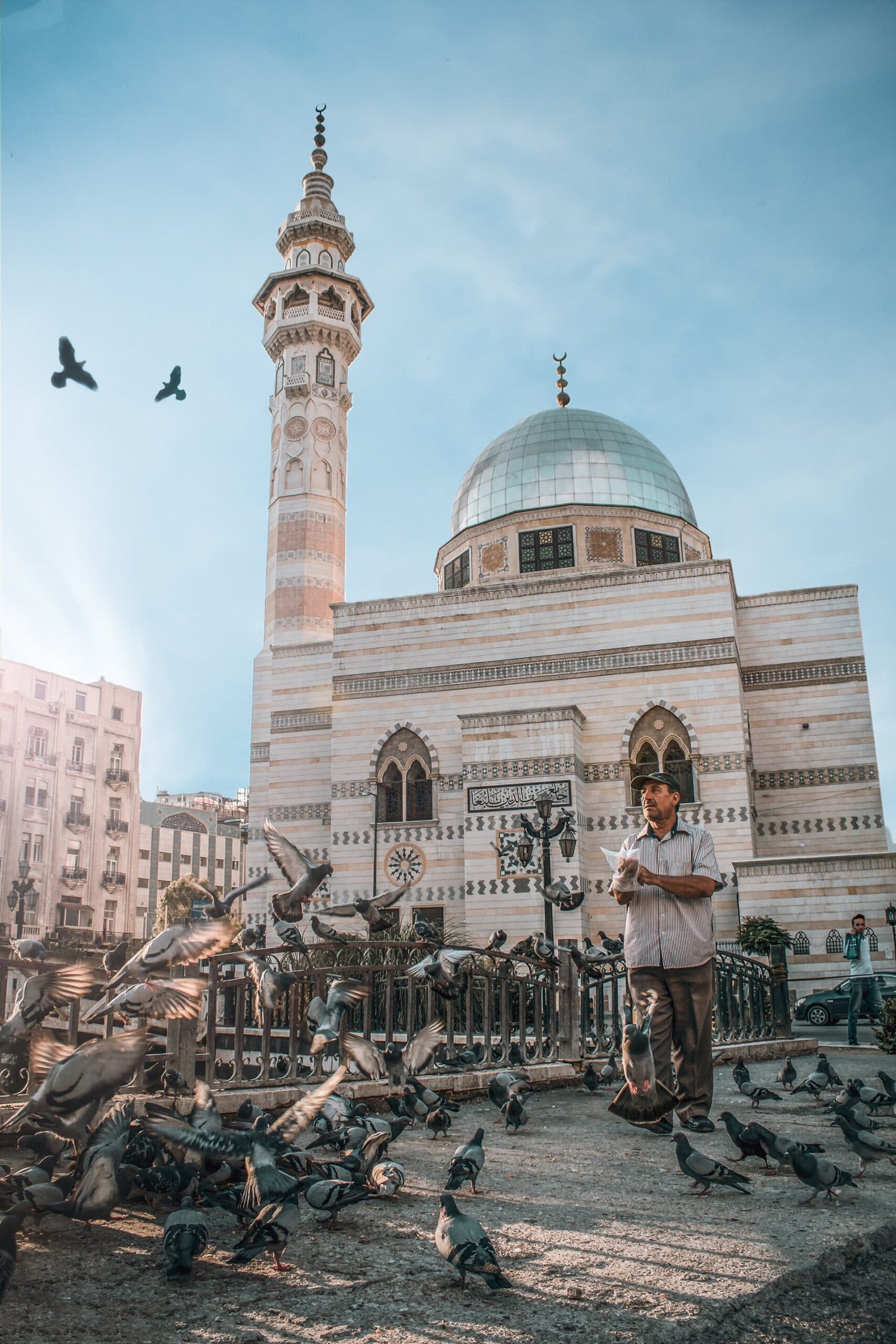
The mosque on the north side of Marjeh Square. The Mamluk building that stood here was pulled down in 1974; the larger mosque now on the site opened in 2014.
- Opening hours
- Open around prayer times
- Entry
- Free
- Duration
- 20 minutes
- Best time
- Morning, while the pigeons are being fed
- Period
- Mamluk — modern
- Address
- Marjeh Square, Saruja, Damascus
On the north side of Marjeh Square stands a mosque with a marble front and a metal dome. It opened for prayer on 27 October 2014. But there had been a mosque here since 1264: a Mamluk building put up outside the Damascus wall, on the bank of the Barada. That building was pulled down in 1974, and the present mosque was raised on the same ground and given the same name.
Getting there
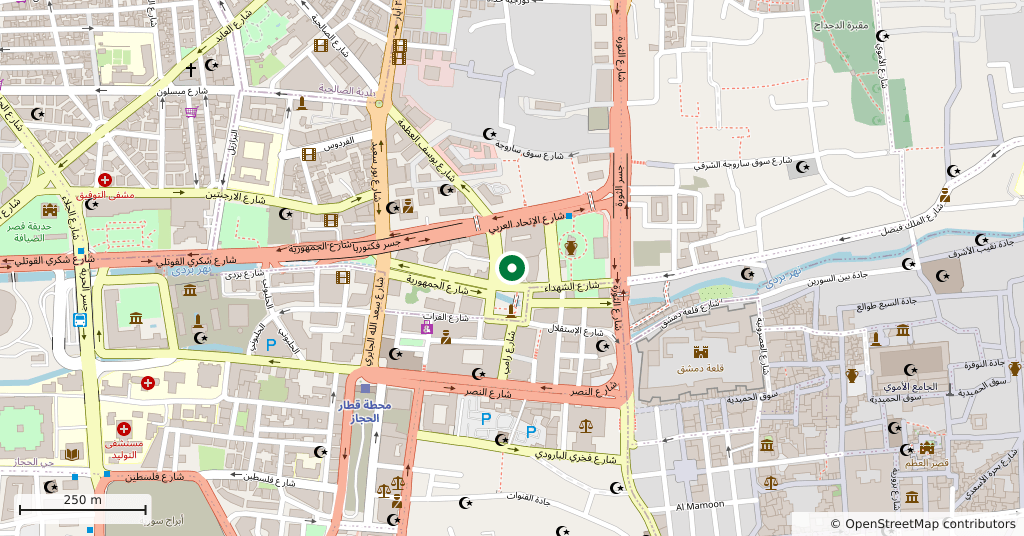
Marjeh is the modern centre of Damascus. Ten minutes on foot from the western mouth of the Al-Hamidiyah Souq brings you into the square; the mosque is on the north side and its minaret picks it out from a distance. Souq Saruja lies just north.
What to see
The building is new but it follows Damascene habit. The front is banded in pale marble, the door and window arches are pointed, the dome is metal and the minaret carries a single balcony. A stone panel above the main door gives the name of the mosque. The terrace facing the square is full of pigeons, and that is what the mosque looks like on an ordinary day.
What happened to the old mosque
The Mamluk building is dated to 1264. Some sources tie it instead to Sayf al-Din Yalbugha al-Yahyawi, governor of Damascus, and to 1346; the mosque carries his name. It was repaired several times over the centuries, and the last major repair we know of was ordered in 1756 by As’ad Pasha al-Azm, which the Damascene barber Al-Budayri noted in his diary. During the years of Egyptian rule the building was used as a biscuit factory. In 1974 it was demolished for the redevelopment of the square.
What most people miss
The Telegraph Monument in the middle of the square is fifty paces from the mosque, and the two fit in one frame: a cast-iron column of 1907 against a marble front of 2014. Then look at the stone panel over the door; the spelling of the name was carried over from the building that came down.
Tips
- The Telegraph Monument is fifty paces away; see the two together
- The stone panel above the door carries the name of the mosque
- Souq Saruja is north of here; walk on to it afterwards
- The square is open to traffic; stay on the pavement side for photographs
Transparency
- How this was chosen
- Written by hand; opening hours, entry fee and coordinates are kept as data. A field that is not known for certain is marked as variable rather than guessed.
- Facts checked
- September 2026
- Last updated
- September 15, 2026