Yusuf al-Azma Square
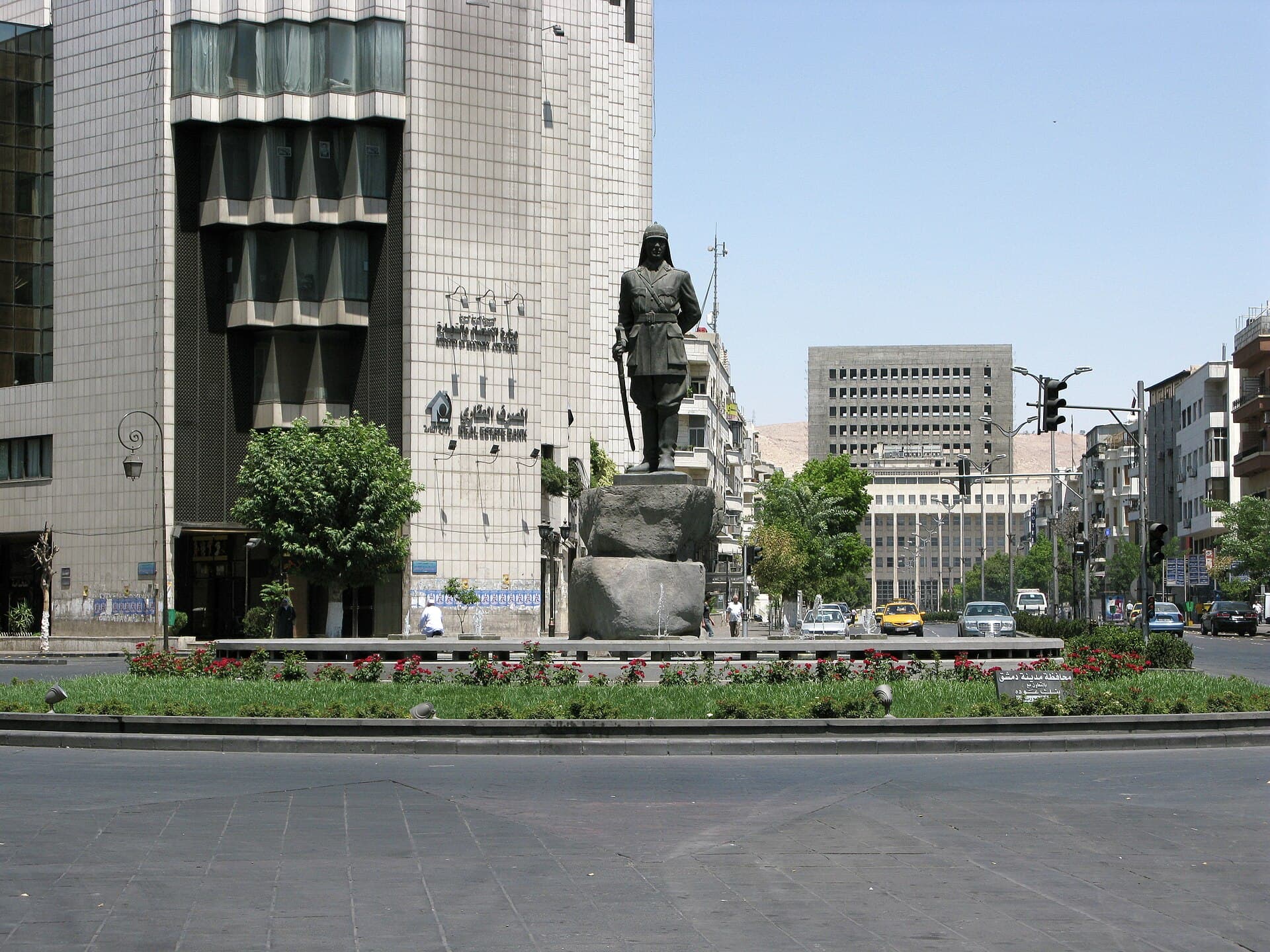
The administrative centre of modern Damascus. The statue at its middle is Yusuf al-Azma, the war minister killed at Maysalun in 1920 fighting the French.
- Opening hours
- Open square, any hour
- Entry
- Free
- Duration
- 30 minutes
- Best time
- Morning, before traffic fills the ring
- Period
- Republican era, rebuilt in 2007
- Address
- Yusuf al-Azma Square, central Damascus
This is the administrative centre of Damascus. At the middle of the square a soldier stands on rough basalt blocks: Yusuf al-Azma, Syria’s minister of war and commander of its army. He was killed at Maysalun in 1920 fighting the French army, and the square carries his name. It has a second name in the city, Sahat al-Muhafaza, the Governorate Square.
Getting there
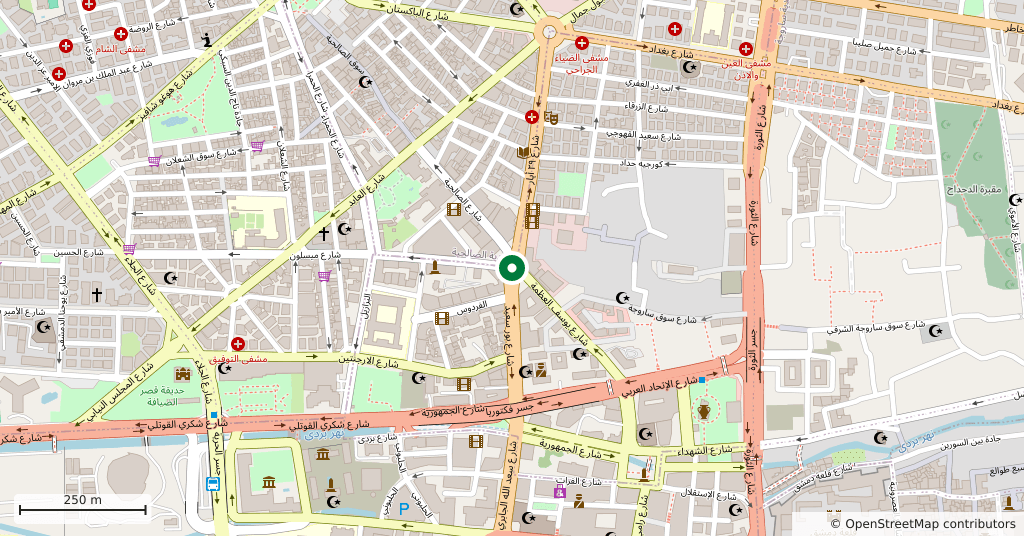
Every walk through the centre passes here. Sabaa Bahrat Square and the Hejaz railway station are both within walking distance, and Port Said Street, where the Havana café stands, begins at this square. Traffic is heavy and circles the square like a ring, so cross using the pavement rather than the central island.
What to see
The headquarters of the Damascus governorate and the city administration stands on the edge of the square. Around it are the Cham Palace hotel and a run of official and commercial buildings. The square is a working administrative centre rather than a monumental space, and the facades behind the statue put the 20th-century architecture of modern Damascus side by side.
The 2007 rebuild
The square was rebuilt in 2007 and takes its present form from that work. The ground was laid in black basalt and limestone, bitter orange trees were planted along every road feeding the square, the traffic islands were planted with flowers and the fountain system was renewed. The rose beds and black stone paving you see today date from then.
What most people miss
Look at the base of the statue. Al-Azma is not on a horse or a tall column. He stands on rough, unsplit basalt blocks, with water rising between them. Maysalun was entered in the knowledge that the battle was lost, and the base was built like an outcrop rather than a hero’s plinth.
Tips
- Photograph from the pavement; the central island carries traffic
- Look closely at the basalt blocks under the statue
- Sabaa Bahrat Square and the Hejaz station are both walkable from here
- Port Said Street starts at this square; the Havana café is on it
Transparency
- How this was chosen
- Written by hand; opening hours, entry fee and coordinates are kept as data. A field that is not known for certain is marked as variable rather than guessed.
- Facts checked
- September 2026
- Last updated
- September 15, 2026