Outside the walls of Damascus: from al-Qassaa and the Holy Cross Church to Bab Touma
A 90-minute, 1200-metre walk outside the old walls of Damascus: al-Qassaa Street, the Holy Cross Church finished in 1932, Sheikh Raslan Cemetery and Bab Touma.
- Duration
- 1.5 hours
- Distance
- 1.2 km
- Difficulty
- Easy
- Best season
- March–May, September–November; late afternoon
- stops
- 4
- City
- Damascus
Most walks into old Damascus start at Bab Touma. This one reaches the gate from outside, coming down from the north. It begins in al-Qassaa, the Christian district that spread beyond the walls in the early 20th century, and passes the Holy Cross Church, built between 1927 and 1932. Then it skirts the cemetery named after Sheikh Raslan, a 12th-century Sufi, and ends at Bab Touma. In all: 1200 metres, four stops, 90 minutes. The streets are flat and paved, with pavements; the traffic tires you more than the distance.
The route
Start in the southern half of al-Qassaa Street. It runs the length of the district. The apartment blocks with shops on the ground floor, and the grid of streets, come from a plan drawn up under the French Mandate. There is no single monument to look for here; the district itself is the sight. Its name comes from the soil: the clay pots made here were called qassaa.
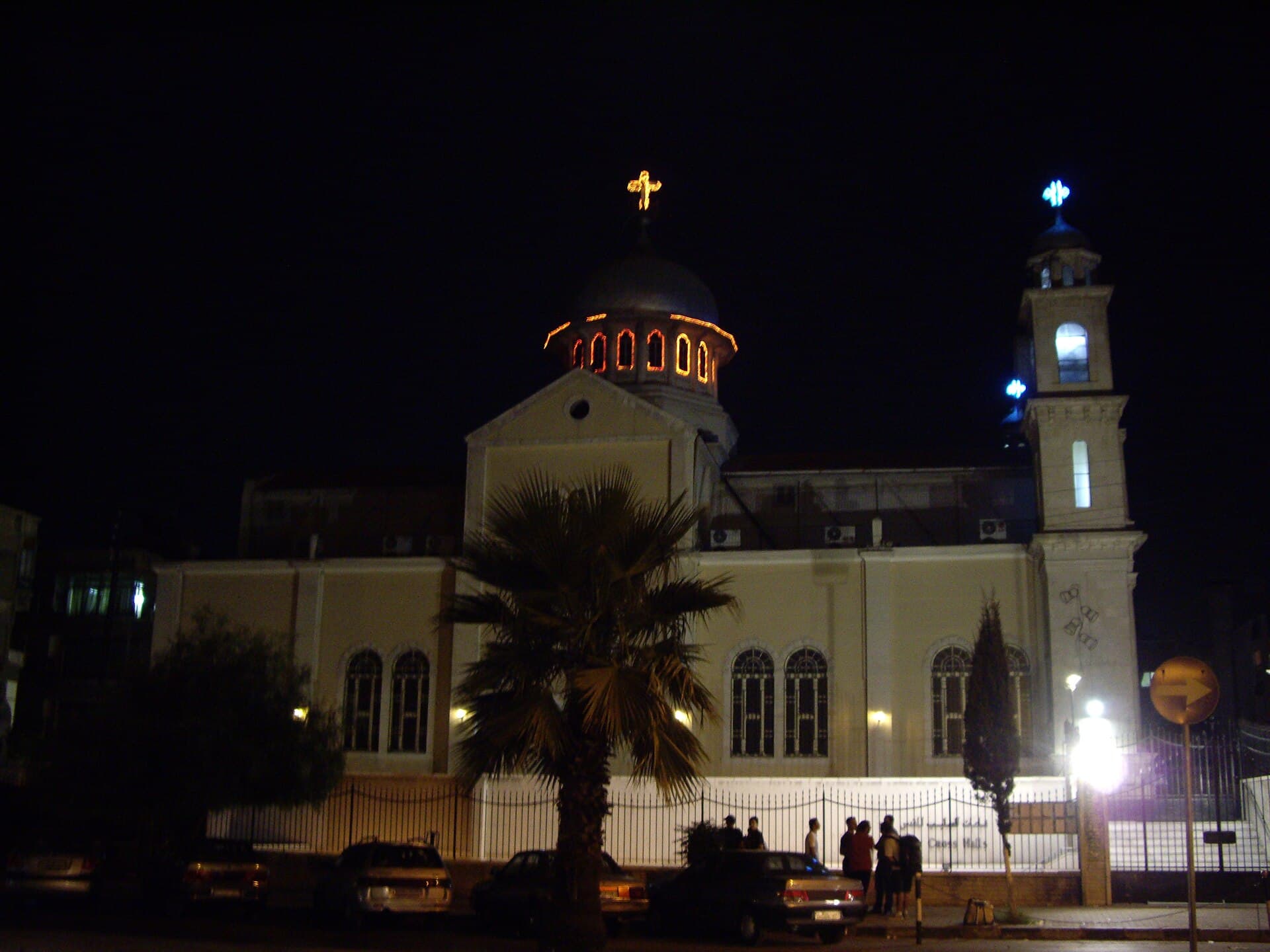
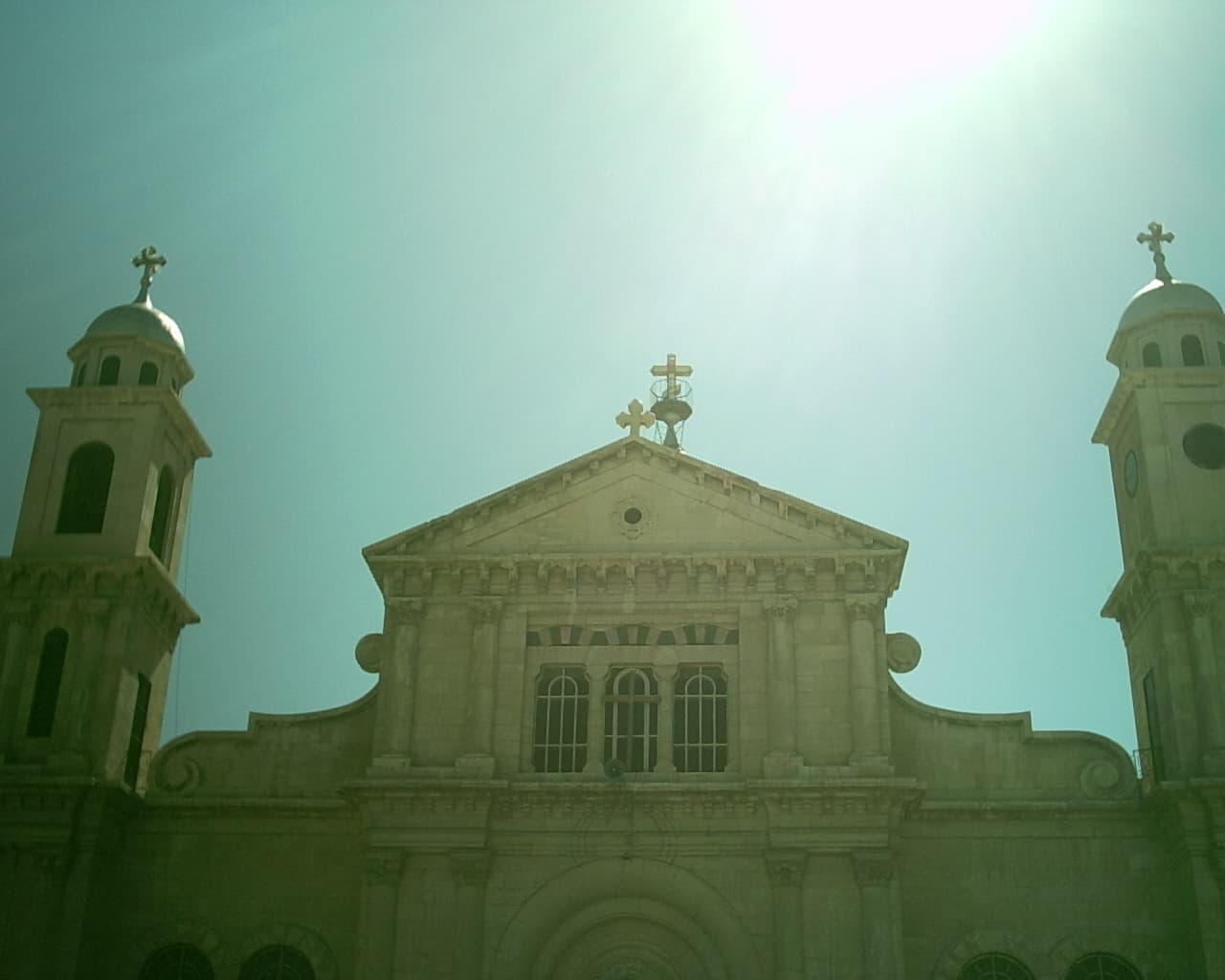
From the street turn east towards al-Manama Street. The Holy Cross Church is 280 metres on, and its twin towers and dome show above the rooftops before the building does. It stands on the site of an older Holy Cross monastery. If you can get inside, look at the marble iconostasis, the screen of icons in front of the altar. It dates from 1936, and the icons on either side are in Greek, Syrian, Russian and Western styles. On 10 February 2013 Patriarch John X was enthroned here; in November of that year a mortar shell hit the building.
From the church head south, towards the line of the walls. Sheikh Raslan Cemetery is 620 metres further, along Sheikh Raslan Street. The sheikh was born in 1077 at Qal’at Ja’bar, earned his living as a carpenter and split his income three ways: food, clothing and charity. He died in 1146. Burials still take place here. Walking along the edge, or a few quiet steps inside, is enough.
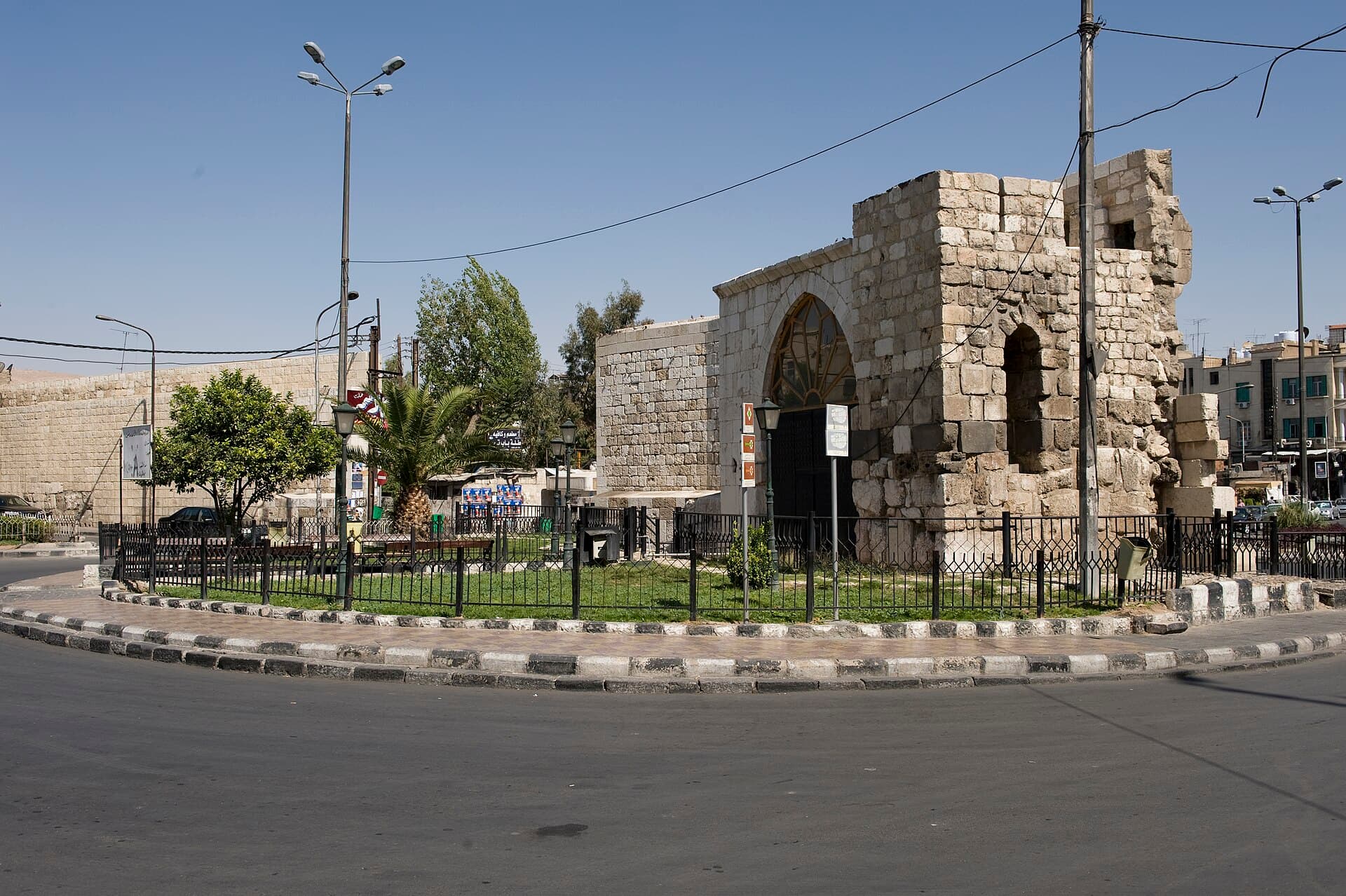
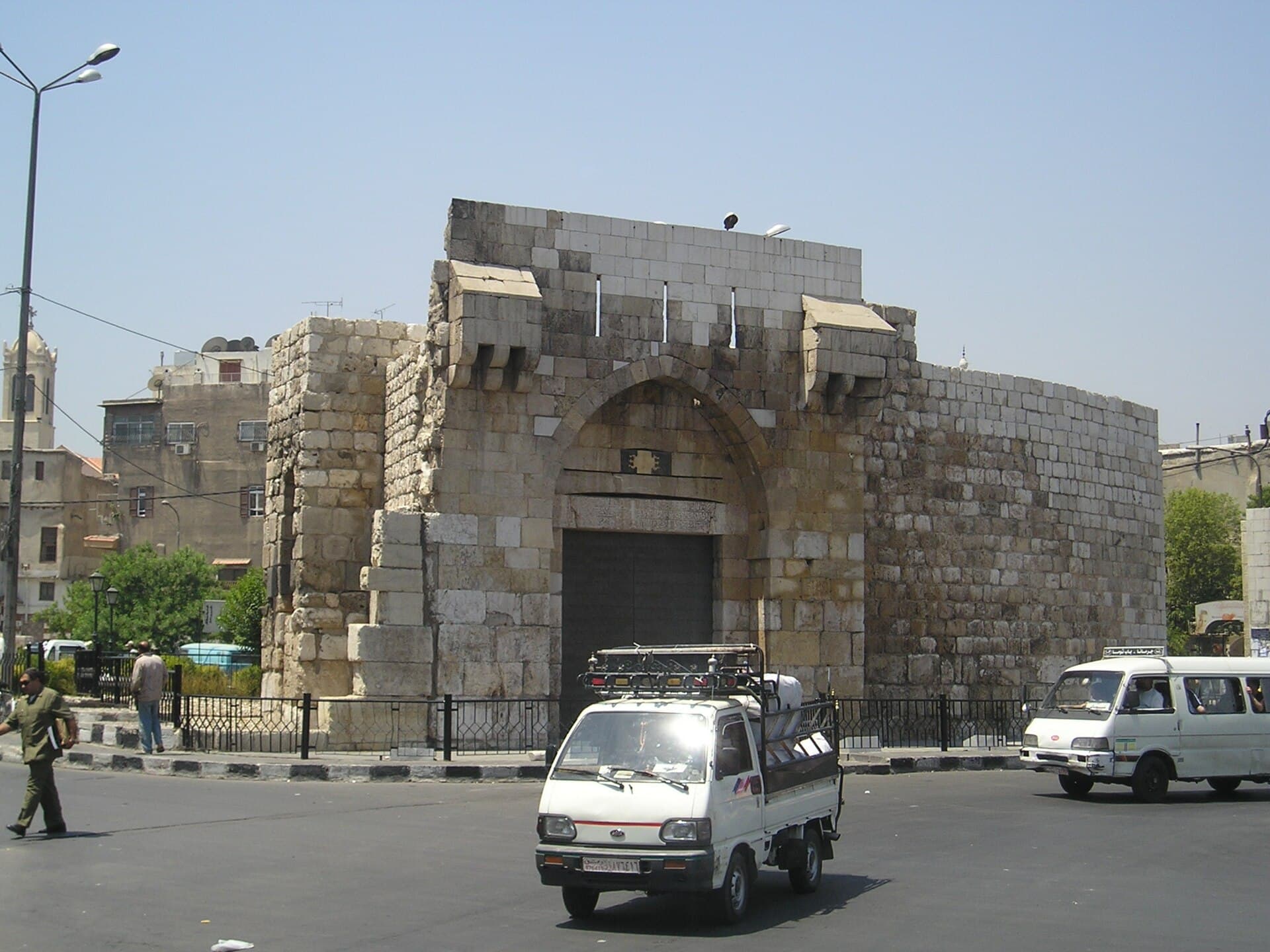
Follow the street west for 340 metres and Bab Touma Square opens up. Look at the gate from outside first, then walk through and turn to see its inner face. Repairs have flattened the outer wall; the old courses of stone and the traces of the arch read more clearly inside. The foundations go back to one of the seven gates of the Roman wall, and the structure standing today is Ayyubid work of the 13th century.
Timing
Walk in the late afternoon, and be in al-Qassaa about two hours before sunset. At this hour the district fills with people coming home from work, and the shops on al-Qassaa Street are open. Give the Holy Cross Church half an hour; if the door is shut, the façade alone is worth the stop. Reach the cemetery before dark. People visit it by day, and no one walks in after nightfall. Arrive at Bab Touma towards sunset, since at midday the square is crowded. The cross on the church dome is lit after dark. To see it, walk back from the gate to the church outside the walls, roughly 500 metres.
Take care
The church is a place of worship and the cemetery a place of mourning. If a service is on, stay at the back and do not take photographs; on Sunday mornings and feast days the church is full. Its opening hours are not fixed, so ask on the spot. In the cemetery, do not step on the graves. Women cover their hair, and if a funeral is under way, step back. Bab Touma Square is open to traffic: cross with care, and move to the far pavement for a photograph. The walk has no entry fees, though the church may have its own practice.
The route on a map
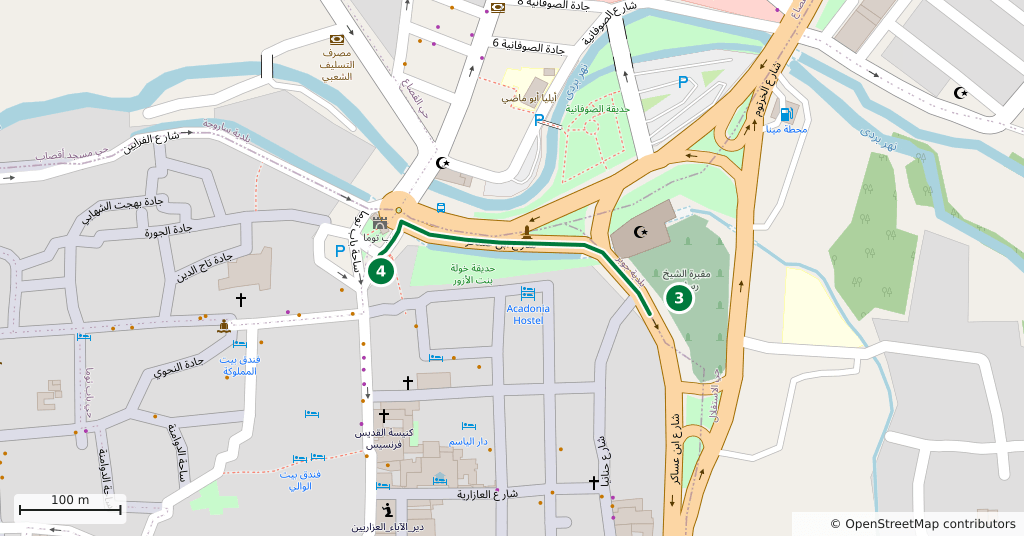
Stops along the route
- 01
- 02
- 03
- 04
Transparency
- How this was chosen
- The stops and their order were set by hand. The line on the map is real road geometry, not a straight hop between pins; distance and duration belong to that itinerary.
- Facts checked
- September 2026
- Last updated
- September 15, 2026