An old Damascus neighbourhood on foot: from Hammam al-Bakri to Maktab Anbar
950 metres and five stops on the Bab Touma side of old Damascus: a working hammam, a church from after 1856, a 1743 madrasa, a 1699 minaret and Maktab Anbar.
- Duration
- 2 hours
- Distance
- 0.95 km
- Difficulty
- Easy
- Best season
- Year round; avoid Friday prayers and Sunday morning
- stops
- 5
- City
- Damascus
In old Damascus the everyday buildings of a neighbourhood stand a few hundred paces apart: a place to wash, a place to pray, a place to study. This walk starts at Hammam al-Bakri on the Bab Touma side of al-Qaymariyya. It passes a Greek Orthodox church and an Ottoman madrasa, and ends at the minaret of the Al-Safarjalani Mosque and the courtyards of Maktab Anbar. In all: 950 metres, five stops, two hours. Four of the stops were built between 1699 and the late 19th century; the sources give no building date for the hammam.
The route
Enter through Bab Touma and walk west towards al-Qaymariyya; Hammam al-Bakri is on Jadet al-Nahwi. It is a working bath house, not a museum, and its customers come from the neighbourhood. It keeps the classic sequence of cool, warm and hot rooms. Hours for women and men are separate and shift with the season, so if you want to bathe, ask at the door. Arabic sources say about 60 hammams were working in Damascus at the end of the 19th century; today there are fewer than 20.
From the hammam head southwest. The Church of Saint John of Damascus is 340 metres away, at the western end of Yuhanna al-Dimashqi Street, about 100 metres northeast of the Mariamite Cathedral. In 1856 the plot passed to the Greek Orthodox Patriarchate with Ottoman permission, and the church went up soon after. Inside, a timber roof rests on two rows of arches carried by square basalt piers. The carving on the iconostasis, the screen of icons before the altar, is the work of Damascene Christian craftsmen. If the door is locked, the key is said to be kept at the Mariamite Cathedral.
From the church turn northwest into the narrow lanes of al-Qaymariyya. The Al-Fathiyah Madrasa is 240 metres on. An Ottoman finance official, Fathi al-Daftari, built it in 1743. Today it is a mosque, and the sign on the door reads Fathi Mosque. Little is known about the building: the sources do not describe its plan, its courtyard or any inscription. Keep this stop short; the weight of the walk lies in the next two.
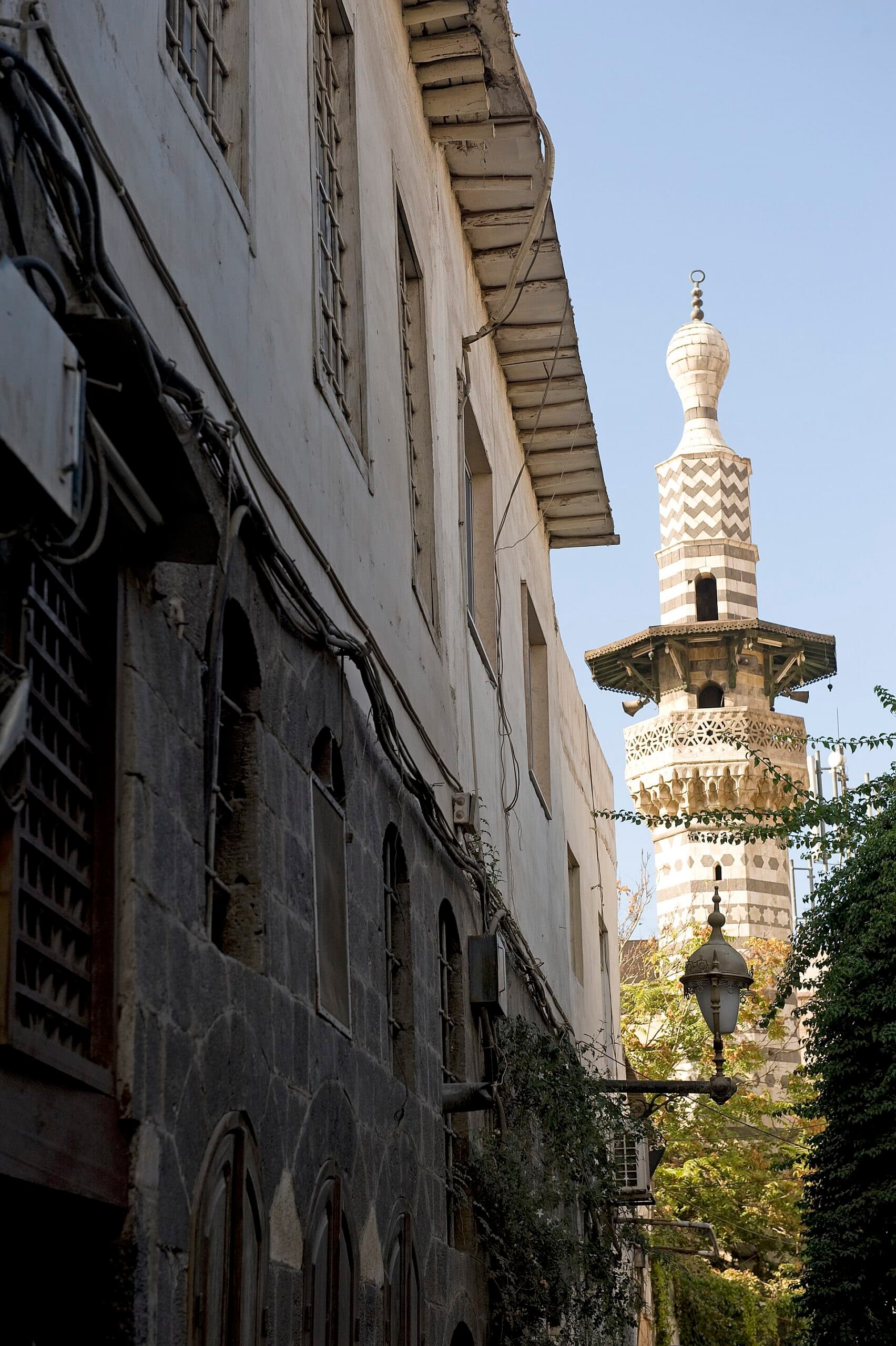
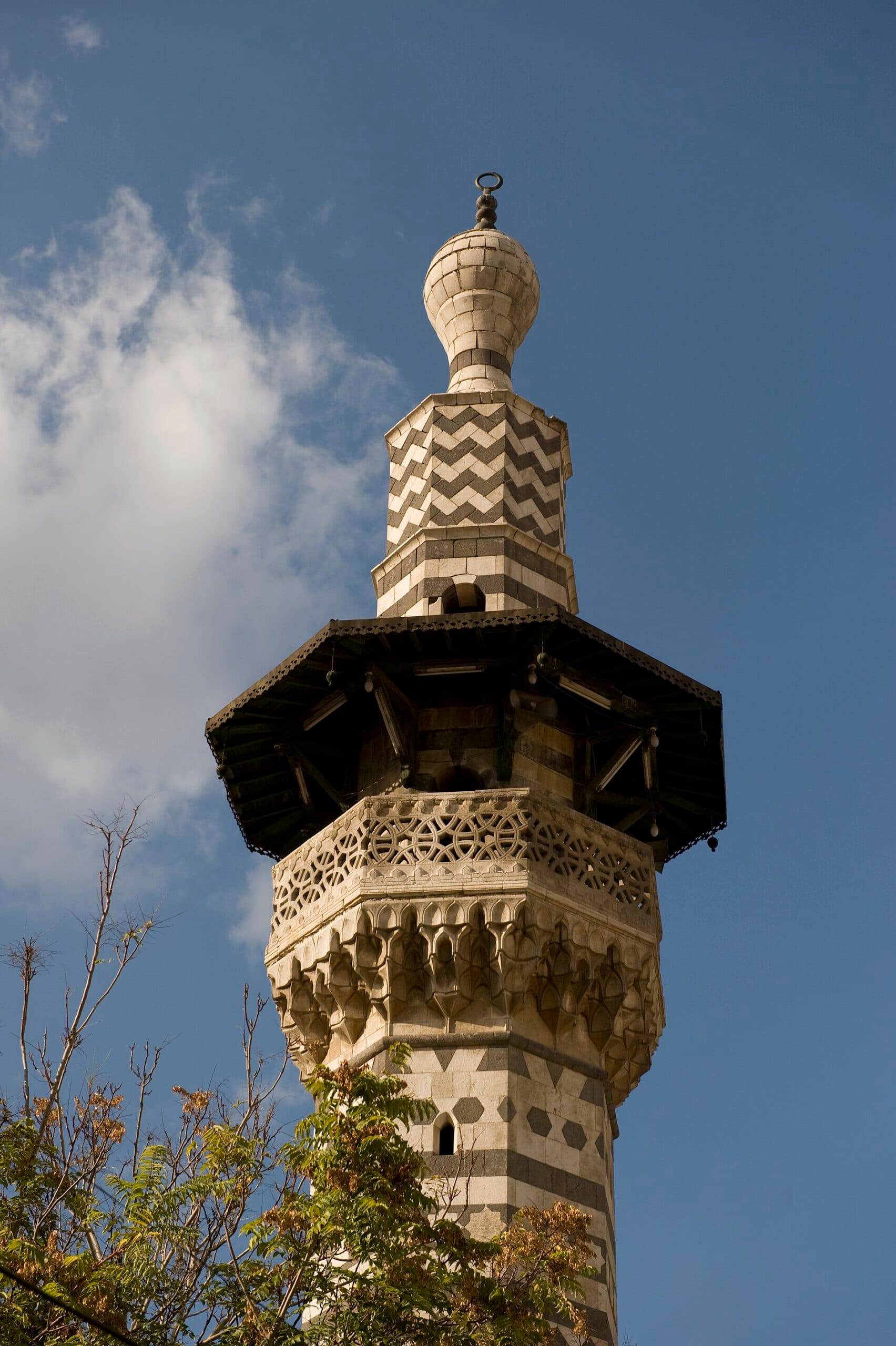
From the madrasa walk southwest towards Straight Street. After 330 metres the minaret of the Al-Safarjalani Mosque rises above the roofs. The mosque was built in 1699, and some sources call it the Qari Mosque. On the octagonal minaret, bands of black and white stone turn into zigzags and rows of lozenges, and the pattern changes with every tier. Muqarnas carry the balcony, with a timber canopy above it. Look at the minaret from two distances. From its foot the canopy hides the upper shaft; from the far end of the lane the whole shaft and the copper crescent come into view.
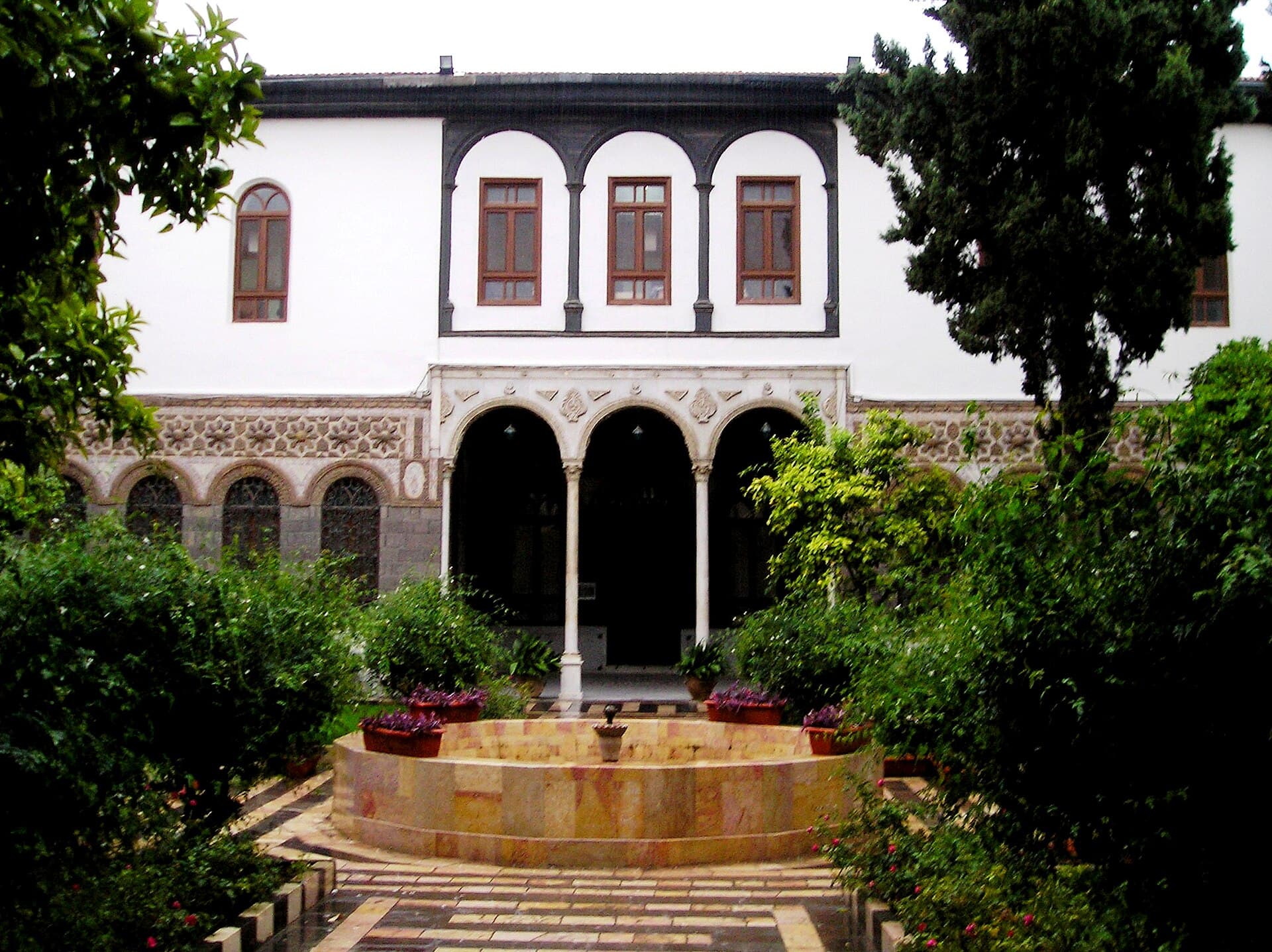
Maktab Anbar is right beside the mosque, 50 metres away. From the street it is a plain wall. Inside are three linked courtyards, pools and painted timber ceilings. It was built in the second half of the 19th century for a merchant, later became the first modern secondary school in the city, and is now a cultural centre.
Timing
Be outside Hammam al-Bakri at 10:00. In the morning the hammam is a stop for seeing the door and asking the hours rather than for bathing; its real crowd arrives in the late afternoon, once the neighbourhood is home from work. Reach the church around 10:30, as a morning hour outside services suits the interior best. Stop at al-Fathiyah around 11:00. The door opens at prayer times, and if it is shut, the sign and the façade are enough. Pass al-Safarjalani at 11:30 and go into Maktab Anbar before noon: the timber ceilings need light, and the courtyards are emptier in the morning. The west face of the minaret catches the afternoon sun, so for a photograph pass by once more on the way back.
Take care
Three of the stops are places of worship. Cover shoulders and knees in the church and the mosques, and do not take photographs during a service or prayers. The mosques are full at Friday prayers and the church on Sunday morning; skip those two times. The lanes of al-Qaymariyya are two to three metres wide and loop into each other, so passing the same corner twice is normal. When asking the way to al-Fathiyah, ask for Fathi Mosque rather than the madrasa. At the hammam, scrubbing and massage cost extra; ask about both at the entrance. When Maktab Anbar hosts an event some courtyards may be closed, and its fee and hours vary, so check at the door.
The route on a map
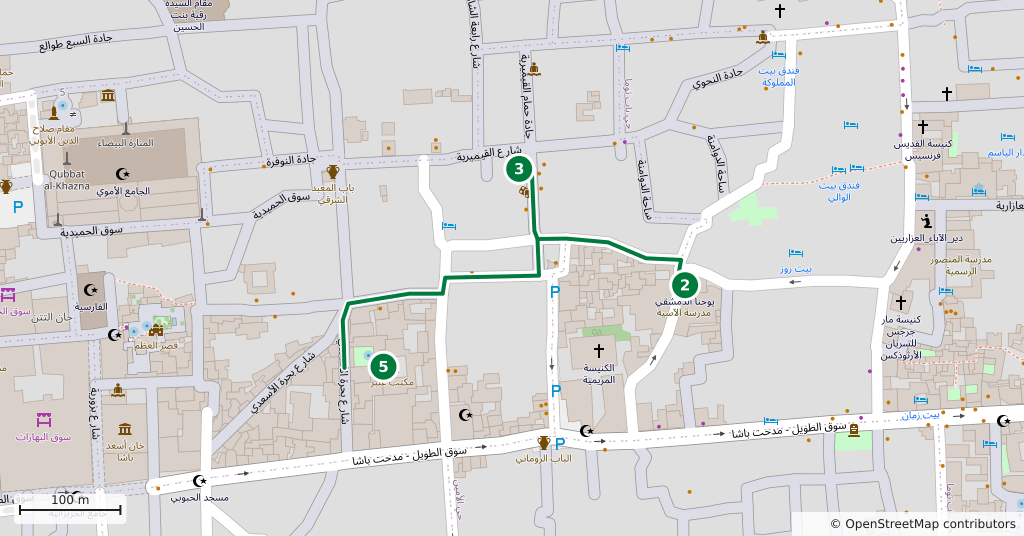
Stops along the route
- 01
- 02
- 03
- 04
- 05
Transparency
- How this was chosen
- The stops and their order were set by hand. The line on the map is real road geometry, not a straight hop between pins; distance and duration belong to that itinerary.
- Facts checked
- September 2026
- Last updated
- September 15, 2026