Both banks of the Orontes in Hama: from the Great Mosque to Abu’l-Fida
To read Hama you have to cross the river: two stops on the west bank, one long look from the mound, two mosques on the east bank. A walk of 2500 metres.
- Duration
- 3 hours
- Distance
- 2.5 km
- Difficulty
- Easy
- Best season
- April–June, September–November
- stops
- 4
- City
- Hama
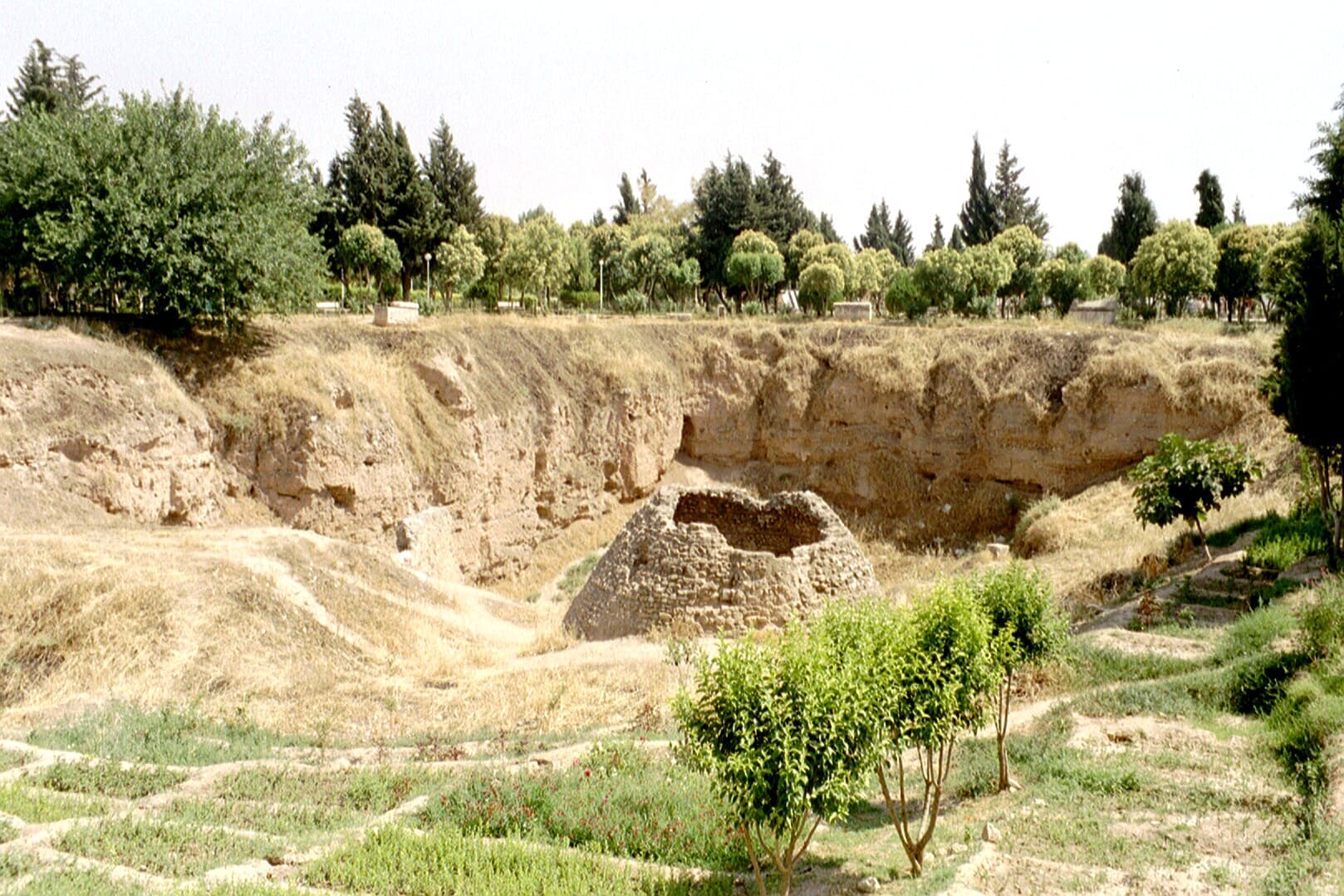
To read Hama you have to cross the river. This walk starts on the west bank, looks at the city from the top of the mound, then crosses to the east bank and follows the water. It is 2500 metres, four stops. One of them has been rebuilt, one is no longer a castle but a park, and two stand as they were. The order is set exactly to make that difference visible.
The route
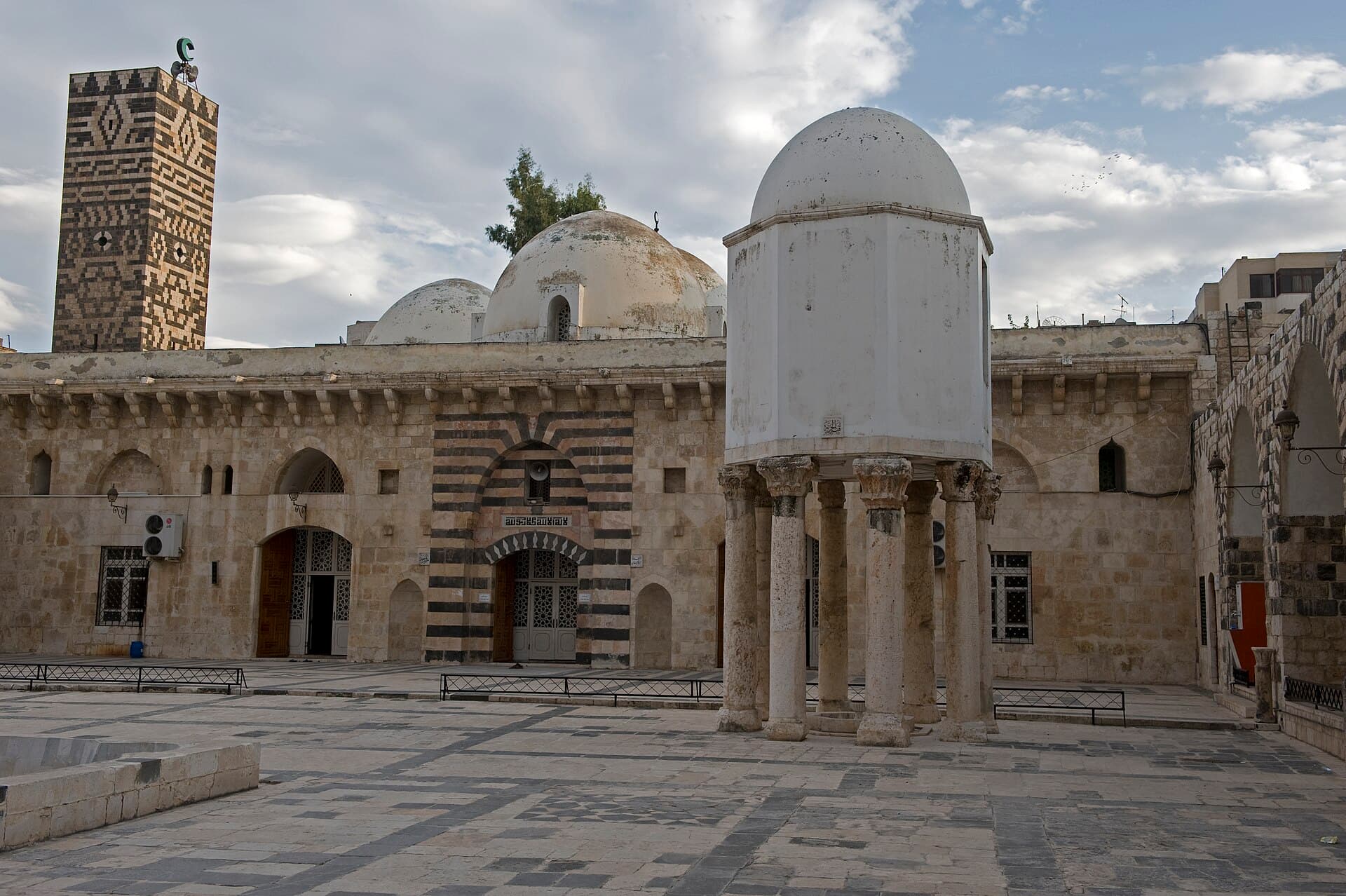
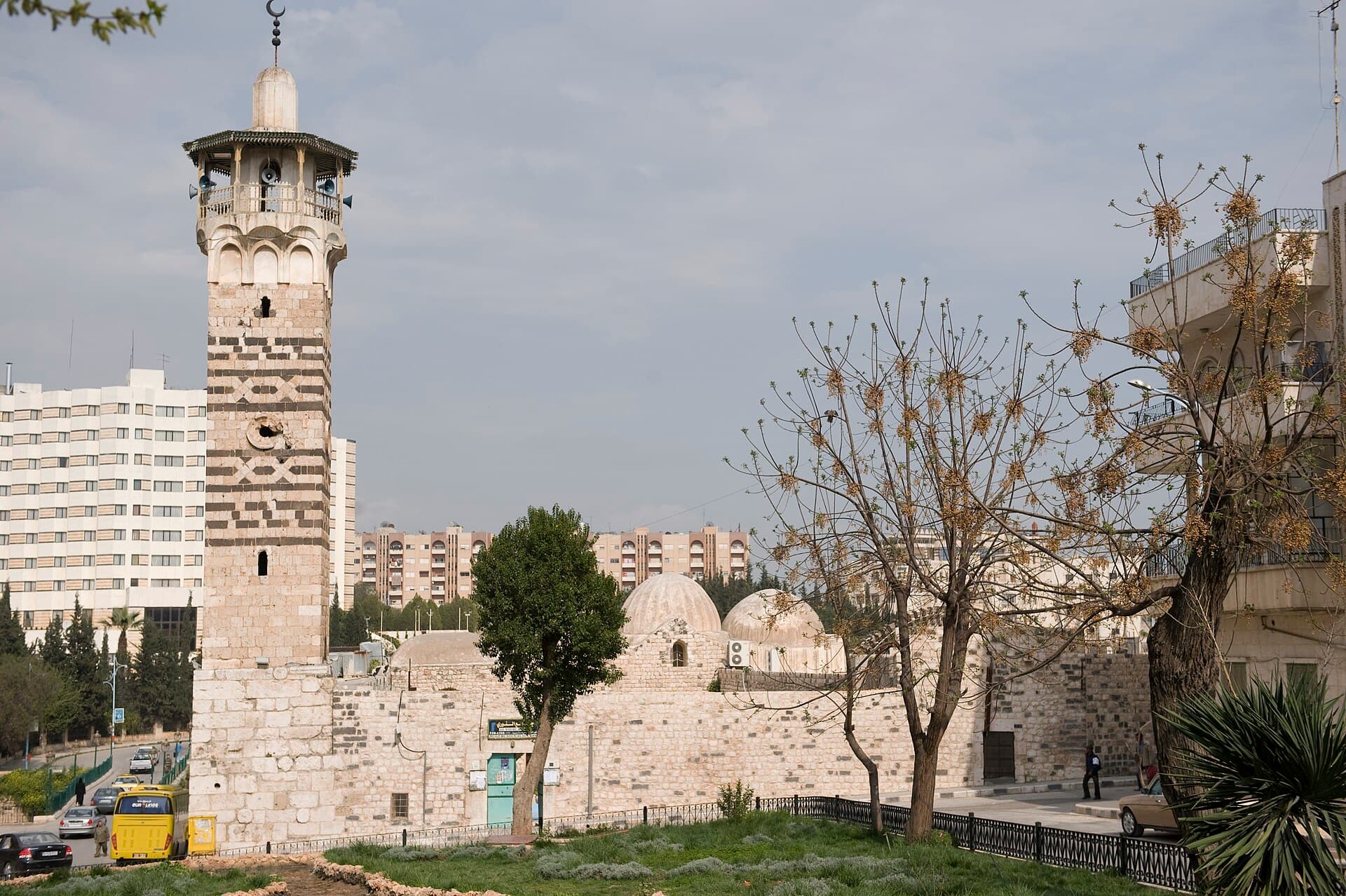
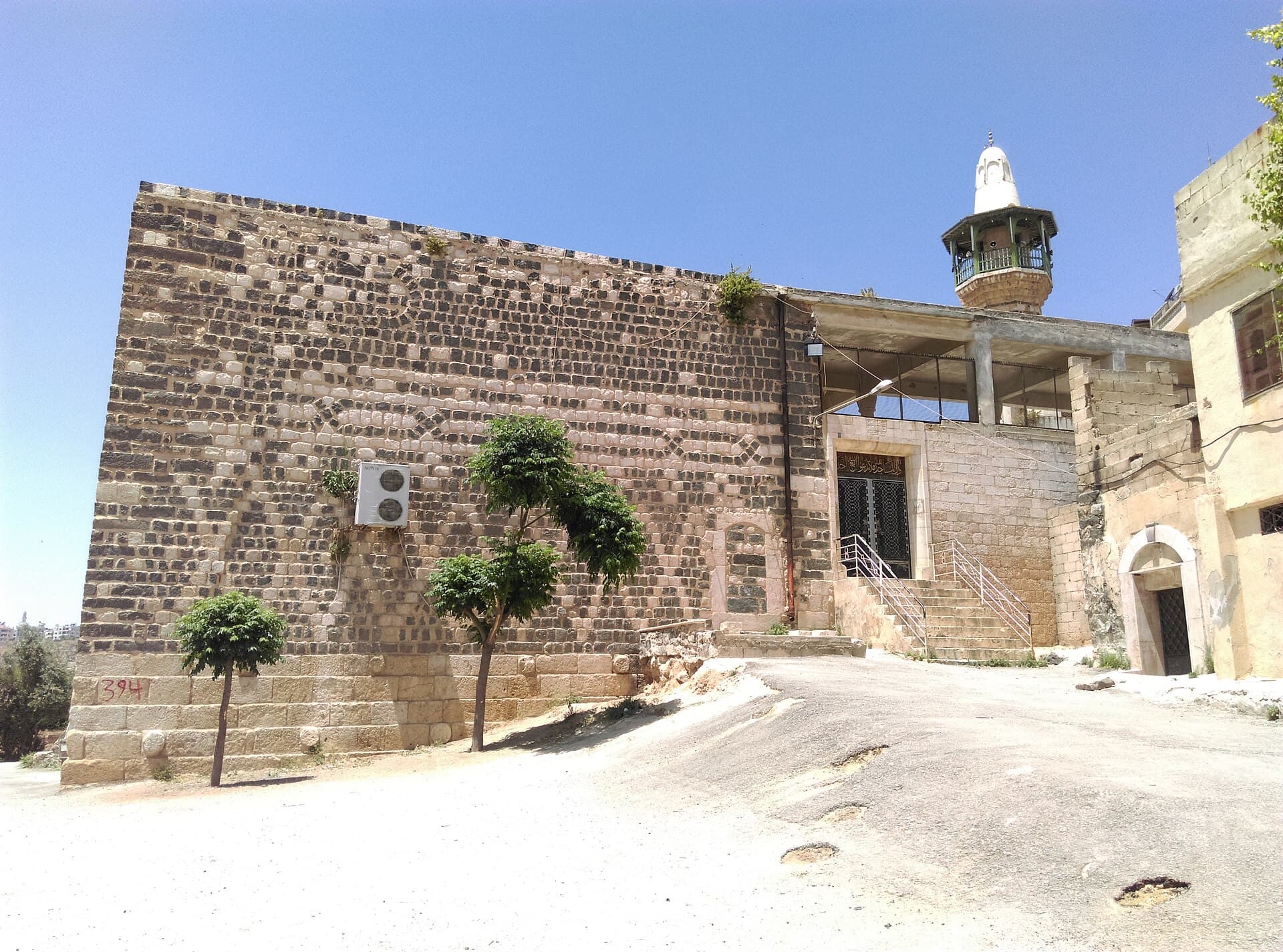
Start at the Great Mosque. It lies in the west of the old city, one lane back from the bank of the Orontes; step into the courtyard and stand between the two minarets. From here walk east towards the mound: 900 metres. A stone retaining wall and a paved square wrap the slope of the citadel mound, and the way up is from there. The top is now a planted park and its real work is the view: both banks of the city and the line of the norias read in a single look. Coming down, turn to the river and cross to the east bank. From the Naura bridge it is 600 metres on foot to the north door of the al-Nuri Mosque; the square minaret, banded in black and white stone, gives it away from a distance. The last leg follows the bank for 900 metres. The south front of the Abu’l-Fida Mosque faces straight onto the river, so you see the building from the water side first.
Timing
Be at the Great Mosque at 09:00. The courtyard is empty in the morning and, outside prayer times, visiting is easy. Climb the mound around 10:00: in morning light the line of the norias reads clearly to the east, while by afternoon the top is both shadeless and hot. The al-Nuri Mosque at 11:00. The foundation inscription over the north door takes the light from the side in the morning and the letters stand out in relief. Abu’l-Fida at 12:00. Visiting stops as the noon prayer approaches, but the hour makes no difference to seeing the river front from outside. If you want to carry on in the afternoon, the norias and the Azem Palace are on the same bank.
Take care
Entry is free at all four stops. Three of them are working mosques: visiting stops at prayer times, shoes come off, and women are asked to cover their hair. The Great Mosque was almost entirely destroyed along with the historic centre in the events of 1982, and what stands today is the rebuilt version; the record does not hide it, so set your expectations accordingly. The climb to the mound is steep, the surface is earth, and it turns slippery after rain. The river bank is shaded but has no railing everywhere; take care with children. There is no shade on the top at midday in summer.
The route on a map
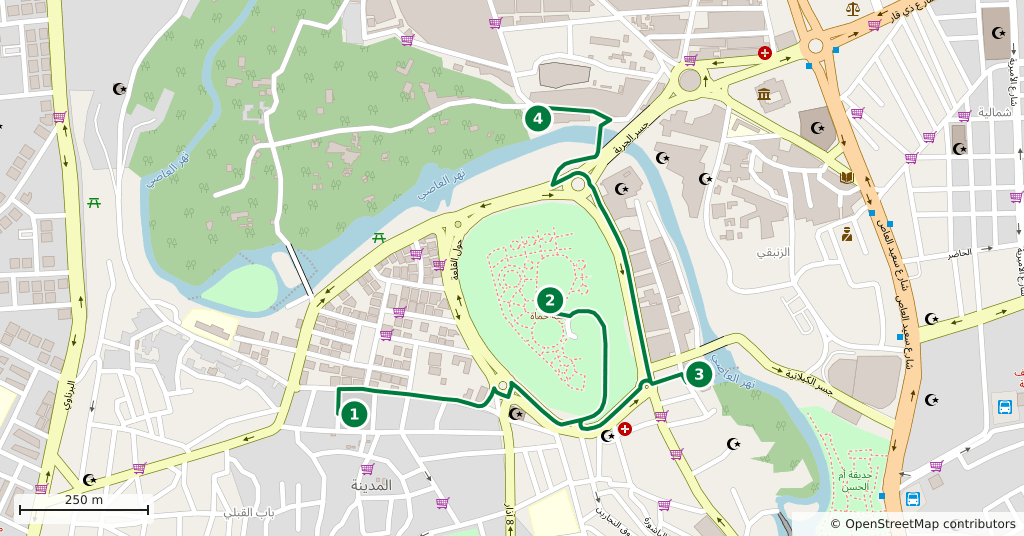
Stops along the route
- 01
- 02
- 03
- 04
Transparency
- How this was chosen
- The stops and their order were set by hand. The line on the map is real road geometry, not a straight hop between pins; distance and duration belong to that itinerary.
- Facts checked
- September 2026
- Last updated
- September 15, 2026