On the Umayyad trail: 4 days from Damascus across the desert to Aleppo
Two great mosques of around 715 and the steppe between them: Damascus, Palmyra, Qasr Ibn Wardan, Aleppo. 525 kilometres over 4 days, with distances and timing.
- Duration
- 32 hours
- Distance
- 525 km
- Difficulty
- Moderate
- Best season
- March-May, October-November
- stops
- 4
- City
- Damascus
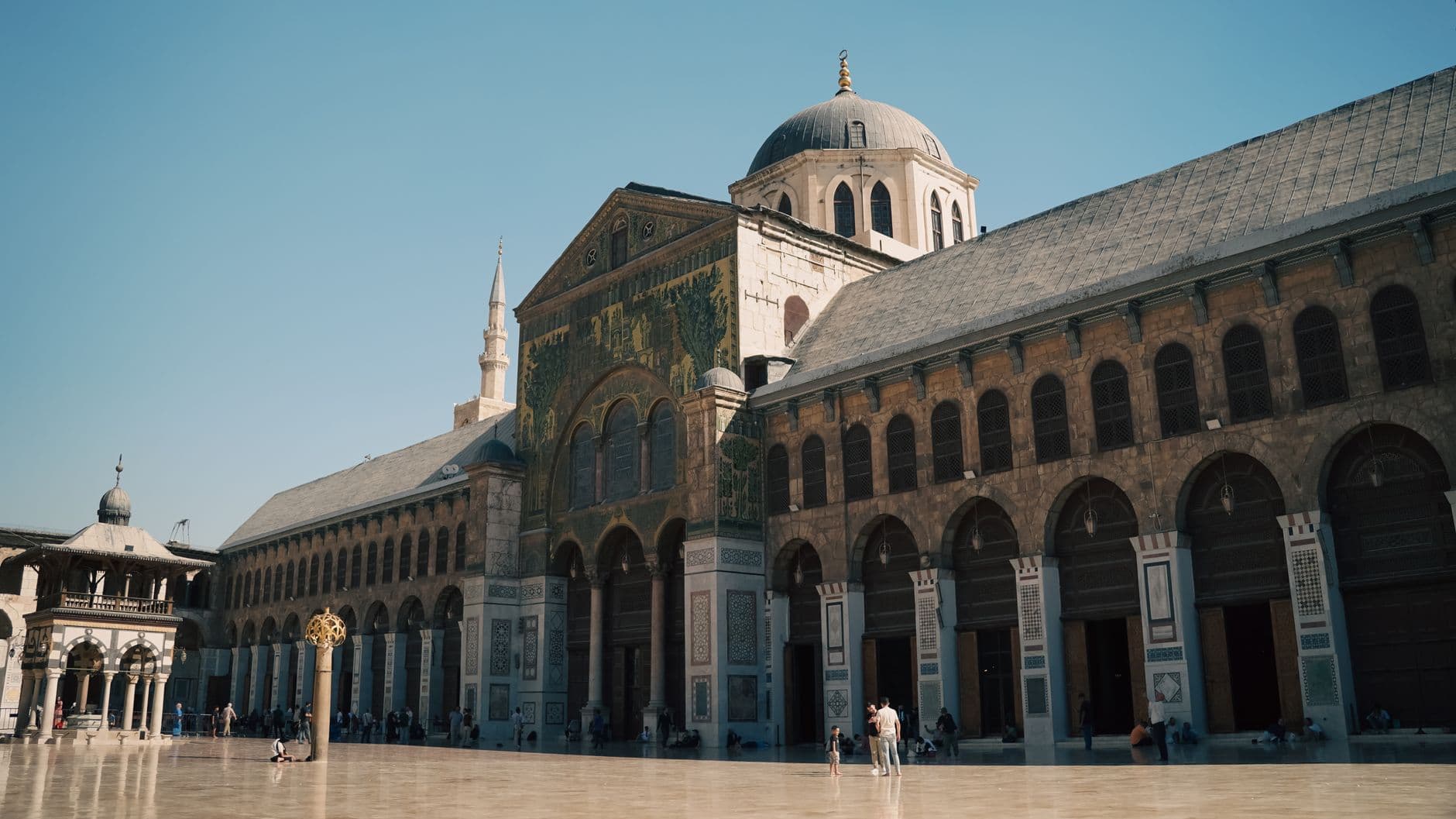
The Umayyads made Damascus their capital and lived in the desert. This route follows that split: a great mosque founded around 715 at each end, and in between the steppe where the caliphs actually spent their time. It runs from Damascus to Aleppo, 525 kilometres over 4 days. Not everything on it is Umayyad — Qasr Ibn Wardan is Byzantine work of the 6th century, roughly two hundred years older. That is deliberate: the model for the Umayyad desert palace is standing there.
The road
You start at the Umayyad Mosque in Damascus. Look at the facade of the National Museum the same day: that facade is the gate of Qasr al-Hayr al-Gharbi, the entrance of an Umayyad palace built in the desert in 727, taken down stone by stone and rebuilt here. The museum reopened on 8 January 2025; check visiting hours before you go.
Damascus to Palmyra is 240 kilometres; the road climbs onto the steppe and settlement thins out over the last hundred kilometres. From Palmyra it is 174 kilometres northwest to Qasr Ibn Wardan, but the road is slow: five hours across open country. From there Aleppo is 111 kilometres. If you would rather sleep in Hama, drop southwest off the steppe and head north the next morning.
Timing
Day one belongs to Damascus. The Umayyad Mosque is open 08:00–20:00 outside prayer times and entry is 500 SYP. Go to the courtyard early: the gold mosaics on the west wall are what survives of the original, and the light comes in from the side at that hour.
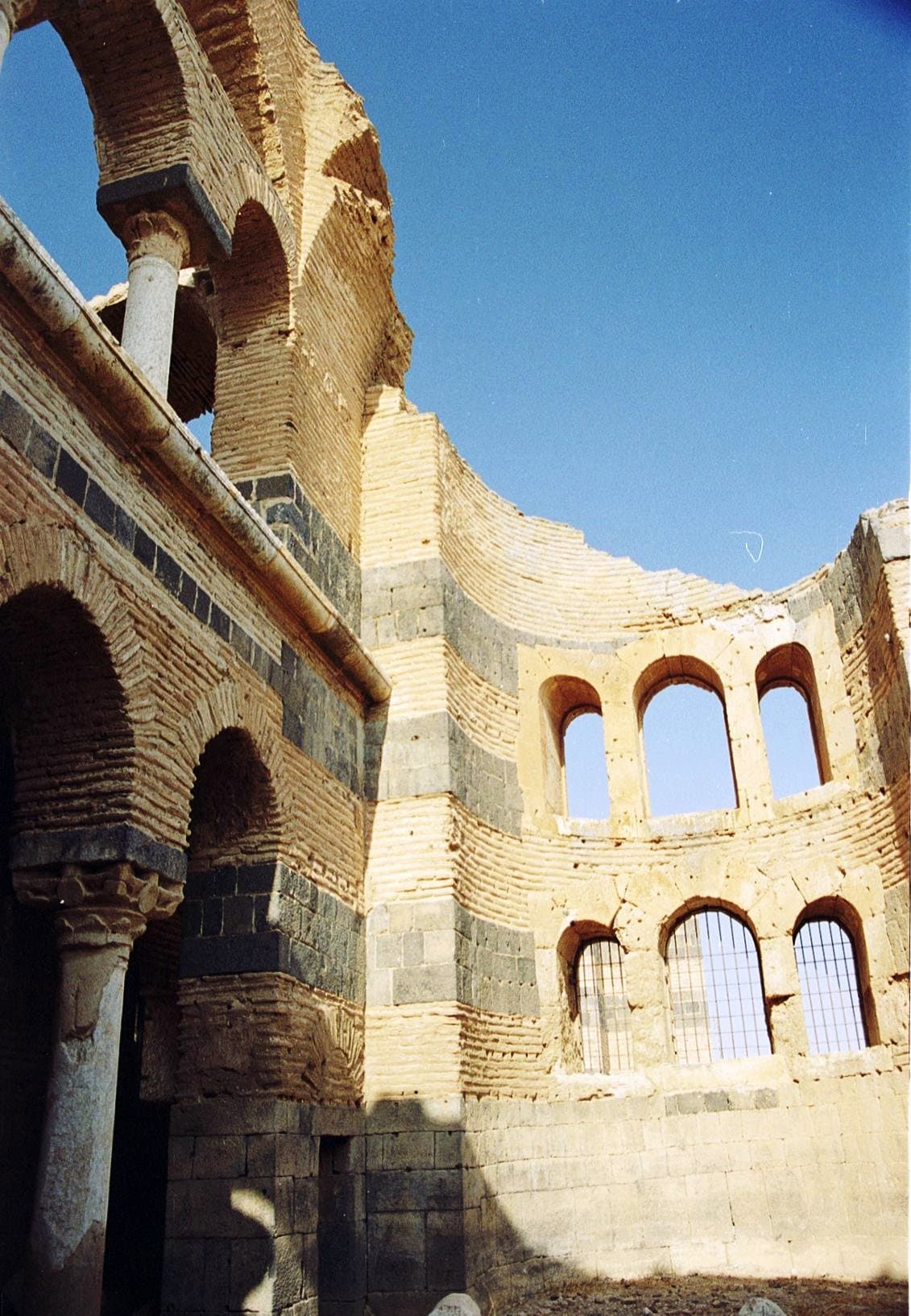
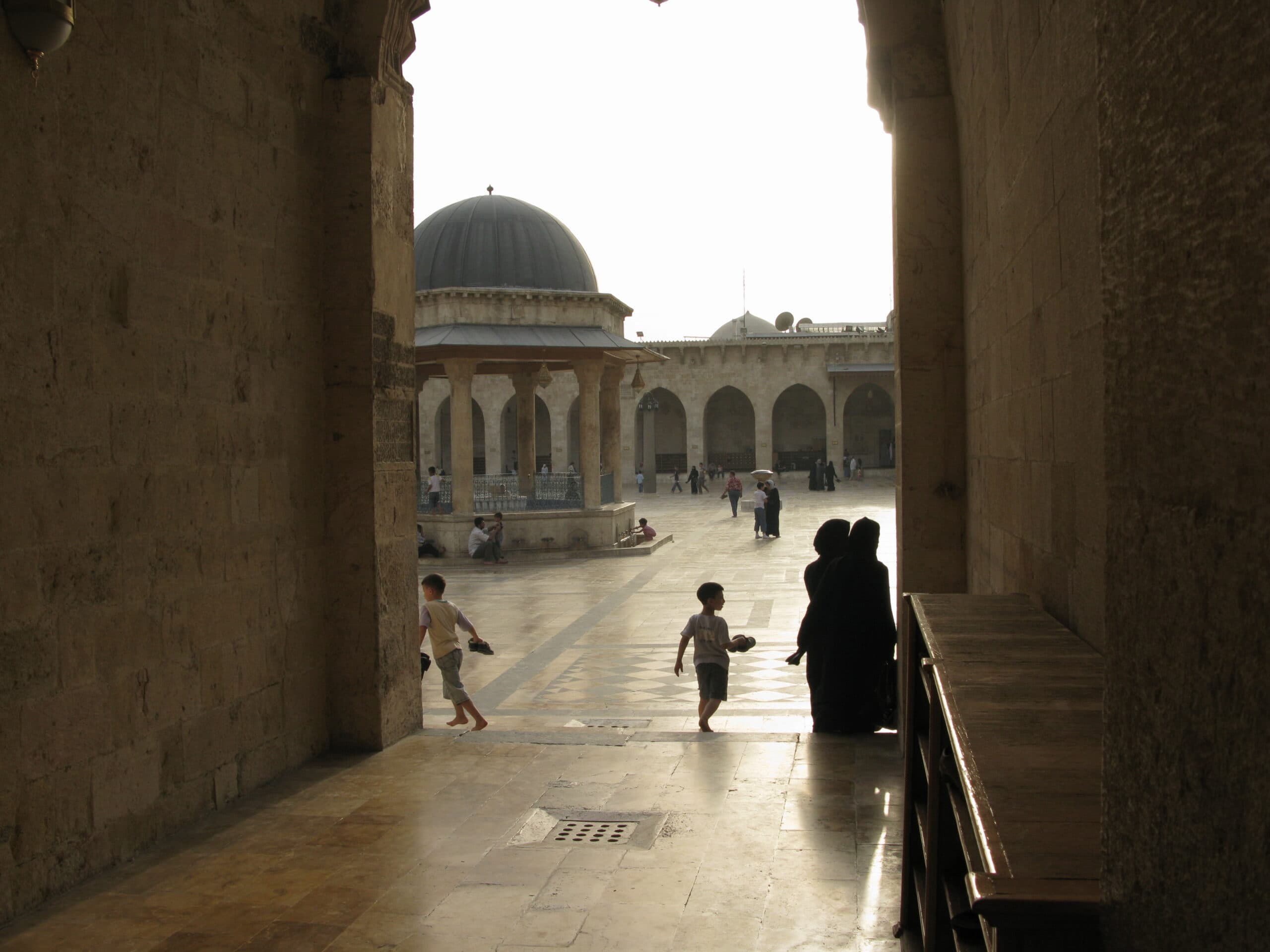
On day two leave Damascus at 08:00 and reach Palmyra in the afternoon. The ruins are open from sunrise to sunset; walk the colonnaded street late in the day, when the shadows lengthen. Spend the first two hours of day three back at Palmyra, then set off for Qasr Ibn Wardan — you arrive in the late afternoon, and that is the light in which the banded brick and basalt facade reads properly. Day four is Aleppo: the Great Mosque is empty early in the morning, and the black and white stone pattern of the courtyard is clearest before the shadows come.
Take care
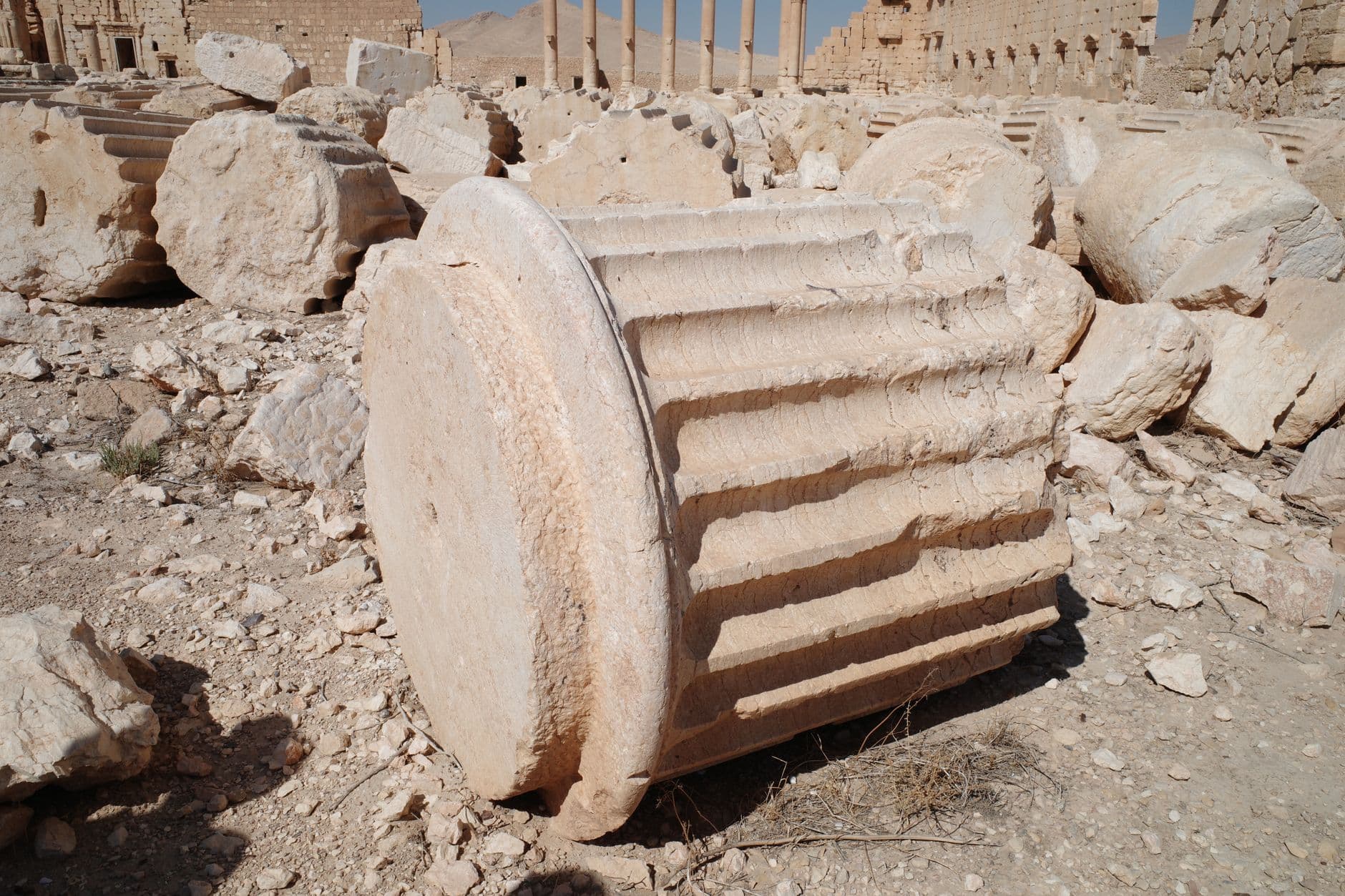
The Umayyad layer at Palmyra is thin but real: the large souq excavated along the colonnaded street is Umayyad, and part of the Temple of Bel was turned into a mosque in the same period. The Roman layer dominates, so most visitors walk past it. The minaret of the Great Mosque of Aleppo, built in 1090, came down in fighting in 2013; its stones were numbered and set aside, and work on the courtyard continues. Most of what stands today dates from the 11th to the 14th century; what is Umayyad is the foundation and the plan. Fuel stations are scarce on the steppe leg, so fill up in Damascus and in Palmyra. In summer there is no shade at Palmyra or at Qasr Ibn Wardan.
The route on a map
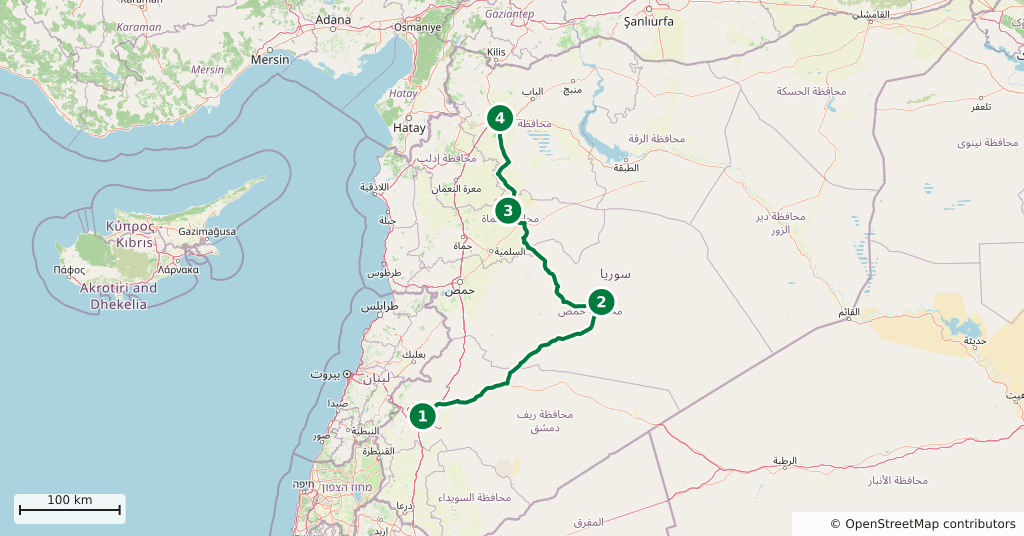
Stops along the route
- 01
- 02
- 03
- 04
Gallery
Transparency
- How this was chosen
- The stops and their order were set by hand. The line on the map is real road geometry, not a straight hop between pins; distance and duration belong to that itinerary.
- Facts checked
- August 2026
- Last updated
- September 15, 2026