Zabadani
An upland plain between two mountain ranges, an hour north-west of Damascus. What to see around Zabadani, when to go, and which towns fit into one day.
- Founded
- The name comes from Aramaic; an old settlement
- Best season
- June–September
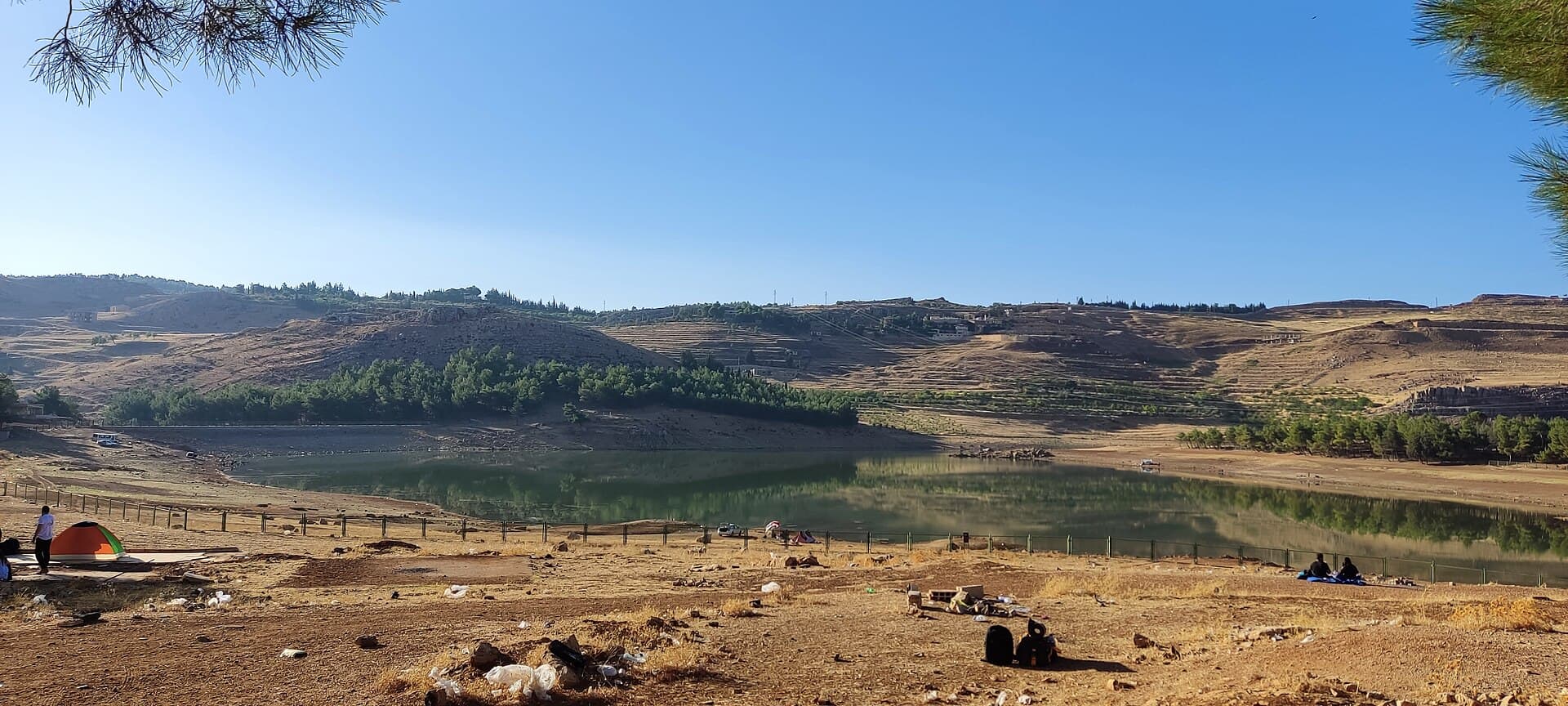
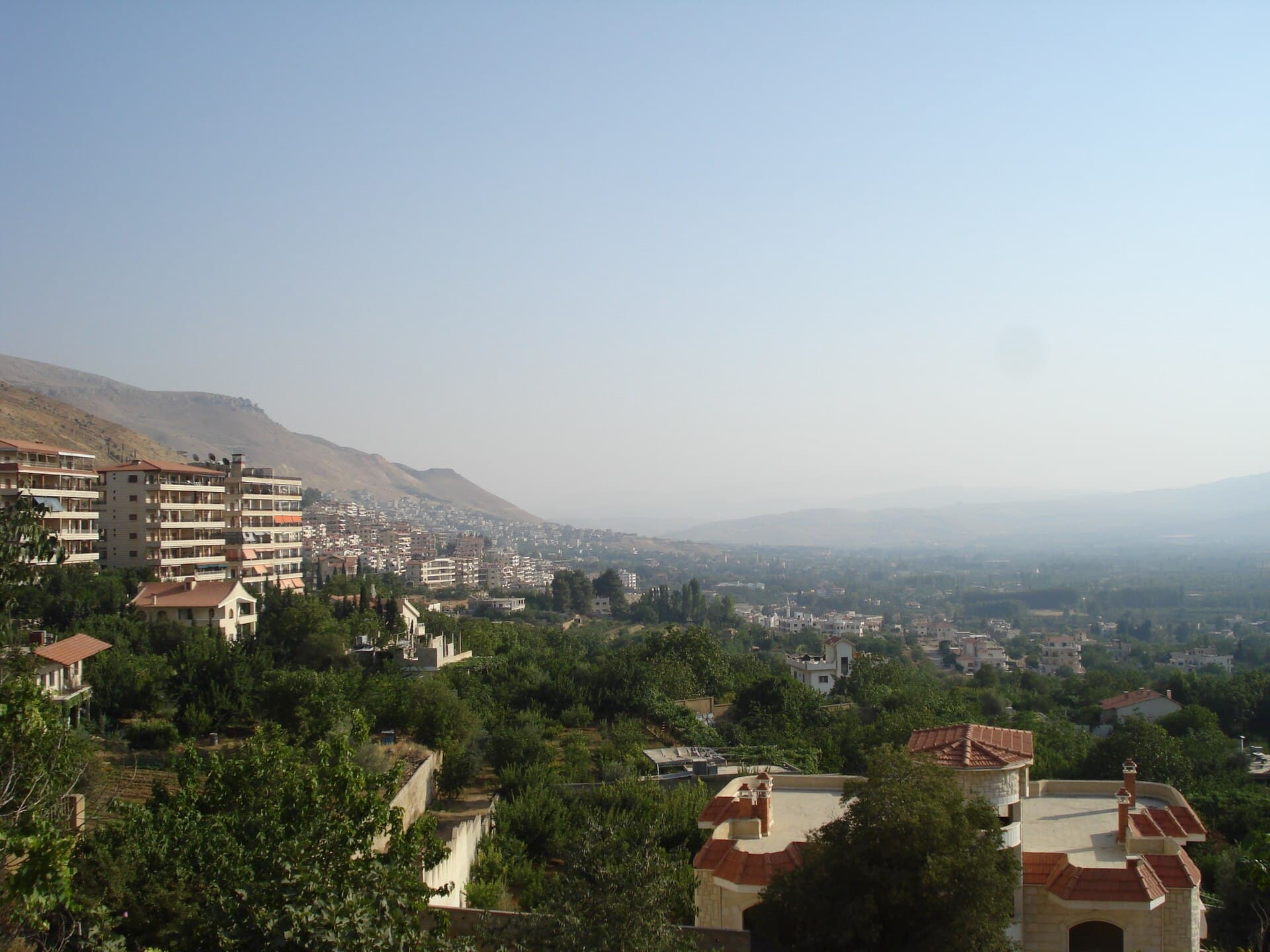
The air changes as you leave the Damascus plain and climb into the Anti-Lebanon. Zabadani lies in a plain between two ranges at 1250 metres, and its summers run 5 to 8 degrees cooler than the capital. The French administration saw that difference and turned the town into a hill station, and the choice has held: people escaping the heat of Damascus still come up here. The name of the district goes with water too, because the Barada rises from this plain and runs down to Damascus.
Where to start
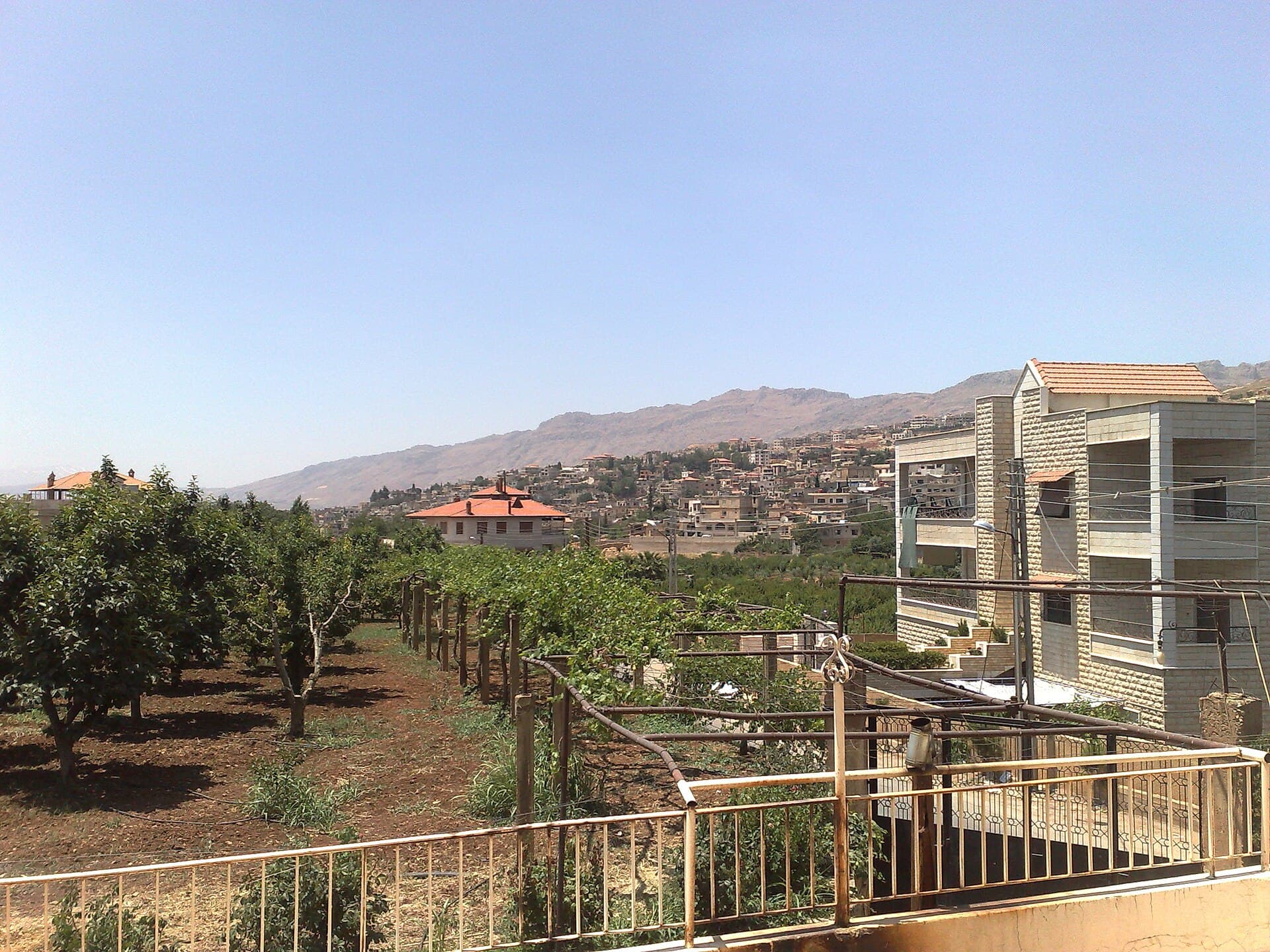
With the plain. What Zabadani shows you is not a single building but the apple, apricot and walnut orchards that cover the valley floor, and the stone houses that step up the slope above them. Half a day covers the centre and the gardens; the real day goes higher, to Bloudan, and north to Serghaya.
Around it
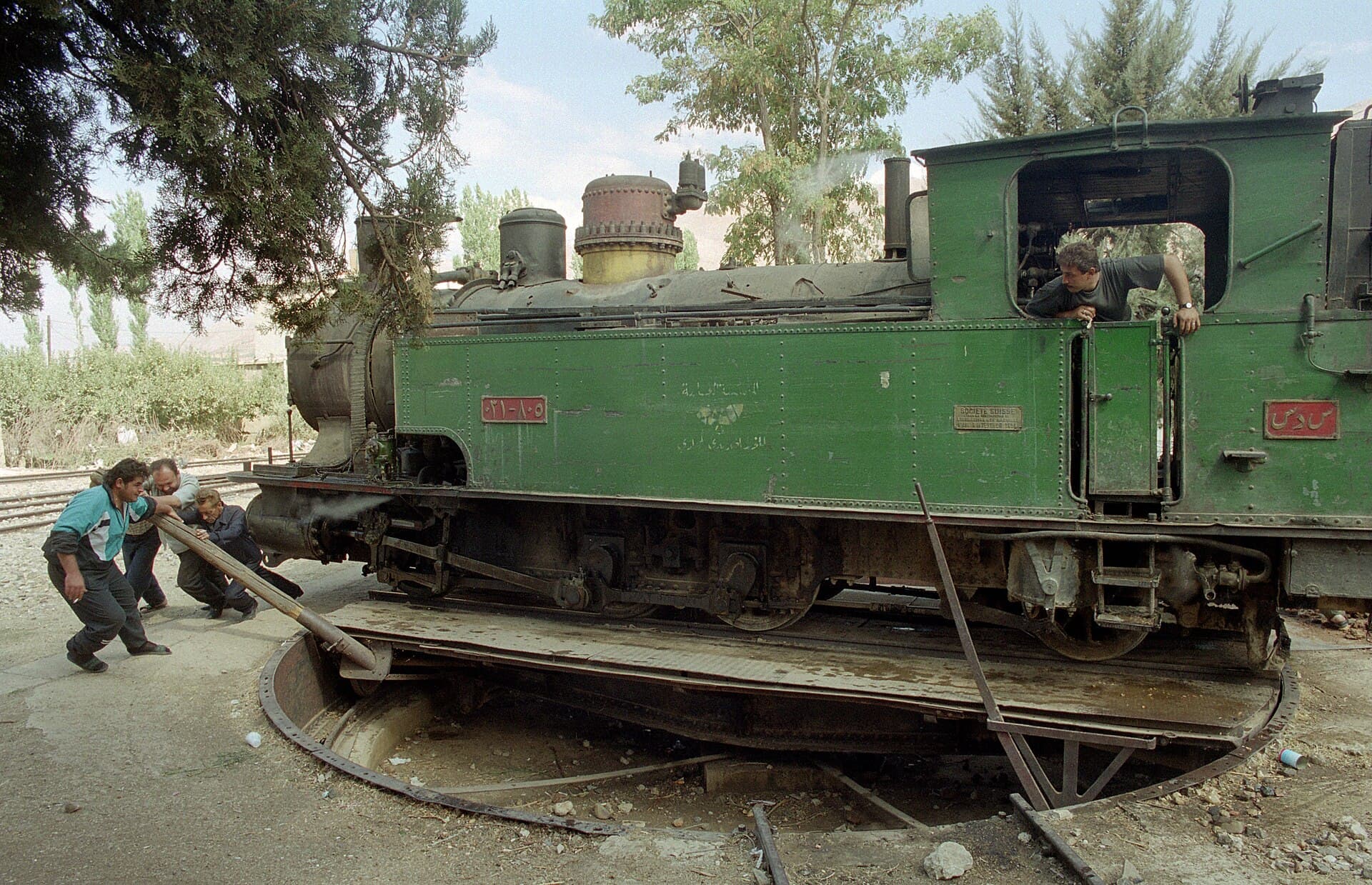
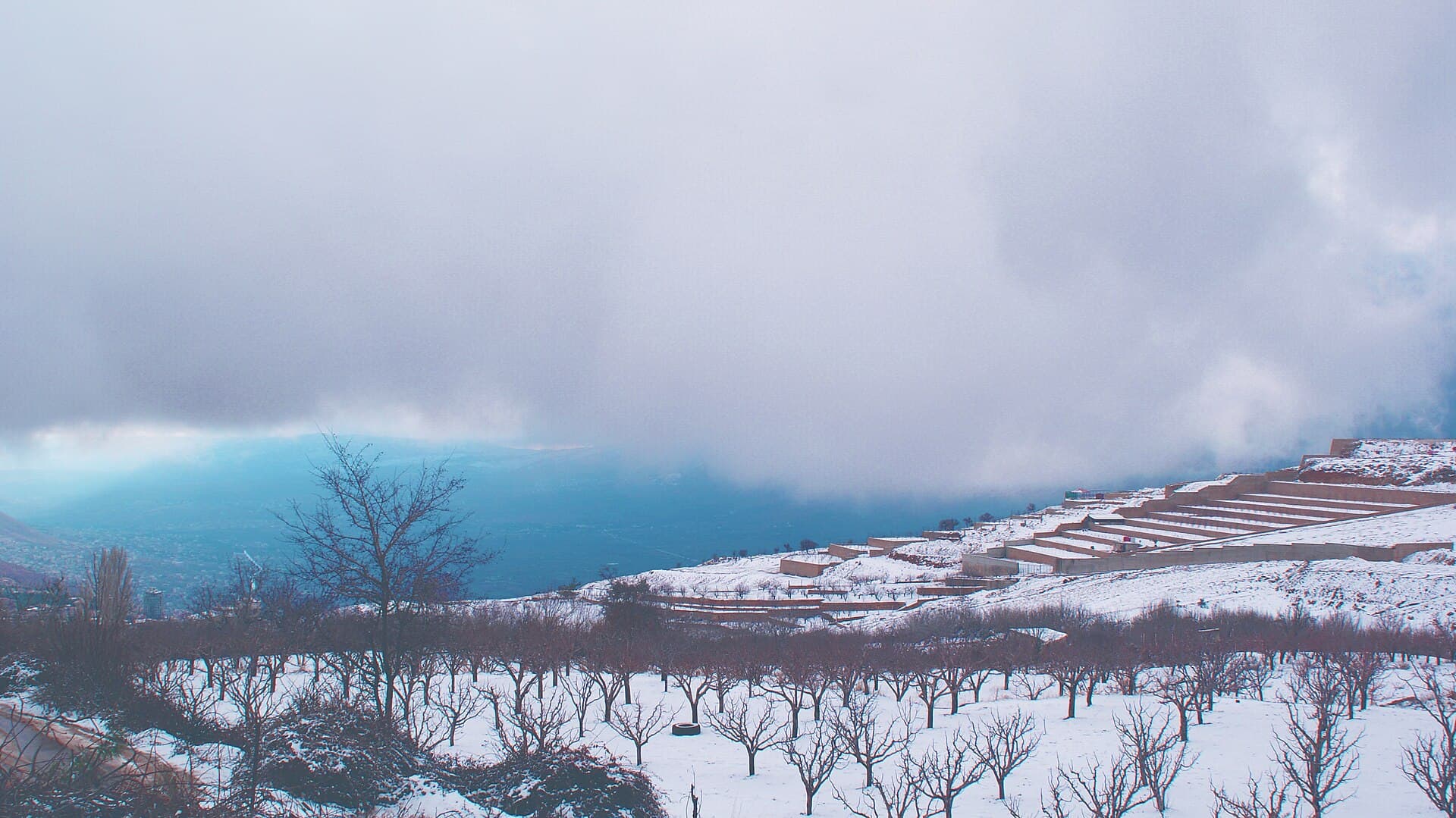
Bloudan is 5 kilometres above the town at 1500 metres, looking down on the Zabadani plain, ringed with almond woods and under snow in winter. Serghaya is 12 kilometres north at 1446 metres, right against the Lebanese border, with apple and cherry orchards and the end of the old railway to Beirut. Go 16 kilometres down into the valley instead and you reach Souq Wadi Barada, ancient Abila, with its road cut into the cliff and its Latin inscriptions. Ain al-Fijah is in the same valley, where the water that Damascus drinks comes out of the rock.
Safety and access
Zabadani was one of the first towns to change hands in the war, in 2012, and then went through years of siege and fighting; the handover was completed in 2017. Much of the housing and infrastructure was damaged and the repair has not moved at the same pace in every quarter. Wadi Barada was also a battleground at the end of 2016 and the start of 2017. The road is open now and the towns are settled, but damaged streets remain. The border is close: there are checkpoints on the Serghaya side, so keep your passport to hand and do not photograph checkpoints or military installations. Road conditions change from week to week, so ask in Zabadani before you set out. This page explains what a place is; it does not say that it is safe today.
When to go
June to September. While Damascus bakes, the evenings up here call for a layer and the humidity is low. Snow falls from December to February, the temperature drops to minus 10, and mountain roads can close; in winter, ask whether the road is open before you leave. In spring the orchards are in blossom, and October is the harvest.
Getting there
51 kilometres north-west of Damascus, about an hour. The town sits to the right of the Damascus-Beirut road and you climb the whole way. Services to Serghaya and Bloudan are thin; to get out of the plain you need a car.
Highlights
- The apple, apricot and walnut orchards that cover the Zabadani plain
- Bloudan at 1500 metres, on the slope looking down over the plain
- The end of the Beirut line at Serghaya and its old turntable
- The Roman road cut into the cliff at Souq Wadi Barada, with its Latin tablets
- The plain where the Barada rises: the water of Damascus starts here
Where to stay
Most visitors come out from Damascus for the day; the drive is an hour and one day covers the plain. If you do want to stay, the summer accommodation is concentrated in Zabadani and Bloudan, but which places are open has changed from year to year since the war: confirm by phone before you book. Because snow can close the roads in winter, choose where you sleep by the state of the road rather than by the view.