Al-Bab
A town 40 kilometres north-east of Aleppo: a covered market split into four parts under one roof, an Umayyad great mosque and the mound of Tell Batnan.
- Opening hours
- The covered market from morning to evening; streets at any hour
- Entry
- Free
- Duration
- 150 minutes
- Best time
- Morning, as the market opens
- Period
- Roman — Umayyad — Ottoman
- Address
- Old core, Al-Bab, Aleppo Governorate
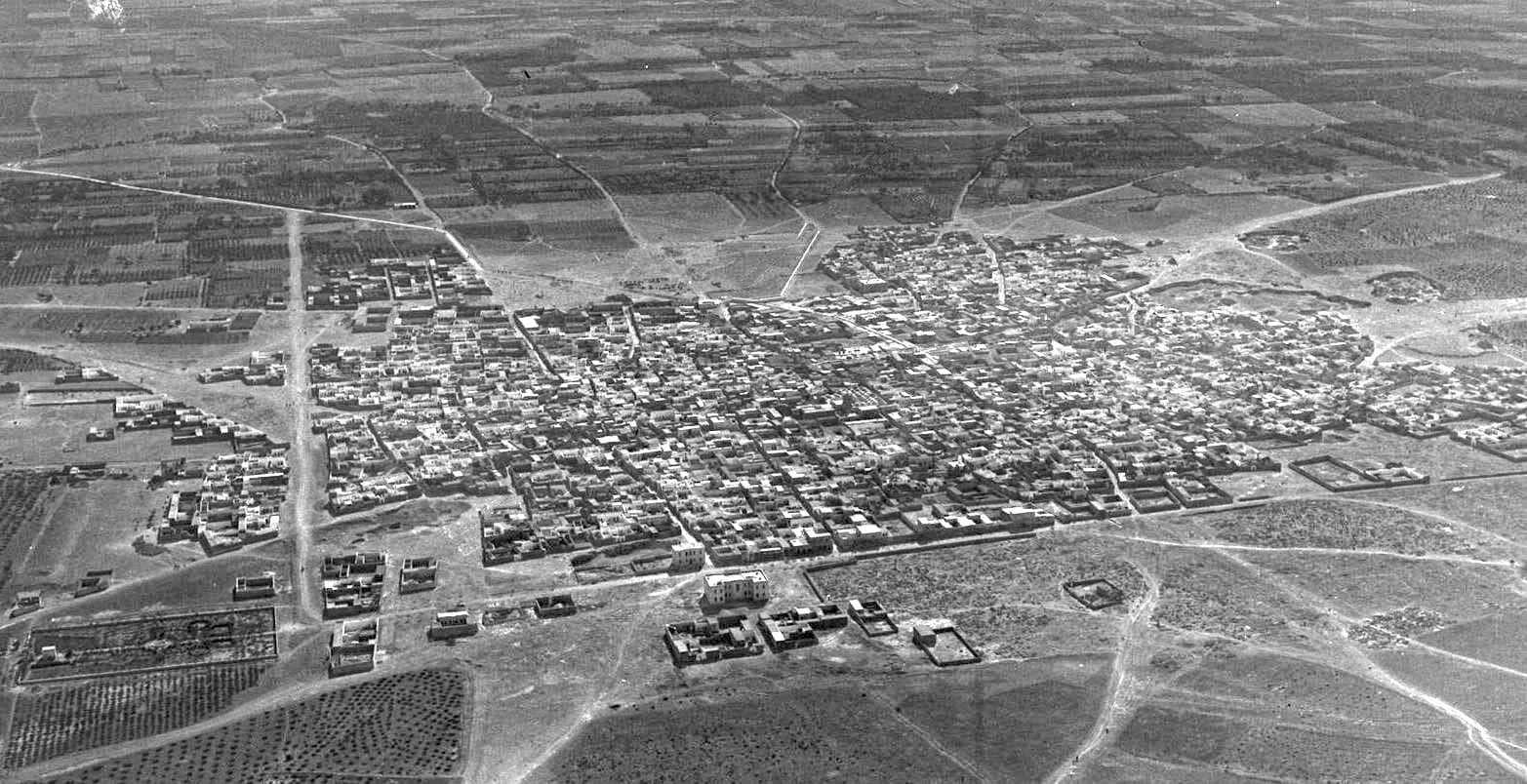
Al-Bab is a town about 40 kilometres north-east of Aleppo and 30 kilometres south of the Turkish border. It covers 30 square kilometres and stands at 471 metres. It is built on the eastern foot of Jabal Sheikh Aqil, with rolling plain to the north, east and south. The valley of Nahr al-Dhahab, the Golden River, runs through it from north to south and opens onto the Jabbul salt flats. The town administers 157 villages, 52 hamlets and three subdistricts: Tadef, Deir Hafer and al-Rai.
The name and the earliest records
Al-Bab means the gate. Yaqut al-Hamawi wrote in 1226 that the name is short for Bab Buza’a, the gate to Buza’a, a town 10 kilometres to the east. The town is also said to have been called Tayma once. It was taken in 638 in the campaign of Habib ibn Maslama al-Fihri. In the Roman period the settlement here was Batnai, and its ruins lie on the bank of the wadi 1 kilometre north of the modern town. North of the town there are also remains of a paved road, underground water channels attributed to the Roman period, and the mound of Tell Batnan, with pottery on the surface dated to the Hittite and Aramaean periods.
The covered market
The oldest market in the town is the covered one, now divided into four: the north, qibla, east and west markets. All four sit under a single roof. Trade here goes back a long way. In 1226 Yaqut described markets full of kirbas, a cotton cloth sent to Damascus and Egypt. In the 14th century Abu al-Fida wrote of a small town with a market, a bath, gardens and a mosque. Today Al-Bab sells cheese and dairy across Syria and is known for its ironwork.
What there is to see
The old core has narrow lanes and flat-roofed houses of stone and mudbrick. The Great Mosque is traced to the Umayyad period. The sources also list an Ottoman Saray building and a few other government buildings. The town saw heavy fighting between late 2016 and February 2017, so which of these still stand and are open needs confirming on the spot. Jabal Sheikh Aqil rises to 534 metres, with a shrine of the same name on the summit.
Getting there
By the road north-east out of Aleppo, about 40 kilometres. The old core is walkable. Roads and checkpoints change; ask before you set out.
What most people miss
The wadi bank 1 kilometre north of town. That is where Roman Batnai stood, a different place from Batnae, the Roman town about 70 kilometres to the north-east.
Tips
- Look up inside the market; the four sections are under one roof
- Stop at the cheese stalls; that is the trade the town is known for
- If you want to see the Saray building or the Great Mosque, ask on the spot whether they are open
- Walk down to the wadi north of town; the ruins of Roman Batnai are 1 kilometre out
Transparency
- How this was chosen
- Written by hand; opening hours, entry fee and coordinates are kept as data. A field that is not known for certain is marked as variable rather than guessed.
- Facts checked
- September 2026
- Last updated
- September 15, 2026