Al-Dawayat Cave, the Cave of Lights near Mashta al-Helu
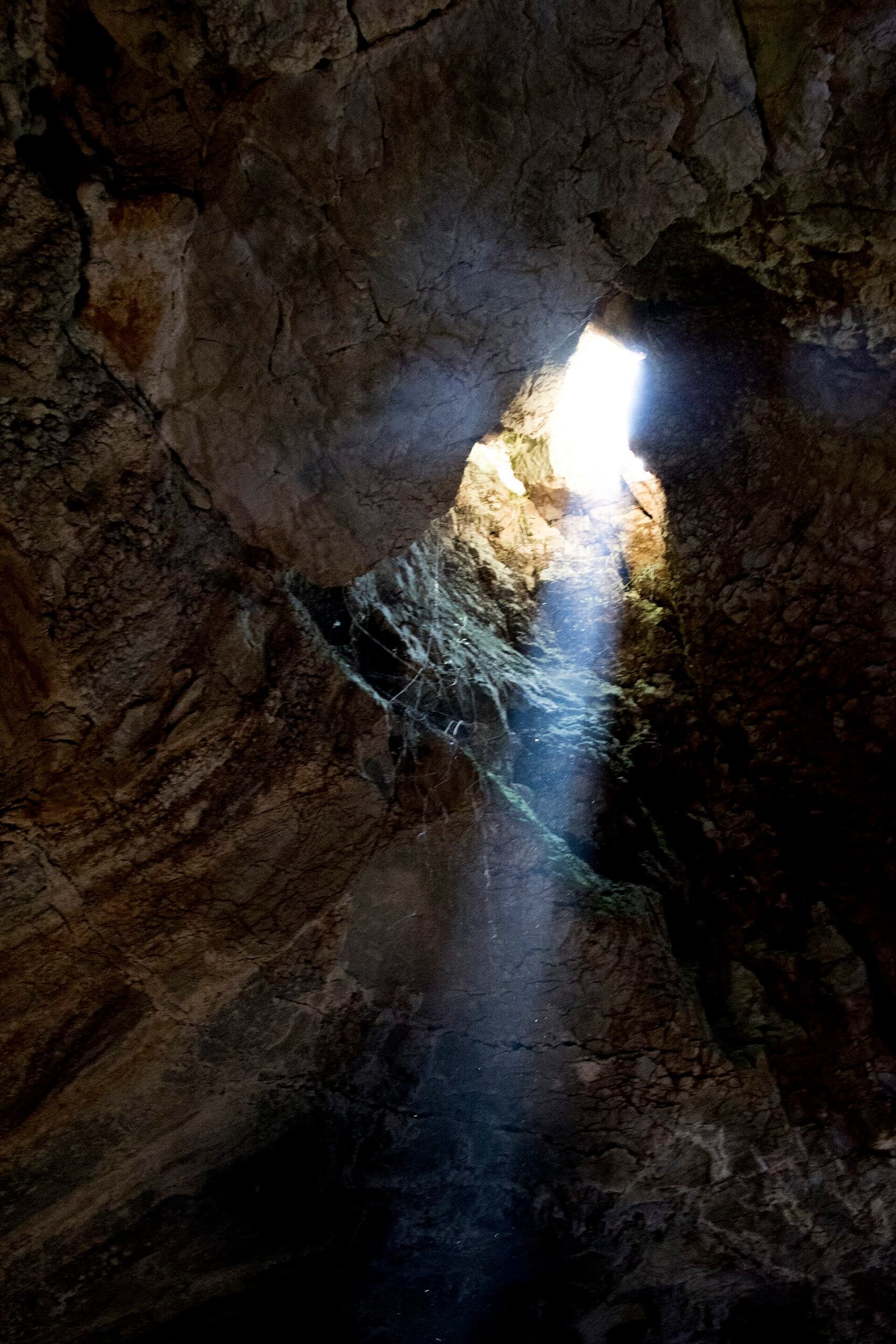
A cave 2 km north-east of Mashta al-Helu, lit through seven holes in its roof. A shepherd found it in 1914; the main hall covers 2400 m² under a 17-metre ceiling.
- Opening hours
- Variable — confirm in town
- Entry
- Variable — confirm on site
- Duration
- 60 minutes
- Best time
- Daytime, while light comes through the roof holes
- Period
- Geological formation; found in 1914
- Address
- About 2 kilometres north-east of Mashta al-Helu, Safita District, Tartus
Al-Dawayat Cave is a natural cave 750 metres above sea level, about 2 kilometres north-east of Mashta al-Helu, a summer town in the Tartus mountains. Its name means ‘the lights’ in local speech: seven natural holes in the roof light up the entrance, and daylight falls inside in shafts. The main hall covers 2400 square metres under a ceiling 17 metres high.
How it was found
By accident. In 1914 a shepherd found the cave when one of his sheep fell through a hole in the roof. Researchers went in and studied it in 1956. People knew the place before that, though: under Ottoman and then French rule the cave sheltered rebels and fugitives.
What is inside
Stalactites hang from the roof, ranging from half a metre to 9 metres long. Glittering crystal columns rise from the floor, between 8 and 16 metres tall. According to SANA, the state news agency, the cave runs 250 metres underground, has been explored as far as 400 metres, and its end is still unknown. Arabic Wikipedia, going by the size of the stalactites, places it in the same geological age as the Jeita and Qadisha caves in Lebanon.
Getting there
First go to Mashta al-Helu, in Safita District; the cave lies about 2 kilometres north-east of the town (SANA gives 1700 metres). No current information could be found on whether the cave has lighting or a walkway, or on its opening hours and fee; ask in town.
How long it takes
An hour is enough for the cave. It fits into the same half day as Jabal al-Sayyida, the hill above Mashta al-Helu.
What most people miss
The light falling on the entrance. What gives the cave its name is not the stalactites but the seven holes in the roof. As the angle of the sun shifts through the day, the spot where the shaft hits the rock moves too, so the same cave looks different in the morning and the afternoon.
Tips
- The cave floor can be damp; wear shoes that grip
- If you do not know whether it is lit, bring a torch
- Stand under the light holes and look up; the cave is named after them
- Add Jabal al-Sayyida to the same half day
Transparency
- How this was chosen
- Written by hand; opening hours, entry fee and coordinates are kept as data. A field that is not known for certain is marked as variable rather than guessed.
- Facts checked
- September 2026
- Last updated
- September 15, 2026