From al-Shaykh Badr to Hawat al-Jubab: the town of the 1918 revolt, two hill castles and a sinkhole
A day by car in the hills of Tartus: al-Shaykh Badr, where Saleh al-Ali declared revolt in 1918, the castles of al-Kahf and Qadmus, and a sinkhole 35 metres deep.
- Duration
- 9 hours
- Distance
- 37.5 km
- Difficulty
- Moderate
- Best season
- April–June, September–October
- stops
- 4
- City
- Tartus
This route ties the geography of an uprising to the inside of a mountain, all in one day in the hills of Tartus. It starts in al-Shaykh Badr, the town where Saleh al-Ali declared revolt against the French in December 1918. It climbs north to two Ismaili castles, al-Kahf and Qadmus. It ends at a sinkhole beside the village of al-Dey, where a stair leads down to the floor. Between the four stops there are about 38 kilometres of mountain road. Out from Tartus and back via Baniyas, the total comes to 140 kilometres: a full day by car.
The route
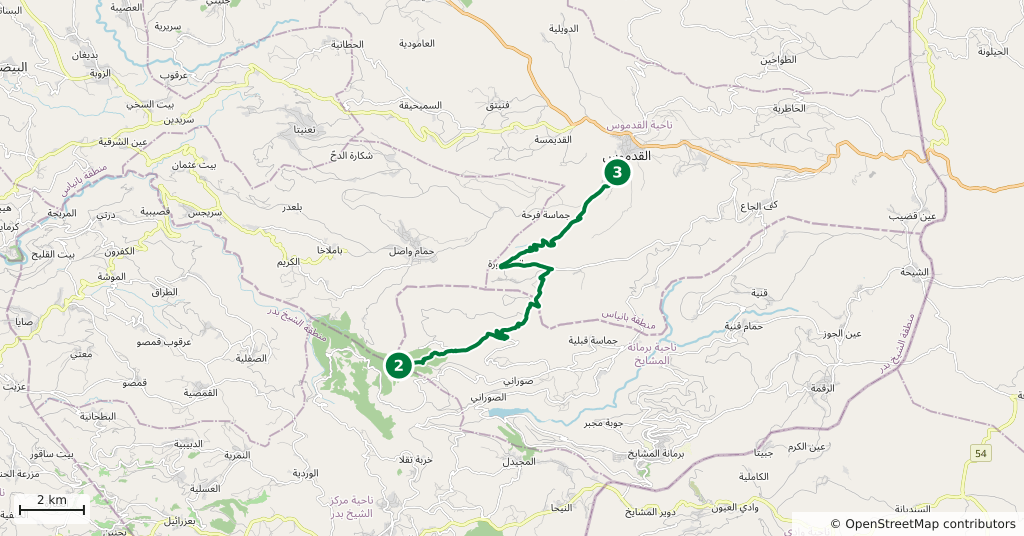
From Tartus the mountain road inland reaches al-Shaykh Badr after 38 kilometres, close to an hour. The town sits 536 metres above the sea. The tomb looks down on it, and the way up runs through the town; its exact position is not on a map, so ask locally. From the tomb to Al-Kahf Castle is 11 kilometres, about half an hour. You cannot drive into the castle. Leave the car near al-Qumsiyah; the only way in is a narrow path halfway along the northern slope. From al-Kahf, Qadmus is 16 kilometres to the northeast, close to forty minutes. When you reach the town the castle is right above you, and a stair leads up. From Qadmus to the village of al-Dey is 11 kilometres, twenty-five minutes. The sinkhole is 1 kilometre south-west of the village but is not marked on maps, so ask in the village for the last stretch. From al-Dey to Baniyas is 27 kilometres, then 38 kilometres down the coast road to Tartus. These are road distances; in these hills a straight line on the map misleads.
Timing
Leave Tartus at 08:00. At 09:00 you are in al-Shaykh Badr. The complex has three parts: the tomb, a museum of the revolt and a ceremonial square. Saleh al-Ali was born here in 1883. French artillery shelled the village in early 1919, and troops entered it in November 1920. In January 1921 he wrote to Mustafa Kemal asking for weapons; the letter is now in the ATASE archive in Ankara. After the amnesty of 1922 he left politics. On 17 April 1946, Evacuation Day, he was guest of honour of President Shukri al-Quwatli, and he died on 13 April 1950. From the square, look down at the town: the village shelled in 1919 is the core of what you see. An hour is enough.
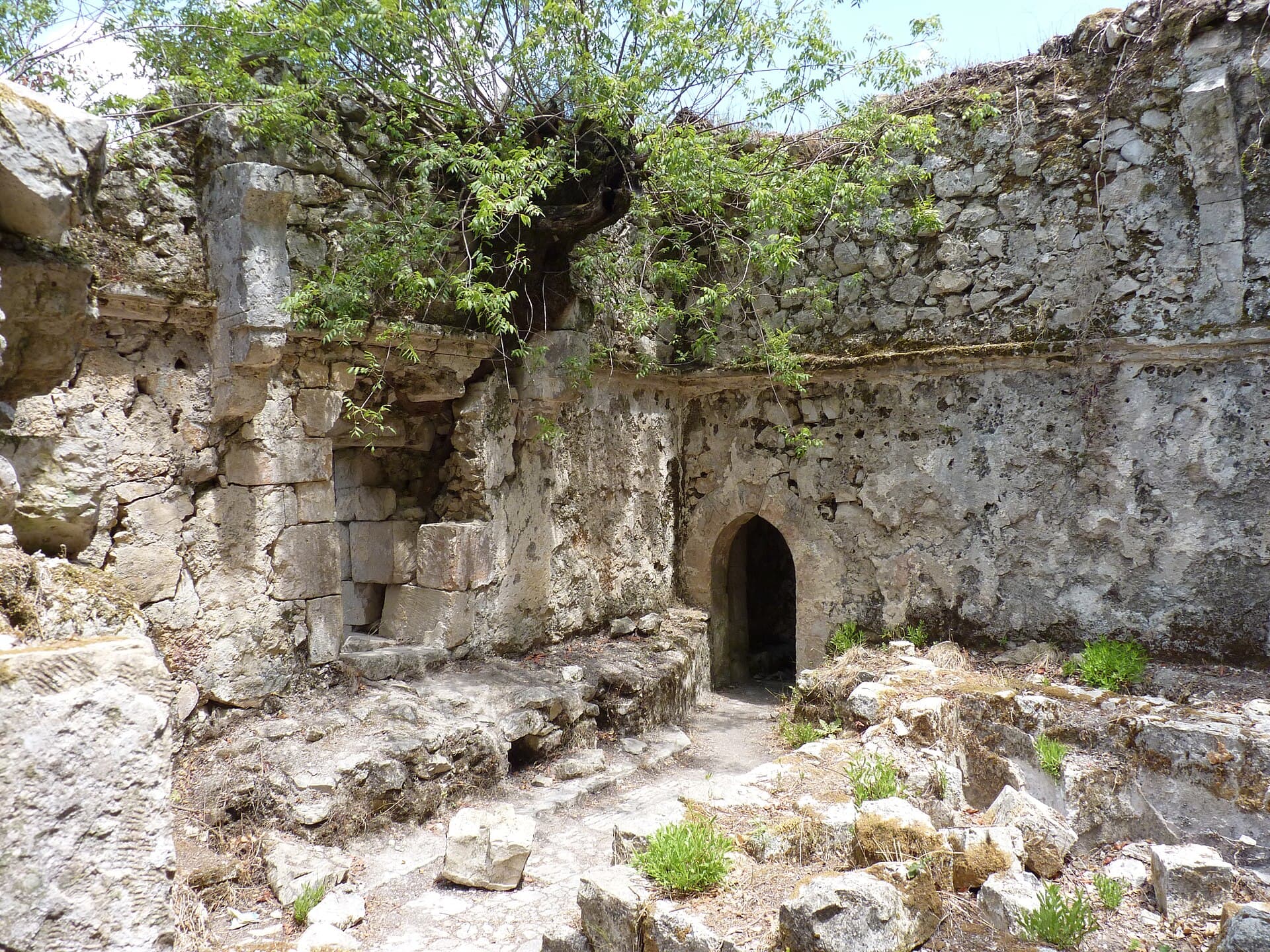
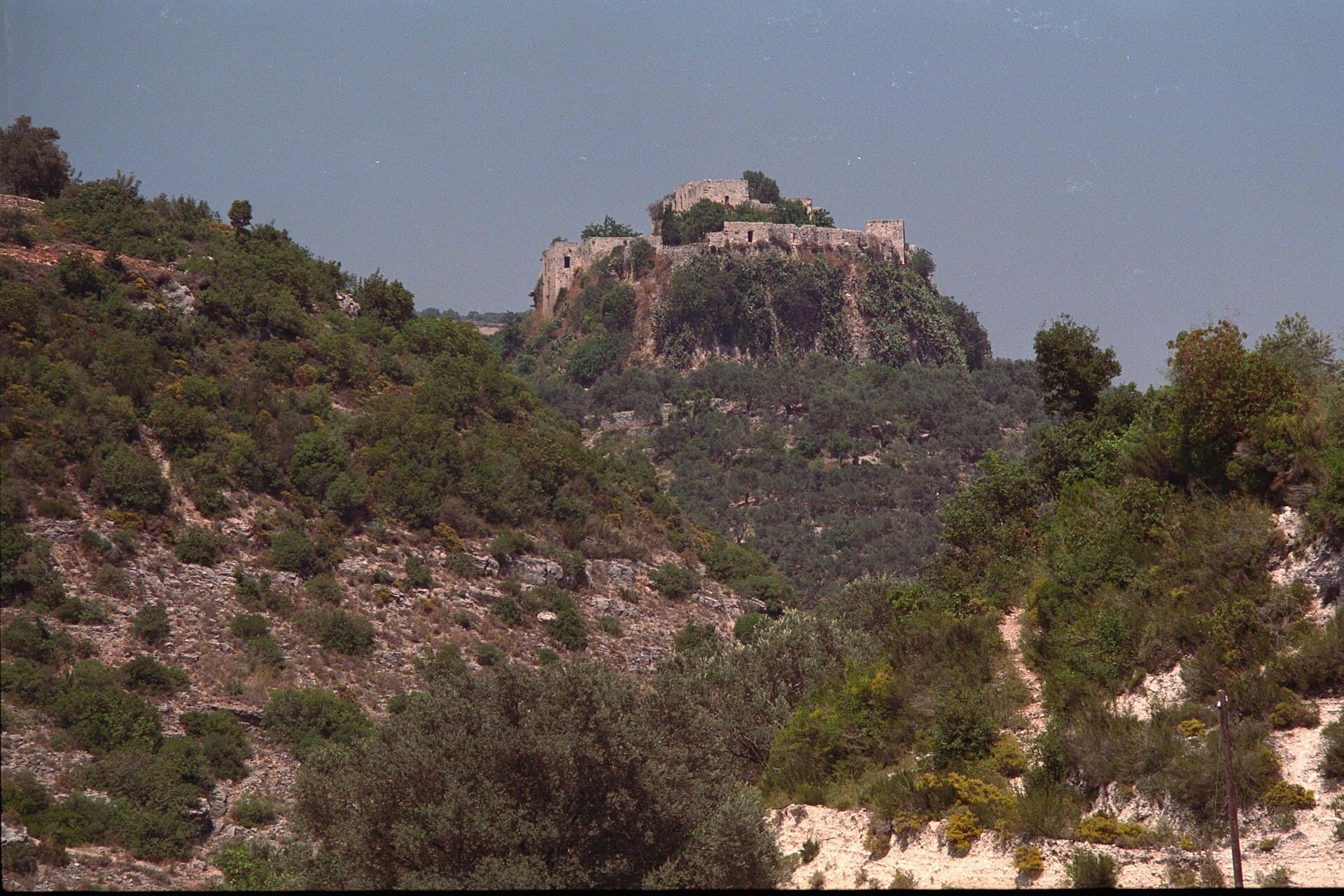
At 10:30 you are at the foot of al-Kahf. The path and the castle take an hour and a half. The castle was built around 1120 and sold to the Ismailis in 1138. Rashid al-Din Sinan made it his base and died in 1193; sources differ on where he died and where he was buried. At the west end is an outer bailey 170 metres long; higher up are seven cisterns and passages cut into the rock. At 12:45 you are in Qadmus. The castle sits above the town on a mass of rock cut off on all four sides. It was sold to the Ismailis in 1132. Like al-Kahf, it fell to the Mamluk sultan Baybars in 1273. It was badly damaged in the earthquake of February 2023. On the upper terrace, look for the two wells cut into the rock and the balconies facing east; an hour covers it. Bring lunch with you from Tartus.
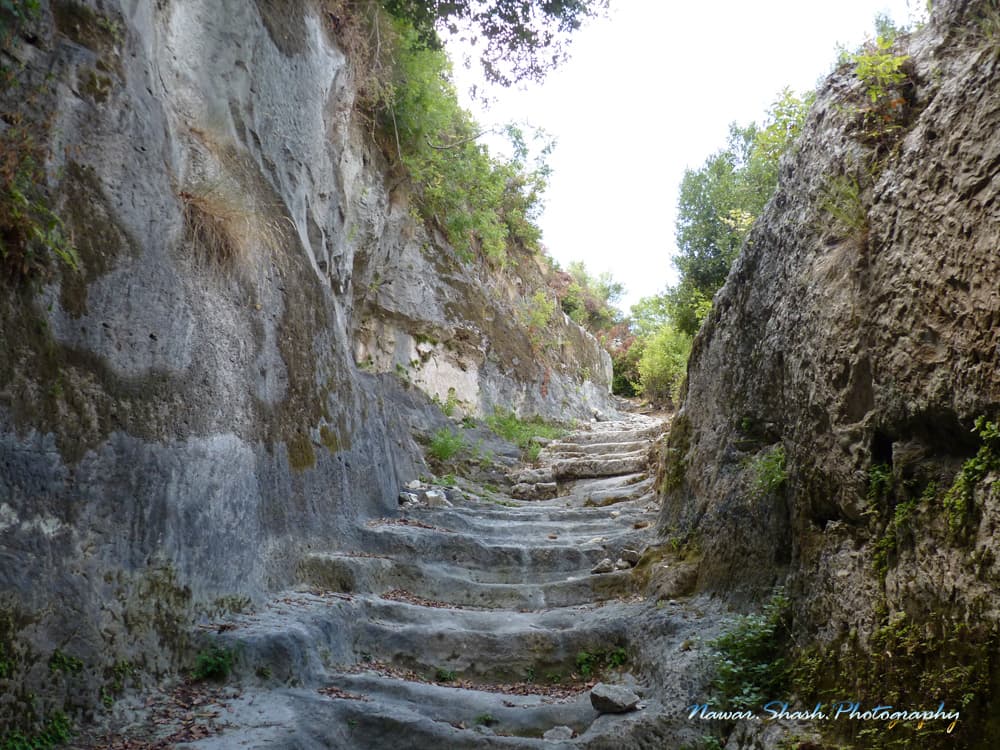
At 14:15 you are in al-Dey. The mouth of Hawat al-Jubab is almost round, about 20 metres across, and the sinkhole reaches 35 metres at its deepest. A concrete stair built by the municipality leads down to a floor of 800 square metres. The nearest point of the roof is about 20 metres above; the rock is red and drips with water. In the east corner a freshwater spring rises at the foot of the rock. Arabic Wikipedia says the sinkhole was a home in the Stone Age and a shelter from raids under Ottoman and French rule. Today people from the area come down in summer to cool off, and the floor holds about 500 people. Be back at the top by 15:30 and take the road to Baniyas. You are in Tartus at 17:00.
Take care
Keep away from the mouth of the sinkhole; the edge may have no railing and the drop reaches 35 metres. Go down only by the municipal stair and do not try any other way in. The current state of the stair has not been confirmed. Water drips from the roof, so the steps can be wet; wear shoes that grip. Qadmus Castle has cracked walls since the earthquake, and some sections may be closed. The path at al-Kahf is narrow and slippery after rain. Entry to al-Kahf is free; at Qadmus and the Saleh al-Ali tomb, fees and hours vary, so check at the entrance. The only time the tomb museum is sure to be open is the April festival: it was held for the 22nd time in 2019 and the 24th in 2022, and the latest dated ceremony was on 19 April 2026. In winter, fog closes the roads in these hills.
In March 2025 armed violence hit the coastal countryside, and the areas around Qadmus and Baniyas were among those affected. We found no dated source on the current state of the road back from al-Dey to Baniyas. Ask in Tartus about the situation before you set out, and plan to be back before dark. Dated details are on the safety and access in the Syrian coast countryside page.
The route on a map
Stops along the route
- 01
- 02
- 03
- 04
Transparency
- How this was chosen
- The stops and their order were set by hand. The line on the map is real road geometry, not a straight hop between pins; distance and duration belong to that itinerary.
- Facts checked
- September 2026
- Last updated
- September 15, 2026